
 E-Paper



Opening avenues for marginalised sections through education
The institution has started educating parents, especially mothers, on education and has got good success in such small projects. “Most fathers are doing hand to mouth jobs so they cannot be disturbed,” he said.

 Prefer HTon Google


For the last 15 years, he has been leading one of the oldest and biggest educational institutions in the country — Anjuman-i-Islam. It has become a conglomerate of 97 institutions imparting education in all streams right from Kindergarten (KG) to PhD to 110,000 students every year at different campuses. Despite that, Zahir Kazi believes that there is a lot to do in the field of education especially related to the Muslim community.
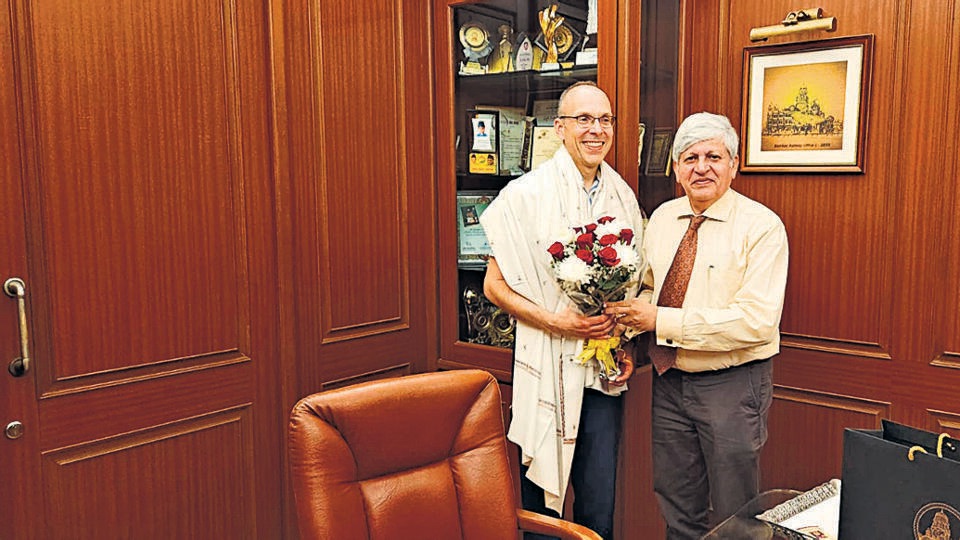
“The ratio of literacy rate in the community has improved in a big way in the last over two decades. The credit goes to the philanthropists and educationists who had done really well. But more efforts are required to be taken in this direction by major institutions,” Kazi insisted, who turned 70 in January this year.
He pressed that there is a need to undertake outreach programs to the marginalised ones on board as there are many who have not seen the school in their lives. “Going by my experience, the underprivileged students have done exceptionally well whenever they got an opportunity. They have a fire in their belly, the only thing required is the initiatives that need to be undertaken by the major institutions,” he pointed out.
The institution has started educating parents, especially mothers, on education and has got good success in such small projects. “Most fathers are doing hand to mouth jobs so they cannot be disturbed,” he said.
As far as the government is concerned, it needs to come out with a one-window clearance policy for all the education institutions, especially those who are doing it for charitable purposes. “Imparting education and improving the literacy rate is part of the government job and if institutions are doing it on their own then they need to be encouraged,” he stressed.
For his 40-year commitment to education, especially among minorities, and his contributions to de-radicalisation initiatives, Kazi was conferred a Padma Shri in January this year. He is also a practising radiologist who has maintained a balance between both the professions even today.
Born in Goa, Kazi took over the reins of the education institution in 2009. Before that, he worked as the chairman of MI Jamkhanawala Tibbia College for 10 years.
To him, the idea of freedom is intricately tied with the need for education, especially for marginalised communities for whom he believes learning can open the avenue to a better life. “In the last 15 years, I have balanced between my medical practice and the responsibilities at Anjuman-i-Islam by spending the morning at the clinic and devoting the rest of the day at the education institution,” he explained. “I’m happy with that.”


