
 E-Paper



Over 100 Maoists surrender in Chhattisgarh’s Bijapur district, say police
On the state’s rehabilitation measures, a police officer said each surrendering individual received an incentive cheque of ₹50,000

 Prefer HTon Google


Raipur: A total of 103 Maoists, including 49 cadres with bounties on their heads, surrendered in Chhattisgarh’s Bijapur district on Thursday, police said.
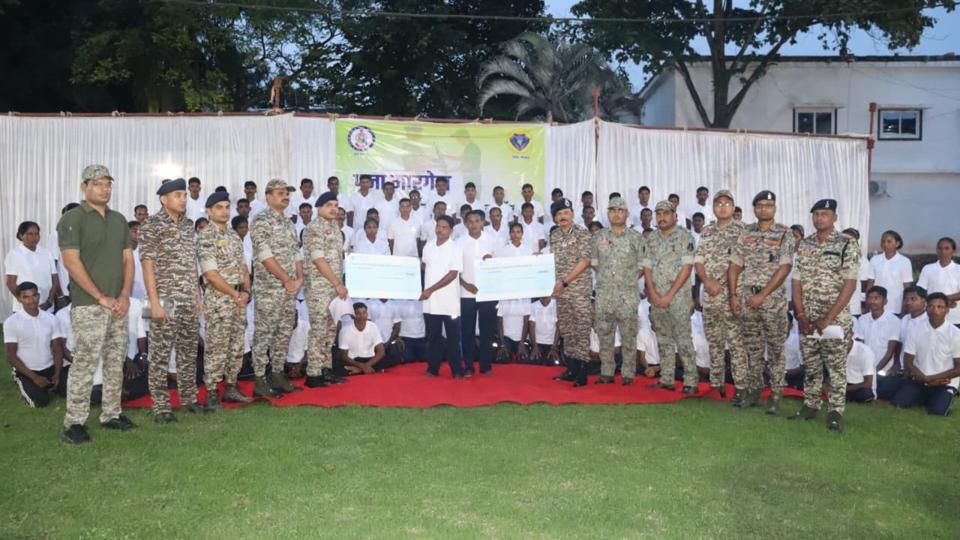
The mass surrender took place in the presence of senior police and paramilitary officers.
The police released a detailed list of the surrendered cadres, which includes a mix of senior functionaries and lower-rank militia members—many from Muria tribal communities in villages across Bhairamgarh, Gangalur, Nelsonar, and other police station areas in Bijapur. “Individuals between 18 and 40 years of age featured prominently among those who quit the movement,” the release said.
Also Read: Chhattisgarh: 66 Maoists surrender across five Bastar districts
Among the important cadres who gave up arms were south sub-zonal bureau communication commander Lacchu Punem alias Santosh (reward ₹8 lakh); Guddu Farsa (alias Vijay) of company number 10 (reward ₹8 lakh); and senior PPCM and security guard commander Bhima Sodhi alias Kamal Singh/Sukhdev (reward ₹8 lakh), the release said, adding, “Several other area committee leaders, Revolutionary People’s Committee (RPC) and militia commanders, and members of the so-called Janatana Sarkar were also part of the group.”
On the state’s rehabilitation measures, a police officer said each surrendering individual received an incentive cheque of ₹50,000, alongside access to the government’s reintegration package that promises livelihood support, education, and social rehabilitation.
Also Read: Chhattisgarh: 30 Maoists surrender in Bijapur; carried ₹81 lakh combined bounty
Bijapur Superintendent of Police (SP) Jitendra Kumar Yadav appealed to remaining cadres to accept the state’s offer and reintegrate with their families. “The government’s rehabilitation policy is attracting Maoists. The relatives of those who surrender also want them to live a normal life and walk hand in hand with society,” Yadav added.
-kW0H-U20214218012MgB-250x250%40HT-Web.jpg)


