
 E-Paper



281 foreigners at Nizamuddin Covid-19 hotspot flouted visa rules
The foreign nationals at Nizamuddin’s Tablighi Jamaat congregation had entered India on Tourist visas in violation of the law


Nearly 280 foreign nationals who participated in the Tablighi Jamaat congregation in Delhi’s Nizamuddin that has turned into a hotspot of coronavirus disease flouted visa norms, a senior government official told Hindustan Times. These people, the official said citing preliminary reports, appeared to have entered the country on a Tourist visa rather than mandatory Missionary visa.
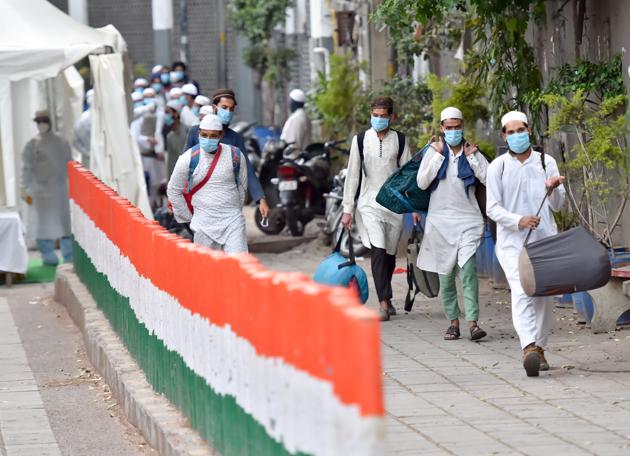
The Delhi government’s home department has flagged this information to the immigration department which is cross-checking the visa status of 281 foreigners.
The Jamaat is an evangelical Muslim sect aimed at spreading the teachings of the Prophet. As many as 24 persons have now tested coronavirus positive after the lockdown of the area. There are about 394 more people in hospitals.
The building belongs to the Tablighi Jamaat, an evangelical Muslim sect that hosted this month its annual congregation with attendees coming in from several nations such as Indonesia and Malaysia before they spread out to other parts of India such as Kashmir and Andhra Pradesh, creating a web of close contacts that now threatens to create an explosion of cases in the country.
According to data available with the Hindustan Times, these foreigners came from 21 countries, a large number of them from Indonesia, Bangladesh, Myanmar, Malaysia, Sri Lanka and Kyrgyzstan.
Watch | Nizamuddin sealed after people show virus symptoms, over 200 in isolation
A government official added that the number of foreigners who are found to have joined the congregation could increase. “It may eventually be closer to 500,” the official said.
In the past, officials said the immigration department had black-listed many foreigners linked to Tablighi Jamaat for undesirable activities and violation of visa norms.
Since the checks for visas granted under the Missionary category are more stringent, these Islamic proselytizers appear to have worked around the scrutiny by hiding the real purpose of their travel to India, blindsiding Indian missions abroad, officials said.
Also read | What we know about Nizamuddin mosque congregation: 10 points
The Tablighi Jamaat already has been under the scanner of security agencies for their links with radical groups in south Asia but this has never been proved. “They operate in grey areas and their preachings can be used to radicalise youth in the name of Islam,” a counter terror operative who is familiar with the developments said.
The Jamaatis originally come from the Mewat region on Haryana-Rajasthan border and are currently headed by Maulana Saad.
Also read | Covid-19 update: FIR against Nizamuddin gathering organisers, says Delhi health minister
The Delhi Government was also in the dark about activities at Markaz till the Indian security agencies confirmed the presence of foreigner nationals at the building in the densely-populated south Delhi locality.
A hostel-like complex, the building has six floors with accommodations for up to 2,000 people on the upper floors. The basement and the ground floors housing a kitchen and a communal dining area.


