
 E-Paper



Pak spouses of Kashmiri men flag their plight, seek citizenship, travel papers
The group of women appealed to the governments of India and Pakistan to look into their issues from a humanitarian point of view because they have been unable to go home and meet families and relatives.


Women from Pakistan and Pakistan-occupied Kashmir (PoK) who married Kashmiri men and had traveled to Jammu and Kashmir after 2010 announcement of amnesty policy for former militants by then chief minister Omar Abdullah, on Monday reiterated demands of citizenship rights and travel documents for them and their children to visit their parents, siblings and relatives across the border.
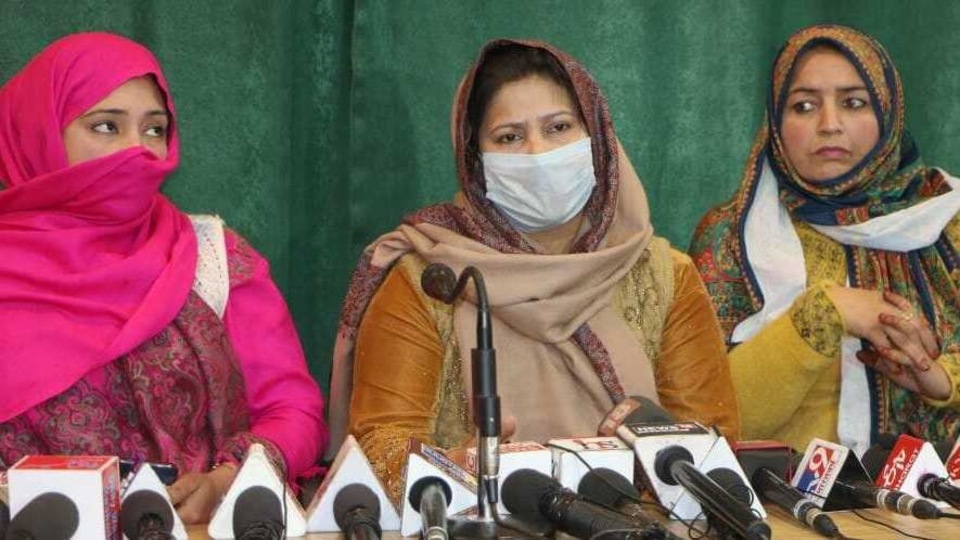
At a press conference, the group of women appealed to the governments of India and Pakistan to look into their issues from a humanitarian point of view.
“We see the last glimpses of our dead relatives on the phone. We see their funerals on video calls. What can be a bigger tyranny than this? Imagine the plight of one’s daughter or sister if she can’t visit her home for 9-10 years or you can’t see her dead body,” said Toiba, a resident of Baramulla district, who had come with her Kashmiri husband and three kids nine years ago from Pakistan.
“We are not criminals. We are women and have small kids. We request the governments of India and Pakistan to decide something for us. The Government of India should either deport us or provide us with the travel documents,” she said.
The women’s group is part of the hundreds of women who came here with their Kashmiri husbands after the then chief minister Omar Abdullah in 2010 had announced a return and rehabilitation policy for former militants who were living in PoK.
Out of many Kashmiri youth who had crossed the Line of Control (LoC) into PoK in the 1990s to get arms training after insurgency started in Kashmir valley, some had given up violence, married there and started their lives afresh.
There are no official figures from the government of the number of those returning but the women say that they are 400 in number who came with their Kashmiri husbands.
“Our husbands are Indian. We have married them. We have kids. What sort of justice is this that you accept them but you don’t accept their wives and children?” Toiba said.
Owing to the opposition from the Pakistan side coupled with the then Indian government’s assertion that there were ‘practical issues’ involved in implementing the rehabilitation policy, the returning men and their families were forced to take Nepal route and then by road to Kashmir with authorities going soft on the travelers.
The informal entry meant no official recognition of their families or any documents which would help them to travel and acquire education.
“The government is now saying that these are illegal immigrants. Why didn't the government deport these families or punish them that time when they had come. Then those 400 women would not have come. How come this illegal thing would continue from 2010 to 2018,” she said.
The women have held a number of protests and lately also met lieutenant governor Monoj Sinha.
"We met LG who listened to our issues and told us to come again. Second time when we went we were detained outside Raj Bhawan without citing any reason. We were lodged in a police station from 10 in morning to 4 in the evening.We were 20 women," said Safiya, a resident of Sopore, who had come from PoK.
She said that the 2010 promise of rehabilitation was all false. “They did not fulfill any of their promises. Instead cases were filed against us. We got no documents like Aadhar card or election card nor were we given any citizenship although we knocked on every door,” she said.
“Our children are suffering the most. They should get travel documents so that they could acquire education outside,” she said.
“We are not terrorists. We are from Pakistan and we have been living here for the past 10-12 years,” she said.
The group said that many of the women have been divorced and husbands of some others have died.
“In any part of the world, a divorced or widowed woman returns to her parent’s home. Where else will she go with her small children? Why are our parents’ homes snatched from us,” said Toiba.
Nabila, a resident of Pattan, had left her minor daughter in Pakistan when she had decided to travel to Kashmir with her husband in 2012. For the past eight years she has been unable to meet her daughter.
“I make her excuses when she asks me ‘Mama when are you coming’. I had never imagined that I would get stuck here. What crime have we committed?... This separation has terribly affected our and our children’s mental health,” she said.
The group said that if a decision was not taken on their fate then they have plans to march en-masse towards the Line of Control in the near future.


