
 E-Paper



Pakistan defence minister's ‘all-out war’ with India warning after Pahalgam terror attack
Khawaja Asif told Sky News that the world should be “worried” about the prospect of a full-scale conflict involving the two nations.

 Prefer HTon Google


Pakistan's defence minister Khawaja Asif, in a TV interview, has warned that India's moves following the Pahalgam terror attack, in which 26 people were killed, could lead to an “all-out war” between the two neighbouring countries.
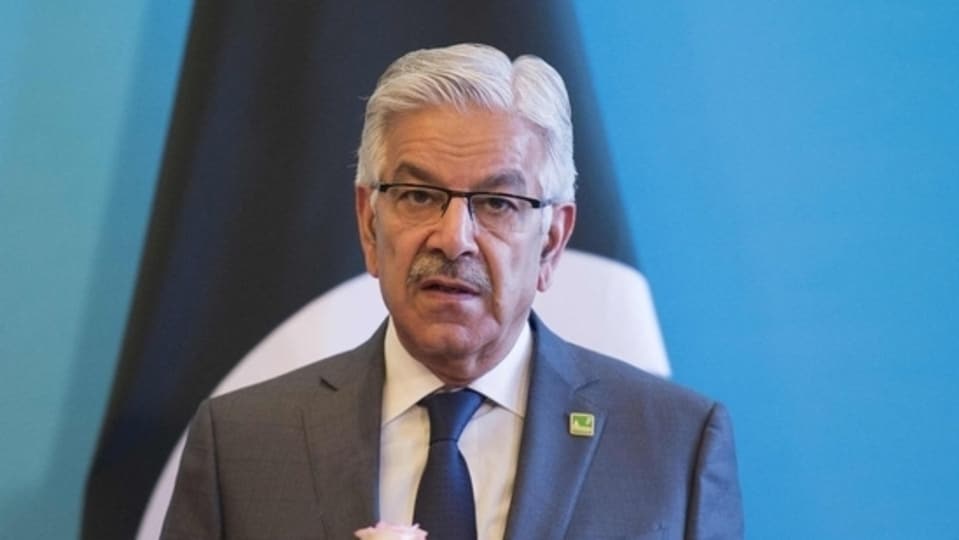
Khawaja Asif told Sky News that the world should be “worried” about the prospect of a full-scale conflict involving the two nations, which both have nuclear weapons.
Follow Pahalgam attack live updates
Claiming that the Pakistani military was “prepared for any eventuality” amid escalating diplomatic tensions with India, the defence minister said. “We will measure our response to whatever is initiated by India. It would be a measured response… If there is an all-out attack or something like that, then obviously there will be an all-out war."
Also Read | Amit Shah calls all CMs, asks them to identify Pakistanis in India
"If things get wrong, there could be a tragic outcome of this confrontation," Sky News quoted Asif as saying.
He, however, hoped the dispute could be resolved through negotiations, it reported.
When asked if the world should be worried, the minister responded, “Yes, I think so. The clash between two nuclear powers is always worrisome…”
Without providing any evidence, Asif also accused India of having “staged” the shooting that killed 26 people.
Also Read | Pahalgam attack: Who are the 26 people shot dead by terrorists? Full list
“The reaction which came from Delhi was not really surprising for us. We could make out that this whole thing was staged to create some sort of a crisis in the region, particularly for us,” the Pakistan defence minister said.
When pushed to clarify what he meant by “staged,” Asif said, “I personally and our government also… in the last two days… have condemned it categorically without any reservation that terrorism in all its forms is something that should be condemned as strongly as possible.”
When asked if he blamed India for the attack, Asif replied: “Yeah, yeah, yeah. Absolutely. Absolutely, they create these situations.”
The Indian government hasn't immediately responded to Asif's comments.
Did Pakistan support terror groups?
On being asked by Sky News' Yalda Hakim if he admits that Pakistan has had a long history of backing, supporting, training and funding terrorist organisations, Asif said, "We have been doing this dirty work for the United States for about 3 decades... and the west, including Britain...That was a mistake, and we suffered for that, and that is why you are saying this to me. If we had not joined the war against the Soviet Union and later on the war after 9/11, Pakistan's track record was unimpeachable."
Following the terror attack in Pahalgam that killed 26 people, the Indian government announced several diplomatic measures, such as closing the Integrated Check Post (ICP) at Attari, suspending the SAARC Visa Exemption Scheme (SVES) for Pakistani nationals, giving them 40 hours to return to their country, and reducing the number of officers in the high commissions on both sides.
India also halted the Indus Waters Treaty signed in 1960 in the wake of the Pahalgam attack.
Prime Minister Narendra Modi also assured the country that the terrorists responsible for this attack, along with those who conspired it, will face punishment beyond their imagination, Modi asserted that the time has come to eliminate the remaining strongholds of terrorism and that the willpower of 140 crore Indians will now break the backbone of the perpetrators of terror.


