E-Paper



Past govts were ashamed of India’s spiritual legacy: PM in Uttarakhand
Speaking at Mana village near the India-China border in Uttarakhand, the PM also said that previous governments were apathetic to the needs of people from the hills


Offering prayers at the Hindu shrines of Kedernath and Badrinath, Prime Minister Narendra Modi on Friday lashed out at previous Union governments and said that “slave mentality” made them ashamed of India’s spiritual legacy and leave the country’s pilgrimage hubs under-developed.
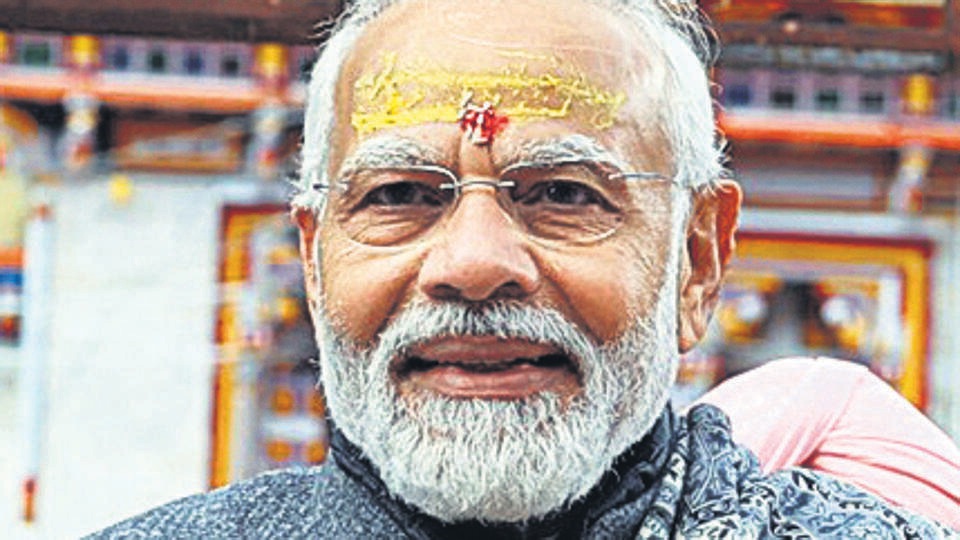
Speaking at Mana village near the India-China border in Uttarakhand, the PM also said that previous governments were apathetic to the needs of people from the hills and ensured that these people were the last to “see the benefits of development”.
“Development work was being assessed through the lens of slave mentality. These people would appreciate foreign centres of faith, but in India, they would look down on them. When it came to the cultural legacy of India, there was a feeling of inferiority and mistrust,” the PM said in a speech in Hindi. Earlier in the day, he also laid the foundation stones for a raft of infrastructure and connectivity projects, including a ropeway between Kedarnath and Gaurikund.
In his independence day address earlier this year, Modi had urged Indians to eradicate colonial mentality as part of his five pledges to help make the country a developed nation by 2047, the centenary of freedom.
Wearing a Chola Dora, a traditional Himachali dress woven for him by women from Chamba in Himachal Pradesh, Modi said that the “slave mindset” left the country’s centres of faith in a dilapidated condition.
“For thousands of years, our centres of faith have been facing the vagaries of weather and have faced so much damage. For decades, a pilgrimage would become the most difficult journey. But governments did not develop facilities for their own people. Isn’t this an injustice? God has given me an opportunity to reply on behalf of 130 crore people of this country,” Modi said. Himachal Pradesh, which is also home to several centres of Hindu pilgrimage, goes to the polls on November 12.
Modi’s comments on Friday mirrored those he made on XXXXX during the inauguration of the Mahakaal Lok corridor at the Mahakaleshwar temple in Ujjain, where he spoke about the revitalisation of India’s cultural heritage and referred to the construction of the Ram Temple in Ayodhya and the Kashi Vishwanath corridor in Varanasi.
“Now the whole country feels proud about our centres of faith. Devbhoomi Uttarakhand is also witness to this change, and this is helping the local economy. We are working on using drones to ferry the produce of people in hilly areas to markets in urban areas,” he said on Friday.
With elections in neighbouring Himachal Pradesh roughly three weeks away, the PM also said that previous governments felt that the people from the hills were industrious by nature and, therefore, didn’t need development. “This was an injustice, and people from the hills would be the last to get a glimpse of development. We have started work from these remote villages and are trying to resolve their issues through development,” Modi said from the podium at Mana, known locally as the last village of India.
Lauding local produce by women-led self-help groups, Modi urged people to dedicate 5% of their travel expenses to buy indigenous produce from the places they visit. “This will create a lot of employment, and you can tell your children stories about these products”, he said.
Modi said that the Union government was working on the Parvat Mala Project that focuses on connectivity, a major hindrance, in hilly areas. “Under this project, work has started on developing a network of ropeways in Himachal Pradesh and Uttarakhand,” he said.
On Friday morning, the PM laid the foundation stone of connectivity projects worth ₹3426 crore in Uttarakhand, which included the ₹1267 crore Kedarnath ropeway, the ₹1163 crore Hemkund ropeway, the ₹422 crore Joshimath-Malari Road and the ₹574 crore Mana-Mana Pass Road link. The ropeway that connects Gaurikund to Kedarnath is expected to shorten travel time between the two sites of faith to 30 minutes, from the current XXXX. He also surveyed reconstruction work in Kedarnath, which suffered devastating floods a decade ago, on an all-terrain vehicle.
Modi said he recently inaugurated the Vande Bharat Express in Himachal Pradesh, and hoped that such a service would start operating in Uttarakhand too. “People in Himachal Pradesh have told me that Uttarakhand chose a double engine government(a BJP government both at the state and the centre) for speedy development of centres for faith, heritage, hilly and border areas, and the same mantra is inspiring Himachal Pradesh,” he said.
Modi said Mana was called the last Indian village because of its location but, for him, every border village in the country was the first village from where the doors of prosperity would open. Modi remembered that he once convened a meeting of the working committee of the Uttarakhand unit of the BJP at Mana 25 years ago, much to the displeasure of then party workers who were reluctant to traverse the distance in hilly terrain. “I told them that the day you understand the significance of Mana, people will give the BJP a permanent place in their hearts. Your blessings have sent the BJP to power for the second time in a row,” he said.
The Congress said it was very strange that PM Modi attacked past governments for not developing shrines. “Modi ji has perhaps forgotten that the Kedarnath Badrinath Temple committee meant for the management of these two shrines was formed in the 1930s. Congress has done a lot for the development of the shrines in the country, but it doesn’t use religion to play divisive politics,” said Uttarakhand state Congress vice-president Mathura Dutt Joshi.