
 E-Paper



‘People, not governments, fight wars’: PM Modi on Kargil War
“There can be no compromise when it comes to modernisation of the armed forces,” PM Modi said.

 Prefer HTon Google


Prime Minister Narendra Modi on Saturday pledged his government’s commitment to the modernisation of the armed forces, took a swipe at Pakistan and credited India’s victory in the 1999 Kargil war to the people of the country.
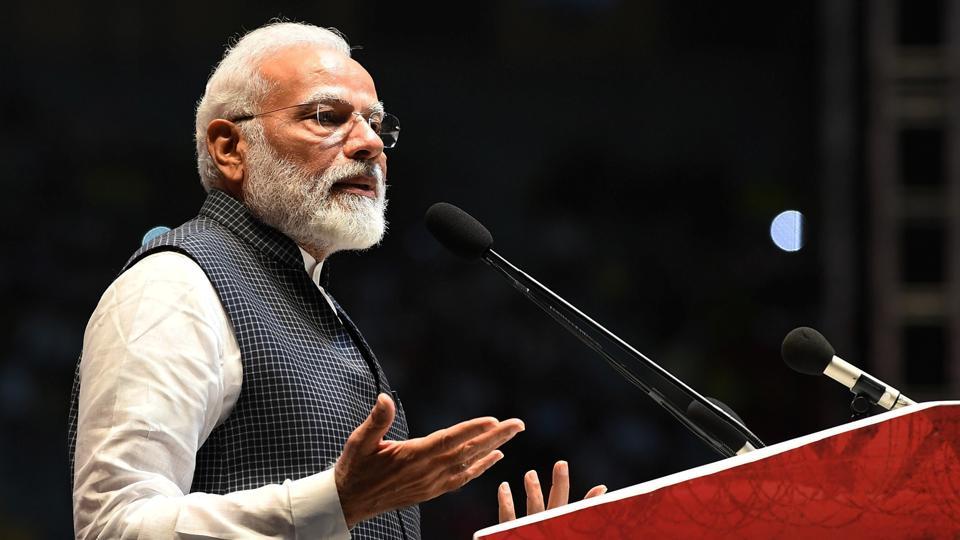
At a function to commemorating Kargil Vijay Diwas (victory day) at the Indira Gandhi indoor stadium in New Delhi, Modi said there can be no compromise when it comes to modernisation of the armed forces and referred to the anti-satellite weapon test conducted on March 27 and the nuclear triad — the ability to fire a nuclear weapon from sea, land and air.
Under the “Make in India” programme,the country is building military hardware, and regulations have been changed to encourage the private sector to manufacture weapons systems, Modi said. “Governments don’t fight a war but people of a country fight a war,” said the prime minister, who accused Pakistan of waging a proxy war against India.
Watch | ‘Modernisation of armed forces is govt’s priority’: PM Modi at Kargil Vijay Diwas
“Those defeated in war are fighting a proxy war,” Modi said, noting Pakistan’s defeats in the 1948, 1965 and 1971 wars. “In 1999, we defeated Pakistan again.”
And, in a message to the military, the Prime Minister stressed on the need for “jointness” among the three forces. “No matter which uniform one wears,” there has to be unity, he said.
On Friday, Prime Minister Modi had recalled his visit to Kargil in 1999 during the India-Pakistan war and described as “unforgettable” his interactions with the soldiers.
On the 20th anniversary of the conflict, Modi tweeted, “During the Kargil War in 1999, I had the opportunity to go to Kargil and show solidarity with our brave soldiers. This was the time when I was working for my Party in Jammu and Kashmir as well as Himachal Pradesh. The visit to Kargil and interactions with soldiers are unforgettable.”


