E-Paper



Petrol prices hiked for first time since July 17, diesel costlier by 95 paise
Petrol is currently sold for ₹101.39 per litre in Delhi and diesel at ₹89.57. The previous price hike of petrol that took place 73 days ago had raised its rate to an all-time high of ₹101.84

 Prefer HTon Google


State run fuel retailers on Tuesday raised petrol rates by 20 paise a litre for the first time since July 17 as international oil prices soared to a three-year high, breaching the $80 a barrel mark following rising demand and supply concerns.
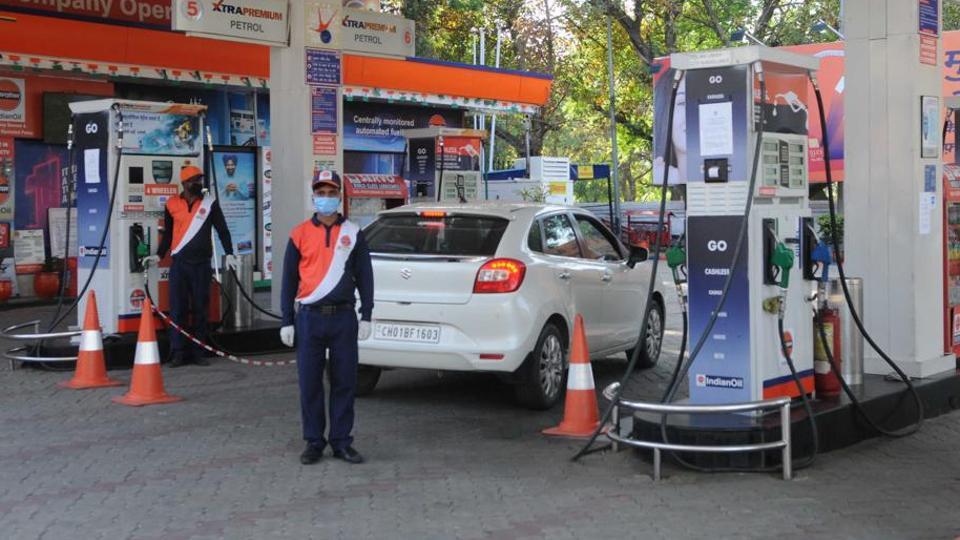
Diesel price also jumped by 25 paise per litre on Tuesday, the fourth hike in five days, which made the fuel costlier by 95 paise a litre. The recent diesel price rally started from Friday (September 24) after it was last hiked on July 15 to reach ₹89.87/litre mark on Tuesday.
Petrol is currently sold for ₹101.39 per litre in Delhi and diesel at ₹89.57. The previous price hike of petrol that took place 73 days ago had raised its rate to an all-time high of ₹101.84.
While fuel rates of the Indian Oil Corporation (IOC) in Delhi are the benchmark for the entire country, retail prices of the two fuels differ from place to place because of variations in state taxes and local levies.
Public sector oil marketing companies (OMCs) are forced to raise petrol and diesel rates as international oil prices are surging and the rupee is depreciating against the dollar, making import costlier, two executives working in these firms said, requesting anonymity. India imports more than 80% crude oil it processes and pays in dollar.
Before the recent rally, oil companies had reduced petrol and diesel rates in small doses by 65 paise per litre and ₹1.25 respectively between mid-August and early September to pass the benefit of softening of global oil price, which had plunged to $68.23 per barrel on August 18. Since then, benchmark Brent crude has surged by over 17%.
HT on Tuesday reported that petrol price increase was imminent as OMCs were not expecting any respite from surging international prices. Companies do not expect any immediate relief to the consumer expecting the fuel prices to surge further.
There are indications that imported energy would be costlier, the executives mentioned above, said. “As per both IEA [International Energy Agency] and OPEC [Organisation of the Petroleum Exporting Countries], global demand is expected to outpace supply due to which international oil prices will likely remain firm in the near to mid-term. A simultaneous rally in natural gas is also likely to drive demand for alternate fuels, including crude oil,” the first executive said.
Global demand for crude oil has been increasing consistently with the easing of pandemic restrictions and improving vaccination rates, the executives said. “Crude Oil prices have reached to near three-year high as global output disruptions have forced energy companies to draw more crude oil out of their stockpiles. Accordingly, US crude oil inventory levels are also nearing a three-year low,” the first executive added.
“On the supply side, OPEC+ [including Russia] alliance has been slow in easing output restrictions, contributing to the tightened supply in the market. Additionally, hurricanes Ida and Nicholas have impacted crude oil production in the US Gulf of Mexico region, when they hit in late August and September respectively,” he said.
“Companies were holding prices, and expecting some tax relief from the government in terms of GST [Goods and Services Tax], but the proposal to include petroleum products in GST was declined in the GST Council meeting on September 17, forcing companies to think about raising fuel rates,” the second executive said.
International oil rates, which are often volatile, directly influence pump prices of petrol and diesel in India. Heavy loads of Central and state taxes are also responsible for astronomically high rates of the auto fuels.
Through 2020, as global crude prices plunged (below $20 a barrel in April last year), the Central government raised excise duty on fuel to shore up its finances. States too followed suit as their revenues were hit on account of the Covid-19 pandemic. As a result, the Central and state levies on petrol and diesel are over 50% of their retail prices currently.
According to official data, the petroleum sector contributed ₹371,726 crore Central excise revenue in 2020-21, and ₹202,937 crore state levies or value-added tax (VAT). In Delhi, Central levies account for over 32.5% of petrol’s price, and state taxes (VAT) 23.07%. On diesel, the Central excise is over 35.8% while VAT is more than 14.6%.