
 E-Paper



PLA rotates LAC troops, shows hand
According to military commanders, the PLA has moved an additional brigade north of Pangong Tso for rotating troops from the Finger Four mountainous spur to keep up the morale of the deployed troops.

 Prefer HTon Google


The People’s Liberation Army (PLA) has started rotating troops on the north bank of Pangong Tso, signalling that it has no immediate plans of either disengagement or de-escalation in Ladakh. The 7th round of India-China military-diplomatic talks began in Chushul on Monday with the XIV Corps Commander meeting the South Xinjiang military district commander to discuss comprehensive disengagement.
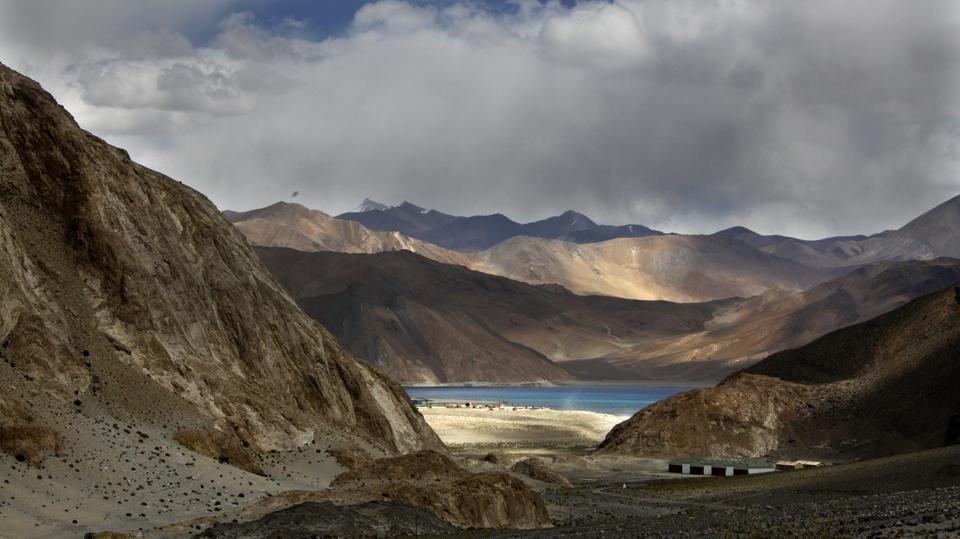
According to military commanders, the PLA has moved an additional brigade north of Pangong Tso for rotating troops from the Finger Four mountainous spur to keep up the morale of the deployed troops. “Given that both sides are deployed at {an altitude of} nearly 18,000 feet on Finger Four and the weather is deteriorating, the PLA is rotating 200 troops at a time so that front-line troops are fresh and motivated. This clearly means that PLA has no plans for disengagement at least this winter,” said a senior official who requested anonymity .
Also read: 54 done, BRO rushes to build 48 bridges that can shoulder T-90 main battle tanks
The assessment of the Indian side is that comprehensive disengagement will be a long-drawn process despite the inherent risk of a flare-up as the PLA will occupy positions south of Pangong Tso the moment they are vacated by the Indian Army. While PLA has come up to its perception of the Line of Actual Control(LAC) on the north bank, Indian Army troops have come up to its perception of the LAC on the south bank by pre-empting the PLA all along the Rezang La Rechin la ridgeline.
Even though winter is expected to set in by the end of this month and take a turn for the worse, the Indian Army is prepared to stay on the heights all along the 1,597 km LAC in Ladakh. The Indian army commanders have learned from the fact that the Sumdorong Chu standoff in Arunachal Pradesh that started in 1986 was fully resolved through comprehensive disengagement by November 1995 — after nine years of continuous deployment. While the Sumdorong Chu standoff was resolved, the Indian Army has been sitting on the Saltoro Ridge since Operation Meghdoot was launched in April 1984 — 36 years and counting.
While the PLA aggression in the Galwan Valley and north of Pangong Tso was pre-planned with military objectives in mind, the Chinese were not prepared for either the June 15 flare-up or the August 29-30 pre-emption. It is quite evident that PLA commanders thought that the Indian Army would accept the aggression as fait accompli and move on. However, with both sides deployed in full at the LAC in Ladakh, the chances of an accident are high and thus distance is being kept between the front-line troops.
Also read: PLA rotating troops on north Pangong Tso, signals disengagement is far off
Even though the PLA’s Western Theatre Command is deployed all along the Ladakh LAC and in depth, the Chinese problems have been complicated by the standoff with the US over Taiwan. The PLA is currently stretched, with its South and Northern Theatre Commands also deployed to pressurize Taiwan, with the US Navy active in the South China Sea. What happens next in Taiwan largely depends on the US posture after the November Presidential election outcome, but either way American policy towards China has hardened.


