
 E-Paper



Plan to buy Predator drones put on hold
The centre was planning to acquire 30 Predator armed drones for use across services at the cost of at least $3 billion from US-based General Atomics

 Prefer HTon Google


India has put its plan to acquire 30 Predator armed drones from the US on the back burner, on account of its focus on indigenous development and manufacturing, as well as the prohibitive cost involved. HT learns that the Pentagon has been informed of the decision.
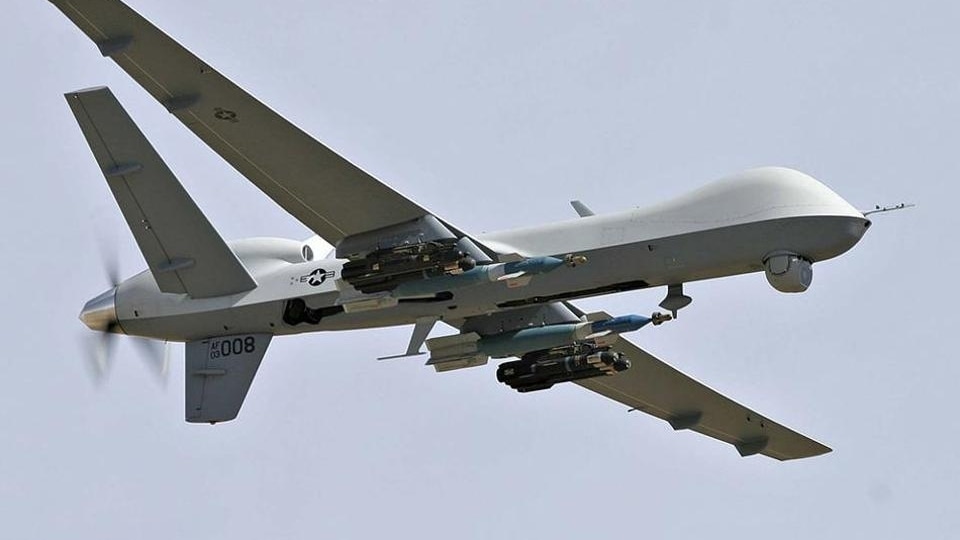
Although the Narendra Modi government on February 9 banned the import of drones, acquisition of unmanned aerial vehicles for defence and security purposes are exempt, but still require special and specific clearances. “As of now, the Predator deal is off,” said a top South Block official who asked not to be named.
Spearheaded by the Indian Navy, India was planning to acquire 30 Predator armed drones for use across services (10 each for the navy, air force and army) at the cost of at least $3 billion from US-based General Atomics. The Indian Navy already has taken two surveillance Predators on lease from the US company and uses them for conducting reconnaissance of India’s maritime and land borders with China and Pakistan.
The decision to put the acquisition on hold was taken as India already has some capability in armed drones; it is currently upgrading the Israeli Heron drones. The Predator platform with armed payload, as in missiles and laser-guided bombs, costs nearly $100 million apiece, but the platform has an endurance of nearly 27 hours.
The Indian Navy uses it for maritime domain awareness from Gulf of Aden to Sunda Straits in Indonesia.
While the Indian Defence Research and Development Organization (DRDO) is expected to unveil its medium altitude long endurance (MALE) drone latest by March, the country’s national security planners are looking at futuristic high altitude pseudo satellite (HAPS) technology for surveillance and targeting capability.
India has already demonstrated its capacity and capability for the manufacture of swarm drones, as was showcased in the Beating Retreat ceremony this year.
Besides DRDO, private Indian companies are also involved in the development of drones that are cheaper to operate compared to the Predator and pack similar lethality.
While the Indian Navy and Army have significant use for the drones for domain awareness, the Indian Air Force was sceptical of Predators due to congested air space, and the presence of surface to air missiles and radars in Pakistan occupied Kashmir. The Air Force is in favour of purchasing more fighter aircraft.


