
 E-Paper



PM Modi cites legend Major Dhyanchand’s example to inspire youth in Mann Ki Baat
Prime Minister Narendra Modi also lauded young Indian entrepreneurs’ entry in the field of space during his Mann Ki Baat address.


Prime Minister Narendra Modi during his monthly radio address Mann Ki Baat, cited Hockey legend Major Dhyanchand’s example on his 116th anniversary on August 29, also celebrated as national sports day, to urge youth to strive for excellence and leaving own mark in all walks of life including sports, space or start ups.
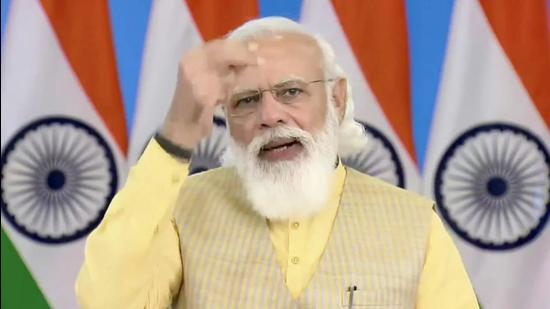
“Major Dhyanchand established India in the sport of Hockey,” Modi said on Sunday. “We may win many laurels, but the nation has always craved for a win in Hockey. Major Dhyanchand showed us the way, now we must continue to progress on it.”
The PM also said that while India’s best-ever haul of seven medals including the one in Hockey in the Tokyo Olympics may not appear to be extraordinary compared to other nations, it has opened up the youth of the country to the possibilities in sports.
“We must not lose this momentum. This sportspersonship must be fostered,” he said
He added that sporting tournaments should be held regularly across all villages and cities to promote the culture. “Our fields should be full of people competing,” Modi said. “It is only through everyone’s contribution that India can attain great heights.”
PM also lauded young Indian entrepreneurs’ entry in the field of space. “There are so many college and university students, and those in the private sector who are laying the foundation for the new developments in space that will take place in the future,” he said.
Drawing attention to India’s growing startup ecosystem, Modi said that the youngsters of today aren’t and should not be afraid to take risks. “Just a little while ago, we were talking about India’s stake in the toy market, now so many young entrepreneurs are working to innovate in the field.”
He also urged the country to continuously maintain its commitment to the Swacchh Bharat, or Clean India campaign and appreciated Indore and Sivaganga’s (Tamil Nadu) contribution to the same.
He also said that Sanskrit was the language of unity due to its universal appeal. “Sanskrit is a language of unity...it is taught across the world from Ireland to Thailand, from Russia to Sydney.”


