
 E-Paper



PM Modi, Macron hold lunch meet, eye India-France ties at new heights of progress
French president Emmanuel Macron said India did its utmost for the G-20 presidency to serve unity and peace.


Prime Minister Narendra Modi on Sunday had lunch with French president Emmanuel Macron following the conclusion of the G20 Summit.
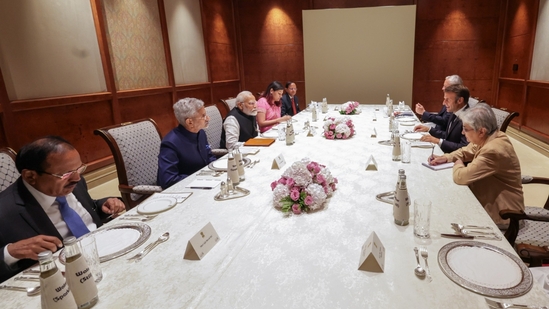
“A very productive lunch meeting with President @EmmanuelMacron. We discussed a series of topics and look forward to ensuring India-France relations scale new heights of progress”, PM Modi posted on social media platform X, formerly Twitter.
The prime minister was accompanied by external affairs minister S Jaishankar and National Security Advisor Ajit Doval.
“We will further develop defence cooperation with India”, Macron was quoted by PTI as saying.
ALSO READ: Modi proposes virtual G20 session before Brazil takes over bloc’s presidency
Earlier, Macron thanked Prime Minister Modi and hailed India's efforts for G20 presidency to serve peace and unity. “I thank PM Modi. Faithful to its principles India did its utmost for the G-20 presidency to serve unity and peace and send across the message of unity while Russia is still waging its aggression on Ukraine”, ANI quoted the French president as saying.
ALSO READ: Russia's Lavrov thanks India for preventing attempts to ‘politicise’ G20 Summit
Macron also called for deep reform of international organisations. “We support a deep reform of global governance. Security Council but as well the World Bank and the IMF, they have to reflect today's reality in terms of demography and economy as well. And then we want to increase the available tools. That's why we want to replenish the World Bank and France is supporting that so that the emerging countries have a greater role to play”, the French president said.
New Delhi Leaders' Declaration
On Saturday, India achieved a milestone in G20 presidency after all the leaders agreed to the New Delhi Declaration after it changed the text on Ukraine. The new text was a result of several rounds of negotiations to reach a consensus on the joint statement.
Asserting that "today's era must not be of war", the New Delhi G20 Summit Leaders' Declaration called on all member states to uphold the principles of international law, including territorial integrity and sovereignty and pitched for initiatives for "comprehensive, just, and durable peace in Ukraine". “The use or threat of use of nuclear weapons is inadmissible.”


