
 E-Paper



PM Modi rejects Pakistan, China's objections on G20 meets, speaks up on Russia-Ukraine war| 10 big takeaways
PM Modi spoke on wide range of issues including G20 summit, terrorism, India's economic growth, 'Sabka Saath Sabka Vikas' model etc.

 Prefer HTon Google


Prime Minister Narendra Modi on Sunday rejected Pakistan and China's objections on holding G20 meetings in Jammu and Kashmir. In an interview to PTI, the prime minister said it is natural to hold meets in every part of the country.
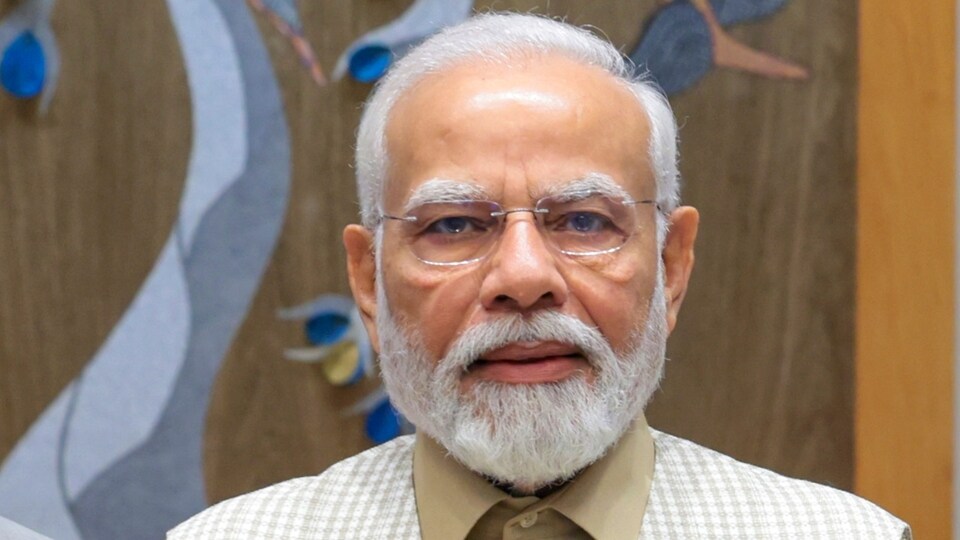
"Such a question would be valid if we had refrained from conducting meetings in those venues. Ours is such a vast, beautiful and diverse nation. When G20 meetings are happening, isn’t it natural that meetings will be held in every part of our country", he said.
In his interview to the news agency, PM Modi spoke on wide range of issues including G20 summit, terrorism, India's economic growth, 'Sabka Saath Sabka Vikas' model etc. Here are the 5 big takeaways from the prime minister's interview.
1. Prime Minister Narendra Modi spoke on India's presidency at the G20, linking it to its efforts in fighting the pandemic, human-centric development approach and vaccination drive. “Looking at India’s experience, it was recognised that a human-centric approach works even during a crisis. India’s response to the pandemic through a clear and coordinated approach, direct assistance to the most vulnerable using technology, coming up with vaccines and running the world’s largest vaccine drive, and sharing medicines and vaccines with nearly 150 countries – were noted and well appreciated”, he said.
“By the time India became the president of G20, our words and vision for the world were not being taken merely as ideas but as a roadmap for the future”, Modi added.
2. PM Modi spoke of debt crisis as a matter of great concern for the world.
“The debt crisis is indeed a matter of great concern for the world, especially developing countries. Citizens from different countries are keenly following the decisions being taken by governments in this regard. There are some appreciable results too”, he said,
"First, countries that are going through debt crisis or have gone through it, have begun to give greater importance to financial discipline. Second, others who have seen some countries facing tough times due to the debt crisis are conscious of avoiding the same missteps," Modi said.
3. PM Modi also called for reforms in the United Nations, saying a mid-20th century approach cannot serve the world in the 21st century. "Today’s world is a multipolar world where institutions are extremely important for a rules-based order that is fair and sensitive to all concerns. However, institutions can retain relevance only when they change with the times", the prime minister said.
4. Prime Minister Modi said India will become a developed nation by 2047, while hitting out at the previous UPA government for ‘not having faith’ in India's abilities. “Unfortunately, in the past, there used to be an attitude of getting things done right here in Delhi, in and around Vigyan Bhavan. Perhaps because it was an easy way out. Or perhaps because those in power lacked confidence in the people of different parts of the country to successfully execute plans of such scale”, he said.
ALSO READ: ‘Need integrated approach on cryptocurrency': PM Modi at B20 summit
5. During the interview, PM Modi spoke of terrorism and how it was using technology to radicalise and capitalise on emerging digital avenues like dark net, metaverse and crypto platforms. “Cyber terrorism, online radicalisation, use of networked platforms to move funds from money laundering to drugs and terrorism – are just the tip of the iceberg,” he said.
6. On Ukraine war, PM Modi called for “Dialogue” and “diplomacy” the only way to resolve different conflicts in different regions.
7. The prime minister spoke about India's skilled hands and his government's ‘Sabka Saath, Sabka Vikas’ model. “For a long time, India was perceived as a nation of over one billion hungry stomachs. But now, India is being seen as a nation of over one billion aspirational minds, more than two billion skilled hands, and hundreds of millions of young people,” Modi said. “The Sabka Saath Sabka Vikas model that has shown the way in India can also be a guiding principle for the welfare of the world", the prime minister added.
8. The prime minister took a veiled jibe at the populist measures by some state governments in the country. “Populism may give political results in the short term but will extract a great social and economic price in the long term. Those who suffer the consequences the most are often the poorest and the most vulnerable,” he said.
9. The PM said corruption, casteism and communalism will have no place in India's national life. "The quality of life of our people will be on par with the best countries of the world. Most importantly, we will achieve all of this while caring for both nature and culture," Modi said.
10. Modi credited a decisive mandate to his government, which according to him led to “a stable government, predictable policies and clarity in the overall direction”.
ALSO READ: India's economic growth ‘natural by-product’ of 9 years of stability: PM Modi
“This stability is the reason that over the past nine years, several reforms were brought in. These reforms, related to the economy, education, financial sector, banks, digitalization, welfare, inclusion and social sector, have laid a strong foundation and growth is a natural by-product”, he added.


