E-Paper



Modi reviews situation in 6 high caseload states
Modi interacted with chief ministers of Tamil Nadu, Andhra Pradesh, Karnataka, Odisha, Maharashtra and Kerala and pointed out that the visible trend of increase in new Covid-19 cases in states of Maharashtra and Kerala was a cause for concern


New Delhi: Prime Minister Narendra Modi on Friday held a review meeting on the coronavirus disease (Covid-19) situation with six high disease burden states, and reiterated the need to take proactive measures to prevent the possibility of a third wave of infections even as some of the CMs asked for more Covid-19 vaccine doses.
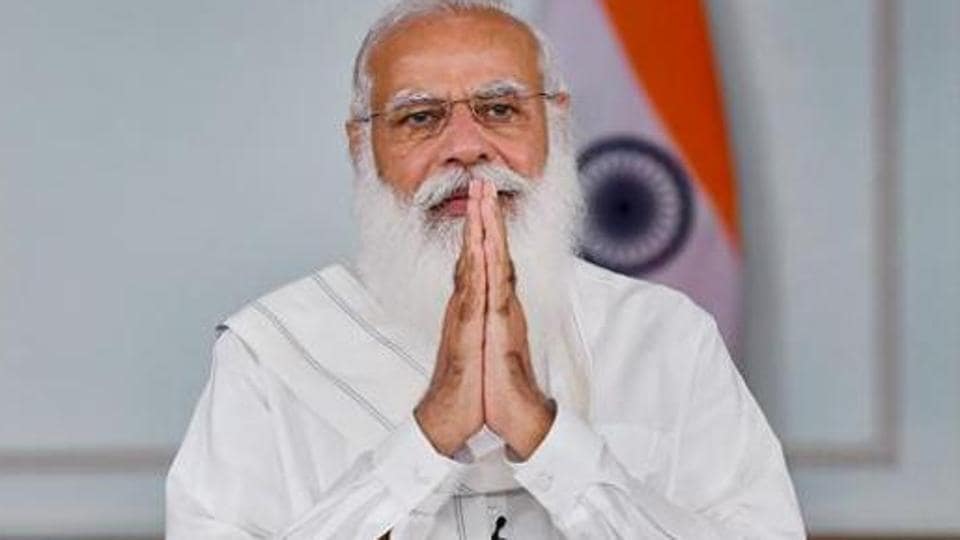
Modi interacted with chief ministers of Tamil Nadu, Andhra Pradesh, Karnataka, Odisha, Maharashtra and Kerala, and said that the visible trend of increase in new Covid-19 cases Maharashtra and Kerala was a cause for concern.
He pointed out that similar trends were seen in January-February before the second wave hit the country.
“…all of us are at a point where apprehensions of the third wave are continuously expressed. Despite experts giving positive signals due to the downward trends increasing number of cases in few states is still worrisome. During the last week, 80% cases as well as 84% unfortunate deaths came from the states present in the meeting. Initially experts believed that states where the second wave originated will see the normalisation first. However, increasing numbers in Kerala and Maharashtra are cause of grave worry,” Modi said.
“…if the cases keep on rising for long time, chances of mutation of the coronavirus will also increase and dangers of new variants will also rise. Therefore, we need to continue with the strategy of Test, Track, Treat and Teeka (vaccination) while putting special focus on micro-containment zones. Districts with large numbers should be focused on…,” the PM added.
With numbers falling for the country’s second wave of infections, the seven-day average of new cases in the country has dropped to 39,112 new cases a day – the lowest in four months, or since mid-March – from a peak of 391,819 infections a day for the week ended May 9.
Union home minister Amit Shah, who was also present during the meeting, mentioned that some of the states whose CMs were in the meeting have high test positivity rates of around 10% or more test positivity rate in some of the districts.
While on average, 2.1% of all samples tested across the country have returned positive for Covid-19, the average positivity rate (a crucial statistic to gauge the outbreak) has been several times higher in many regions such as the northeast, along with states such as Kerala (where this figure was over 10%).
Union health secretary Rajesh Bhushan talked about the need to reinforce Covid-appropriate behaviour and containment measures in the districts that are reporting high caseloads.
Terming vaccine as a strategic tool for high infection areas, the Prime Minister stressed the effective use of vaccination. He assured the chief ministers of all possible help in ensuring successful implementation of not just disease containment measures but also taking forward the Covid-19 vaccination drive, wherever it was required.
CMs ask for more vaccines
The chief ministers of southern states asked the PM to increase vaccine supply to ensure maximum protection for people before the third wave of the pandemic begins.
Kerala chief minister Pinarayi Vijayan said that the state has vaccinated 11.7 million people with the first dose and 4.41 million people with both doses (Kerala’s population is 34.6 million), and no vaccine was wasted. He sought six million more doses to cover a major portion of the population.
He also said Covid-19 situation in Kerala was under control; the second wave started very late, and at one point the state’s test positivity rate went up to 30%, but now was around 10%. The CM said the state’s mortality rate remained the lowest in the country at 0.48%.
Andhra Pradesh chief minister YS Jagan Mohan Reddy said the state had managed reasonably well despite a lack of modern medical facilities. He said the newly setup village/ward secretariats system played a key role in effective containment of Covid-19 and 12 fever surveys helped in containing the spread of the virus in the state.
Karnataka chief minister BS Yeddyurappa urged the PM to provide at least 15 million doses of Covid-19 vaccine to the state every month and said Covid-19 cases in Karnataka now stand at about 1,900 a day, and in Bengaluru at about 400 cases a day.
Tamil Nadu chief minister MK Stalin sought 10 million vaccine doses as a special case and urged the PM to exempt Goods and Services Tax on all goods needed for Covid-19 management.
The demand for vaccines has tremendously increased in Tamil Nadu, Stalin said.
“However, when compared with other states, the allocation for our state is very less. To handle this tough situation, I request a special allocation of one crore (10 million) vaccine doses. I look forward to your support in this important issue,” he said.
The PM assured the state chiefs of all possible help in ensuring successful implementation of not just disease containment measures but also taking forward the Covid-19 vaccination drive.