
 E-Paper



Post lockdown, infiltration dips but smuggling continues across porus Indo-Bangla border
The Indo-Bangladesh border in West Bengal is the longest international border in any state across the country. Out of the 4096.7 km long Indo-Bangla border, West Bengal alone shares 2,216 km with the neighbouring country.


The lockdown may have taken a heavy toll on infiltration attempts across the country’s longest and most porous international border - the Indo-Bangla border in West Bengal – but it hardly seems to have had any effect on smuggling activities.
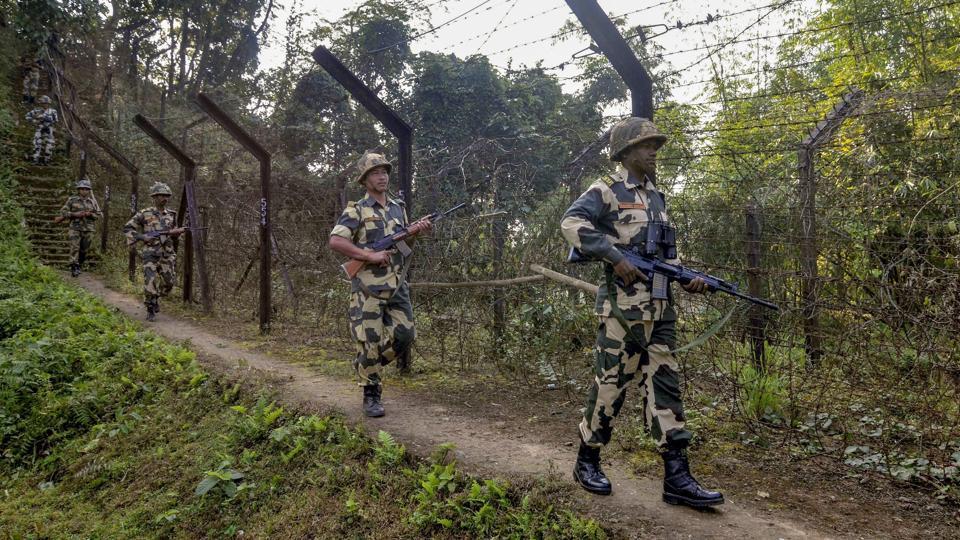
Data shared by the Border Security Force shows that around 20 people were arrested while they were trying to enter India in April and May this year. In 2018 and 2019, the BSF had arrested 314 and 171 people during the same period.
“There was hardly any movement of people in the bordering villages because of the lockdown. Hence it was easier to keep a watch on illegal activities such as infiltration. This has had a negative impact on such cross-border activities,” said SS Guleria, DIG of BSF (South Bengal Frontier).
But when it comes to smuggling, the lockdown seems to have had little effect. This year 82 smugglers were arrested in April and May. In 2019, 85 were arrested. In 2018, the number of arrested smugglers was 28.
The Indo-Bangladesh border in West Bengal is the longest international border in any state across the country. Out of the 4096.7 km long Indo-Bangla border, West Bengal alone shares 2,216 km with the neighbouring country.
Large amounts of narcotics, ganja, phensedyl and FICN have been seized in the last two months compared to the same period of 2018 and 2019.
“Now that infiltration has gone down and so has cattle smuggling, our main focus is on smuggling activities. Huge amounts of contraband have been seized and several people have been arrested in the months of April and May,” Guleria said.
Data shows that while this year more than one kilo of narcotics was seized in April and May, in 2018 there was no seizure. In 2019 only around 100 grams was seized. This year nearly 600 kilos of ganja have been seized compared to around 100 kilos in 2018 and 59 kilos in 2019. Around 9.8 lakh FICN have been seized this April compared to 96,000 in 2019.
BSF officials said that smugglers are resorting to new modus operandi to smuggle contrabands and other items. Patrolling teams have seized at least three consignments in which contrabands were hidden inside cattle carcass. The carcass was found floating down the river.
In south Bengal, the border is more than 900 km long out which nearly 60% is riverine.
“The trend of hiding smuggled items inside cattle carcass is something new. At least three such consignments have been seized. Earlier this week, a carcass was fished out from the river, in which the smugglers had hidden live fish seeds (baby fishes) packed in polythene packets,” said a top BSF official.
The Indo-Bangladesh border, particularly in West Bengal, is also one of the most porous borders. Data placed by the union ministry of home affairs before the Parliament in March 2020 shows that in 2017, 2018 and 2019 security agencies arrested 1175, 1118 and 1351 people along the entire stretch of the Indo-Bangla border in India.
With state-borders sealed, no vehicles, except those carrying essential items, were plying during the lockdown. As a result the supply of smuggled items from other states had almost stopped.
“Whatever is being smuggled now is the backlog which the smugglers had stored before the lockdown. There could be some local production like ganja and narcotics,” he added.


