
 E-Paper



Presidential reference not a review of verdict setting deadlines for governor: Supreme Court
The five-judge bench led by Chief Justice of India Bhushan R Gavai stressed that the presidential reference under Article 143 is “purely advisory” in nature


The judgment in the Tamil Nadu vs Governor case holds no matter what the Supreme Court’s response is to the presidential reference on the powers of governors and the President in granting assent to state bills, according to the constitution bench of the Supreme Court, which is considering the reference.
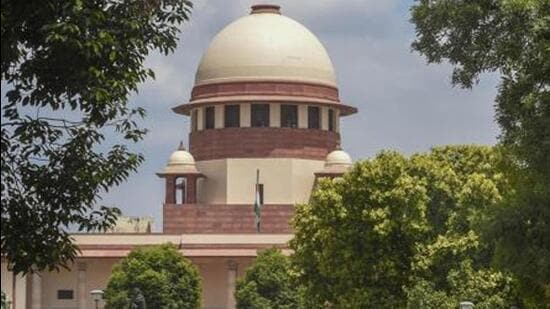
The bench made it clear on Tuesday that it was exercising only its advisory role and not sitting in appeal over the judgment in the Tamil Nadu Governor case, which mandated fixed timelines for Governors and the President to sign off on state bills.
The five-judge bench, headed by Chief Justice of India Bhushan R Gavai, further emphasised that the presidential reference under Article 143 is “purely advisory” in nature, does not bind any authority, and it is ultimately for the President to decide whether to accept the court’s opinion.
“We will be expressing just a view of law, not revisiting the decision in the Tamil Nadu case,” said the bench, also comprising justices Surya Kant, Vikram Nath, PS Narasimha and Atul S Chandurkar. It stressed that under Article 143 the court may clarify whether a judgment lays down the correct law but cannot overrule it.
This clarification came during an exchange with senior advocate Abhishek Manu Singhvi, who argued on behalf of the state of Tamil Nadu that the April 8 verdict by a two-judge bench and the point of law had become inseparably fused, such that any contrary view in the reference would unsettle the decision itself.
The bench, however, responded: “If we accept your views, once a judgment is delivered, everything should stop at that? This is purely advisory and there is nothing mandatory. This has been settled by previous benches as well… We are not deciding the correctness of the Tamil Nadu judgment. We are only going to answer the reference. It is only an opinion and therefore, the question of it having a binding effect on a judgment does not arise.”
The May 13-reference followed the April 8 judgment, which for the first time prescribed a deadline of three months for the president to decide on a bill referred by a governor, and held that a governor must act “forthwith” or within one month on re-enacted bills. If a governor withholds assent or reserves a bill for the president’s consideration, the judgment held, this must be done within three months of its presentation. In that case, which involved 10 pending bills from Tamil Nadu, the court went so far as to invoke Article 142 to hold that the governor’s inaction was “illegal” and the bills would be deemed to have received assent.
The reference asked the court to clarify whether the president and governors must follow judicially prescribed timelines despite the Constitution being silent on such timeframes, and whether such executive actions are justiciable before the courts prior to a bill becoming law.
The first day of the hearing in the reference began with senior advocates KK Venugopal, representing Kerala, and Singhvi, for Tamil Nadu, raising preliminary objections to the maintainability of the reference. They argued that the April 8 judgment had already settled the issues, making it impermissible for the advisory jurisdiction to reopen the matter. “Supreme Court is being asked to sit on judgments already decided… this is wholly outside Article 143,” it was submitted.
The bench, however, questioned whether issues of such constitutional significance ought to have been decided by a larger bench in the first place.
It also appeared to take a favourable view on the very maintainability of the reference, observing that there was “nothing wrong” in the President seeking the court’s opinion on such a matter. Responding to preliminary objections by Kerala and Tamil Nadu, the bench remarked: “When the Hon’ble President is seeking views of this Court, what is wrong in that? Are you really serious about these objections? Do you not think that this objection is hyper-technical? ”
Attorney General R Venkataramani countered the preliminary objections, underscoring that the President is the “master of Article 143” and can legitimately seek guidance where conflicting judgments have created constitutional uncertainty.
“There is no threshold or limitation that the court cannot examine previous rulings. Given the importance of Article 143, the court can even depart from earlier precedents,” he submitted.
Solicitor General Tushar Mehta, representing the Union government, reinforced this view, pointing out that the restriction on revisiting past rulings in a reference was self-imposed and not jurisdictional, citing the 2G Reference as authority for this position.
Mehta added that the present reference raised larger questions of constitutional harmony between the executive and the judiciary. “This is for the first time that the President has felt functional disharmony arises because of the absence of an authoritative pronouncement. There is a constitutional problem when timelines are fixed for another constitutional authority to act,” he argued.
After hearing preliminary objections, the bench heard the AG on the merits of the reference, which raises 14 questions on the scope of the President’s and governors’ powers in dealing with state legislation. After Venkataramani concluded his submissions, SG Mehta commenced his arguments and will continue on Wednesday. The bench has set aside nine days of hearings, starting from August 19 and spreading into September, to conclude the hearing in the reference.
In detailed written submissions for the Union government, SG Mehta cautioned the Supreme Court that imposing fixed timelines on governors and the president to act on state bills would amount to one organ assuming powers not vested in it, upsetting the delicate separation of powers and leading to a “constitutional disorder”. The Centre has further argued that the apex court cannot, even under its extraordinary powers in Article 142, amend the Constitution or defeat the intent of its framers by creating procedural mandates where none exist in the constitutional text. According to SG Mehta, while there may be “limited issues in the operationalisation” of the assent procedure, these cannot justify “relegating the high position of the gubernatorial office to a subservient one”.


