
 E-Paper



‘Prison Induction Document’ can be used for Aadhaar enrolment of inmates: MHA
According to the Prison Statistics India 2021 report published by the National Crime Records Bureau, there are 1,319 prisons in the country with an inmate population of nearly 550,000 as on December 31 last year


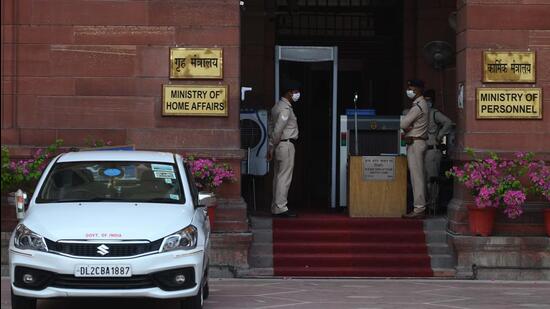
The Union ministry of home affairs (MHA) on Thursday informed all state governments and prison authorities that the ‘Prisoner Induction Document’ (PID), issued by prison authorities, will be accepted as a valid document for the enrolment or update of Aadhaar data of inmates.
It said that the UIDAI (Unique Identification Authority of India) has agreed to accept the PID as a valid document for such enrolments “as a special measure for prison inmates”, and asked the heads of prisons to chalk out a plan to conduct the exercise.
The MHA had mooted the Aadhaar seeding of prisoners in 2017 but it did not take off in the absence of a decision on supporting identification document for prisoners.
“The UIDAI, as part of its endeavour to make available the Aadhaar facility to all eligible residents, has proposed to conduct Aadhaar enrolment/updation camps in all jails of the country for prison inmates,” the MHA said in the communiqué sent to all states, union territories (UTs) and prison heads across the country on Thursday.
“Since Aadhaar enrolment is done on the basis of valid supporting documents, as a special measure for prison inmates, the UIDAI has agreed to accept the ‘Prisoner Induction Document’ (PID) as a valid document for such enrolments. The PID can be generated from e-prison module, and when authenticated by the authorised prison officer with his signatures and seal, it will be accepted by the UIDAI as a valid document for enrolment/update of Aadhaar,” the letter, reviewed by HT, stated.
The ministry has asked states and prison authorities to make use of this special dispensation and instructed them to chalk out a plan to conduct enrolment/updation camps in all prisons, for which they can coordinate with local UIDAI regional offices.
Also Read:MHA seeks separate jail wards for transpersons
The standard operating procedure (SOP) issued by UIDAI in this regard, attached with MHA letter, stated that in case a prisoner’s prison document has multiple aliases, the first name should be recorded and date of birth shall be recorded as declared/approximate.
“No relationship details or C/o field shall be captured as part of the address field. In case the present address and permanent address are available in the document (PID), permanent document shall be captured as address of the resident,” the SOP said.
In an advisory issued in February 2017, the MHA had asked states and prisons to take appropriate steps for Aadhaar seeding of prisoners.
“Considering the fact that 109 crore Aadhaar numbers have been issued, which covers almost 99% of adult population, it has been felt that prison inmates should also be Aadhaar seeded and various aspects of day-to-day prison administration like production before court, return to prison, transport, health facilities, transport to outside hospital, interview, free legal aid, parole, temporary release mechanism, education/vocational training, release from prison etc. be regulated by use of Aadhaar,” the MHA said in 2017.
It further stated, “It will be of immense utility to link the inmates of correctional homes to Aadhaar as this will not only help in efficient handling of prisoners, but will also ensure that the facility does not get misused and that the security of the prisons is not compromised.”
According to the Prison Statistics India 2021 report published by the National Crime Records Bureau (NCRB), there are 1,319 prisons in the country with an inmate population of nearly 550,000 as on December 31 last year.
The overall Aadhaar saturation level in the country has crossed 93%, and in the case of adult population, it is nearly 100%, according to the UIDAI.


