E-Paper



Process itself become the punishment: SC on Zubair
In its 21-page judgment, the bench, which also included justices Surya Kant and AS Bopanna, emphasised that the criminal law and its processes ought not to be instrumentalised as a tool of harassment.

 Prefer HTon Google


Alt News co-founder Mohammed Zubair got “trapped in a vicious cycle of the criminal process where the process has itself become the punishment,” the Supreme Court has said in its judgment while granting interim bail to the fact-checker in the criminal cases registered against him, and added the individuals must not be punished solely on the basis of allegations and without a fair trial.
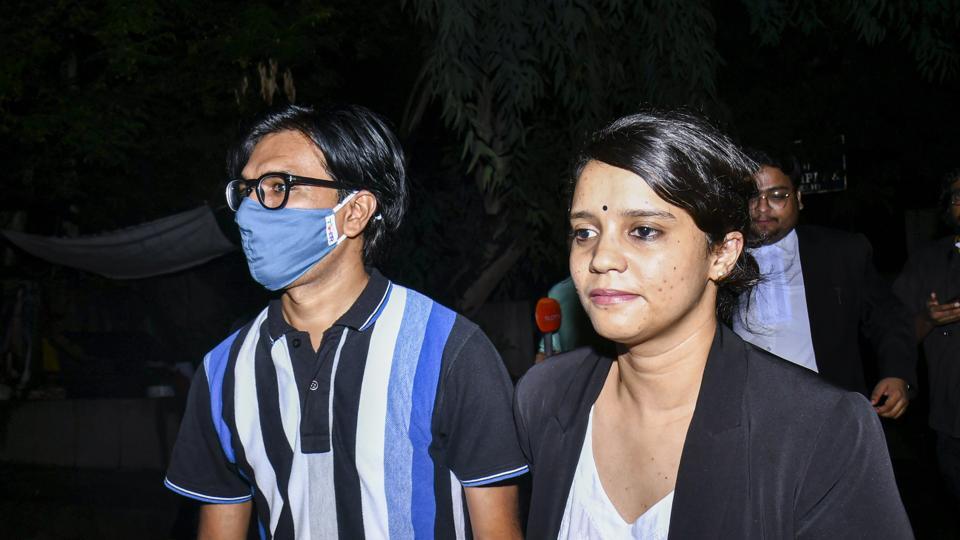
A bench, headed by justice Dhananjaya Y Chandrachud, granted bail to Zubair on July 20 in connection with criminal cases registered against him for his tweets that allegedly offended religious sentiments and incited people. He was behind bars since June 27.
The judgment was, however, released on Monday, in which the apex court gave detailed reasonings and rued how the machinery of criminal justice was relentlessly employed against Zubair, even though the subject matter of the FIRs (his tweets) were either the same or similar.
In its 21-page judgment, the bench, which also included justices Surya Kant and AS Bopanna, emphasised that the criminal law and its processes ought not to be instrumentalised as a tool of harassment.
“Arrest is not meant to be and must not be used as a punitive tool because it results in one of the gravest possible consequences emanating from criminal law — the loss of personal liberty. Individuals must not be punished solely on the basis of allegations, and without a fair trial. When the power to arrest is exercised without application of mind and without due regard to the law, it amounts to an abuse of power,” held the court.
Shooting down the Uttar Pradesh government’s plea to restrain Zubair from tweeting or using social media while on bail, the bench pointed out that such a gag order will not only have “a chilling effect on the freedom of speech” but it will also mean stopping Zubair from expressing an opinion that he is rightfully entitled to hold as an active participating citizen. There are seven FIRs against Zubair in UP alone.
“According to the petitioner (Zubair), he is a journalist who is the co-founder of a fact checking website and he uses Twitter as a medium of communication to dispel false news and misinformation in this age of morphed images, clickbait, and tailored videos. Passing an order restricting him from posting on social media would amount to an unjustified violation of the freedom of speech and expression, and the freedom to practice his profession,” it said.
The court regretted the failure of the investigating agencies to adhere to the guidelines enunciated by the Supreme Court in a raft of judgments and Section 41 in the Criminal Procedure Code (CrPC) that underlines that procedure to be followed by the police before ascertaining the necessity to make arrests.
“Section 41 of the CrPC as well as the safeguards in criminal law exist in recognition of the reality that any criminal proceeding almost inevitably involves the might of the state, with unlimited resources at its disposal, against a lone individual... Police officers have a duty to apply their mind to the case before them and ensure that the conditions in Section 41 are met before they conduct an arrest,” it pointed out.
In terms of Section 41 of the CrPC, the bench noted, the police officer in question must be satisfied that the arrest is necessary to prevent the accused from committing any further offence; for proper investigation of the offence; to prevent the arrestee from tampering with or destroying evidence; to prevent them from influencing or intimidating potential witnesses; or when it is not possible to ensure their presence in court without arresting them.
The court stressed that the power of the police to arrest individuals is “not unbridled” and that it must be guided by the principles evolved through a body of court judgments.
On July 20, the court had granted interim bail to the fact-checker in seven criminal cases registered against him in UP and ordered his immediate release from jail. Zubair, who was behind bars since June 27, was released later that evening.
There is “absolutely no justification” to subject Zubair to endless custody for his tweets, the court said on July 20 while adding that the power of arrest must be used sparingly by investigating agencies.
Clubbing and transferring all the seven first information reports (FIRs) against Zubair from Uttar Pradesh to Delhi where the special cell of Delhi Police is already carrying out a thorough investigation into all his tweets and financial dealings, the bench added that Zubair will be entitled to automatic bail in relation to all such future FIRs as well.
There are two FIRs against Zubair in Hathras, and one each in Sitapur, Lakhimpur Kheri, Ghaziabad, Muzaffarnagar and Chandoli (the latest one) in connection with his tweets, which allegedly promoted enmity between communities and offended religious sentiments. He was arrested by the Delhi Police on June 27 under similar charges for a 2018 tweet. He was granted bail in the Delhi case on July 15 but remained behind bars due to other FIRs in UP.
While he was given an interim bail in the Sitapur FIR by the Supreme Court on July 8, he approached the top court again on July 14 with a plea to either quash the FIRs in UP or club all of them with the FIR at Delhi to avoid multiplicity of proceedings and prolonged detention. In the meantime, the fact-checker sought interim bail in the UP cases. When this petition was taken up by the court on July 18, it directed the UP police not to arrest Zubair in any fresh case until the court examines his plea in detail.
Two days later, the bench ordered for Zubair’s immediate release while also shooting down a plea by UP’s additional advocate general Garima Prashad to restrain Zubair from posting any further tweets as a condition of his bail. Stressing that the facts of the case required a “consolidated investigation” by one agency, the bench rejected UP government’s argument that Zubair should be reverted to jurisdictional courts to pursue his remedy.
In its order on July 20, the bench further gave Zubair the liberty to approach the Delhi high court with his plea for quashing the FIRs in the wake of his averment that his tweets make out no offence under the law and that his arrest is an attempt to stifle his right to free speech and dissent. It added that Zubair can move the Delhi high court either by filing a writ petition or an appropriate plea under the Criminal Procedure Code for quashing of the FIRs.