E-Paper



Progress made but more to do: UNDP India official on global biodiversity targets
HT’s Jasjeev Gandhiok spoke to Ruchi Pant, head, Natural Resource Management and Biodiversity Conservation, UNDP India, on the key outcomes expected from talks

 Prefer HTon Google


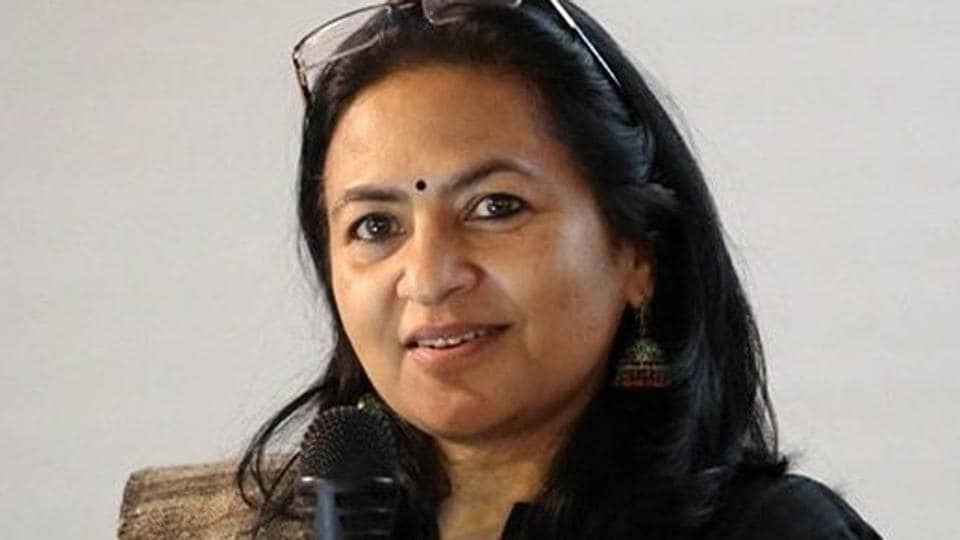
The United Nations (UN) biodiversity Conference of the Parties (COP)17 in Yerevan, Armenia is set to conclude on October 30 and the ongoing talks remain crucial for taking forward the global biodiversity framework and its targets, ahead of COP31 in Türkiye next month. Against this backdrop, HT’s Jasjeev Gandhiok spoke to Ruchi Pant, head, Natural Resource Management and Biodiversity Conservation, UNDP India, on the key outcomes expected from the talks and what it means for India.
At COP17, as the world takes stock of progress towards the 2030 global biodiversity targets, are we doing enough, and what needs to change?
COP17 is an important opportunity to take stock of global progress towards the 23 targets of the Kunming-Montreal Global Biodiversity Framework (KMGBF). India submitted its seventh national report earlier this year, which helps us see where we stand, identify the gaps and focus on areas where action needs to speed up. India was also among the first countries to submit its updated National Biodiversity Strategy and Action Plan (NBSAP) at COP16, with its endorsement by all 24 line ministries giving a strong foundation for collective action in its implementation.
Also Read: COP17: Global progress on biodiversity targets to be assessed ahead of COP31
Progress has been made, but more needs to be done. Two areas need strengthening. First, convergence. Ministries, departments and other stakeholders need to work together so that coordinated decisions turn into biodiversity-positive action on the ground.
Second is finance. BIOFIN – UNDP’s Global flagship programme on Biodiversity Finance, has estimated a funding gap of USD 6.5 billion (2019) for implementing the NBSAP.
On convergence, UNDP and the World Bank are supporting the government through the CONSERVE project, funded by the Global Biodiversity Framework Fund, where a national biodiversity data portal is being set up that brings together data spread across ministries and stakeholders, helping track progress against NBSAP targets. A management information system on Key Biodiversity Areas, ecological corridors and critical ecosystems is also being developed, at the national level and across select pilot states. It will serve as a decision-support tool, helping central and state governments mainstream biodiversity into land-use, spatial and sectoral development planning.
Is the world doing enough to finance biodiversity conservation, and how can we make such investments more attractive?
Financing remains a challenge for biodiversity conservation. An Intergovernmental Science-Policy Platform on Biodiversity and Ecosystem Services (IPBES) assessment from 2024 estimated the annual global biodiversity financing gap at USD 598–824 billion. Bridging this gap will require greater investment from public and private sources, alongside innovative financing mechanisms that make nature-positive investments more attractive.
Also Read:Climate-linked heat deaths rise 36% since Paris Agreement; India also affected: Lancet
In India, BIOFIN is supporting the government in updating the Biodiversity Finance Plan. The plan will help demonstrate innovative finance solutions to close India’s funding gap for implementing the NBSAP, by encouraging nature-positive investments. The private sector is a key part of this. Customised proposals are being developed with companies, based on their location, resources and preferences, and NGOs are being identified to help implement these initiatives. The proposals will be listed on the National Biodiversity Authority’s website so companies can choose projects and partners.
How can conservation move beyond protected areas to safeguard entire landscapes and the species that depend on them?
Conservation has to be planned at the landscape level, not only inside protected areas. Target 3 of the KMGBF and India’s NBSAP supports this through Other Effective Area-Based Conservation Measures (OECMs), which recognise areas outside protected areas that effectively conserve biodiversity.
While India has already reported 27% of its total area under the protected area network in its sixth National Report to the CBD Secretariat in 2019 , to meet its 30 x 30 target (protect at least 30% of its terrestrial, inland water, and coastal areas by 2030) India is considering exploring the potential of OECMs to bridge the gap. Guidelines for identifying potential OECMs have been developed, and a national advisory committee has been set up to guide the operationalisation of the OECM guidelines. At the same time, communities will also have a role.
What does it take to ensure that conservation delivers tangible benefits for local communities, particularly women and tribal communities?
Conservation must deliver for both people and nature. Local communities, especially women and tribal communities, must have a say in how natural resources are managed and how conservation benefits are shared.
Community-led action is an important part of this approach. Under Operational Phase 7 of India’s GEF Small Grants Programme, supported by UNDP, women accounted for over 60% of the more than 20 million people that were reached. Sustainable livelihoods are equally important. Ultimately, lasting conservation depends on community ownership, women’s leadership and local capacity to manage natural resources over time.
Can international biodiversity partnerships deliver conservation outcomes at the scale needed to protect threatened species?
Yes. Threatened species and their habitats do not stop at national borders, so international partnerships are essential to protect them at scale. The India-led International Big Cat Alliance gives countries a focused platform for species-specific conservation, including big cats.
Also Read:If we treat climate as business opportunity, we can find ways to grow: CEEW’s new CEO
These partnerships can be strengthened through knowledge hubs that share best practices with other range countries, developing innovative financial mechanisms, supporting country-specific conservation through local community stewardship, and mobilising additional resources so that successful small-scale efforts can be taken to scale.
Small wild cats are also part of this growing cooperation. Under UNDP’s ongoing GEF-funded Small Wild Cats project, India is strengthening cooperation with Nepal and Bhutan across shared landscapes.