
 E-Paper



Publish West Bengal lists even after cut-off: SC to EC
Over 250 district and additional district judges are currently dealing with nearly five million claims and objections under the special intensive revision.

 Prefer HTon Google


The Supreme Court on Tuesday invoked its special powers under Article 142 of the Constitution and directed the Election Commission of India (ECI) to continue publishing supplementary voter lists even after the final electoral roll is notified on February 28 for West Bengal, in an extraordinary move to ensure that no voter is disenfranchised ahead of assembly elections, which are now likely to be marginally delayed.
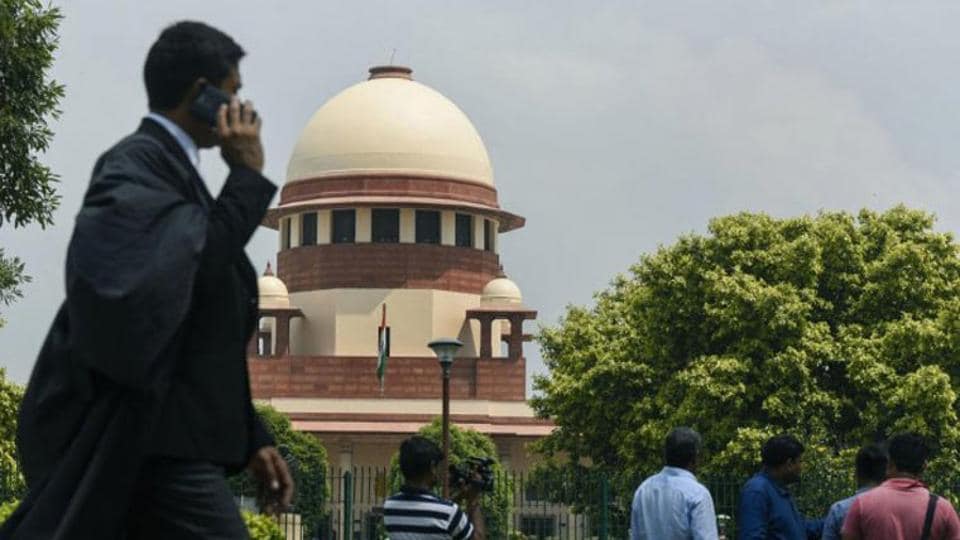

A bench comprising Chief Justice of India Surya Kant, and justices Joymalya Bagchi and Vipul M Pancholi, also permitted the chief justice of the Calcutta high court to draw additional judicial manpower from Jharkhand and Odisha high courts to complete the exercise “on a war footing”.
The unprecedented decisions came after the chief justice of the Calcutta high court noted that approximately eight million cases, falling under categories such as “logical discrepancies” and “unmapped category”, required adjudication. Over 250 district and additional district judges are currently dealing with nearly five million claims and objections under the special intensive revision (SIR).
Even if each judicial officer were to dispose of 250 cases daily, the exercise would take around 80 days -- far beyond the February 28 deadline, the court noted.
The scale of the pending work under the controversial process now poses a serious challenge in holding assembly elections in the eastern state alongside four other regions – Tamil Nadu, Kerala, Assam and Puducherry – as was the case over the past 20 years.
The term of the Bengal assembly expires on May 7, leaving little time for ECI to hold multi-stage polls – the state voted in eight phases in 2021 and seven in 2016 – in the sensitive state. Moreover, it remains unclear till when supplementary lists will continue to be published, and whether it will continue during the campaign process and polling day. Already, election officials have indicated that the appraisal of security requirements – usually done weeks before a poll is announced – is delayed on account of the protracted SIR.
Bengal is one of 12 regions where SIR was announced last November but the process has been dogged by mounting political controversy and confrontation between the state government and ECI, prompting the top court earlier this month to deploy serving and retired district judges to oversee pending SIR work.
On Tuesday, the SC bench clarified that electors included in such supplementary lists will be deemed part of the final roll published on February 28.
“The last date of electoral roll verification is February 28. However, if the verification exercise remains incomplete as on February 28, the ECI may publish the final list followed by supplementary final lists. Such supplements shall be published on a continuous basis as soon as the pending exercise is complete in respect of all such cases. We deem it appropriate to invoke our power under Article 142 and declare that voters enlisted in the supplementary lists shall be considered to be a part of the final list published on February 28,” the bench ordered.
Article 142 is a unique constitutional power vested exclusively in the Supreme Court, enabling it to pass any order necessary to “do complete justice” in a cause or matter before it.
The court said the direction was necessary to ensure the “fairness of the process” while simultaneously preserving the “purity and sanctity of the electoral roll.”
By invoking Article 142, the court effectively neutralised the rigid statutory timeline, which ordinarily bars inclusion if an application is made less than 10 clear days before nominations to enable verification of claims. Tuesday’s order, however, ensures that this procedural constraint does not disenfranchise otherwise eligible voters.
The bench also considered the “self-speaking” communication dated February 22 from the chief justice of the Calcutta high court, detailing the scale of the verification exercise. In addition to civil judges (senior and junior division) with at least three years’ experience, the apex court authorised the Calcutta high court chief justice to approach the chief justices of neighbouring states, including Jharkhand high court and Orissa high court, to spare serving and retired judicial officers for the task.
“Their travelling, board and other ancillary expenditure will be borne by the ECI. Chief justices of Jharkhand and Orissa high courts are requested to sympathetically and urgently consider the request made,” the bench directed.
The court also clarified that verification would be confined to documents specified in ECI’s October 27, 2025 notification commencing the special intensive revision (SIR) and 11 documents originally allowed, read with earlier Supreme Court orders permitting Aadhaar, Class 10 admit cards and certificates as proof of identity. All such documents, whether electronically updated or physically submitted on or before February 14, are to be duly considered.
It further placed the responsibility squarely on electoral registration officers (EROs) and assistant EROs to satisfy the presiding judicial officers regarding the validity of documents.
During the hearing, senior advocate and Trinamool Congress lawmaker Kalyan Banerjee pointed out that the last date for inclusion of voters is seven days before nomination, as per the existing election rules.
The bench responded: “We will exercise our repository power to relate it back,” signalling that the Article 142 declaration would ensure that voters added through supplementary lists are not excluded from the electoral process.
Senior advocates Kapil Sibal, Shyam Divan, Gopal Sankaranarayanan, Menaka Guruswamy and Banerjee appeared for the petitioners that included West Bengal chief minister Mamata Banerjee and several TMC leaders, while senior advocate Dama Seshadri Naidu represented ECI.
When Naidu submitted that it was unclear how many voters might still come forward, the bench remarked, “You have taken an inquisitorial exercise and an adjudicatory exercise…we are not concerned with how many voters come forward but with the fairness of the process.”
The court emphasised that concerns on both sides -- allegations of wrongful deletions and apprehensions of bogus entries -- were equally important. “We have to work out the best possible way forward. Concerns on both sides are equally important. We have to ensure the purity and sanctity of the electoral roll,” said the bench.
The latest directions build upon the court’s February 20 order, when it first directed deployment of serving and retired district judges in West Bengal to adjudicate disputed voter claims in what it termed an “extraordinary situation.”
At the heart of the controversy is the SIR exercise undertaken by ECI, in which nearly 13.6 million electors in the state were flagged under “logical discrepancies”, including mismatches in age gaps, family mapping anomalies and inconsistencies with older rolls. The draft roll released in December dropped 5.89 million names.
The bench had earlier described the situation as an “unfortunate blame game” between the Trinamool Congress-led state government and ECI, pointing to a “trust deficit” between the two constitutional functionaries.



