
 E-Paper



Quad summit announced, to be held after Australian elections in May
Recognising the centrality of ASEAN, the Quad countries have intensified engagement with Indonesia as it controls all the ingress routes to South China Sea - from Malacca Straits near Andamans to Ombai-Wetar near Timor.

 Prefer HTon Google


With US President Joe Biden accepting Japanese Prime Minister Kishida Fumio’s invitation to visit Tokyo in the first half of 2022 on Friday, the Quad summit is expected to take place in May with free and open Indo-Pacific, Covid-19 response, climate, clean energy, and infrastructure on the agenda. The last Quad summit was held on September 24, 2021, in Washington.
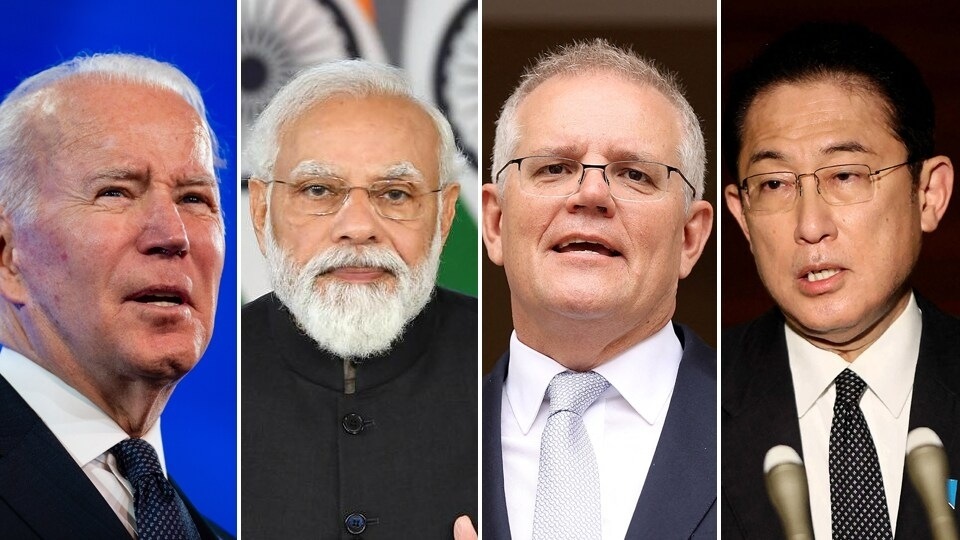
According to officials in knowledge of the matter, the Quad summit has been announced but will take place only after the Australian general elections in May. Formal invites will be sent by Japan only after the dates convenient to all are finalised. A meeting of Quad foreign ministers and sherpas is also likely to set up the agenda for the summit.
The meeting of Quad security grouping comes at a time when erstwhile Cold War powers US and Russia are locked on Ukraine, Shia Houthis in Yemen have targeted Sunni UAE with armed drones and China is eyeing Taiwan while building fortress Tibet and Sinkiang through massive Sinicization campaign.
While US President Biden accepted Kishida’s invitation for attending the Quad summit, the big takeaways from the virtual summit was that Washington encouraged increase in Japanese defence spending, vowed to protect Senkaku Islands from Chinese aggression and agreed to work with other pacific partners like Australia, France and New Zealand for humanitarian disaster relief work.
Both US and Japan have agreed on a economic dialogue in two plus two format with focus on building global supply chains not dependent on China. This decision to intensify economic cooperation in the Indo-Pacific also dovetails into the Quad's vision for alternate supply chains with both Prime Minister Narendra Modi and Australian Prime Minister Scott Morrison facing adverse trade relations with China on account of mounting trade deficit and high tariff sanctions respectively.
While there will be no further admission into Quad grouping, all the participating countries recognise the centrality of ASEAN countries in tackling Indo-Pacific and intensification of engagement with Indonesia has already begun in a bid for an open Indo-Pacific. This is because all the ingress routes to South China Sea are under Indonesian jurisdiction - from Malacca Strait to Ombai-Wetar strait near Timor in far Pacific.
The Modi government is already engaging Indonesia as it is in proximity to Andamans and Nicobar Islands and there is discussion on New Delhi supplying Jakarta with BrahMos supersonic land attack missiles after Manila.


