
 E-Paper



Make competency certificate must for staffers working on signalling systems: CRS
CRS AM Chowdhary recommended that a competency certificate, issued after rigorous practical training, should be required for people carrying out signalling modification work

 Prefer HTon Google


NEW DELHI: Only railway officials who have a competency certificate in signalling systems should be allowed to carry out signalling modification work, commissioner of railway safety (CRS) AM Chowdhary has said in his report into the June 2 collision between Coromandel Express and a goods train in Odisha’s Balasore.
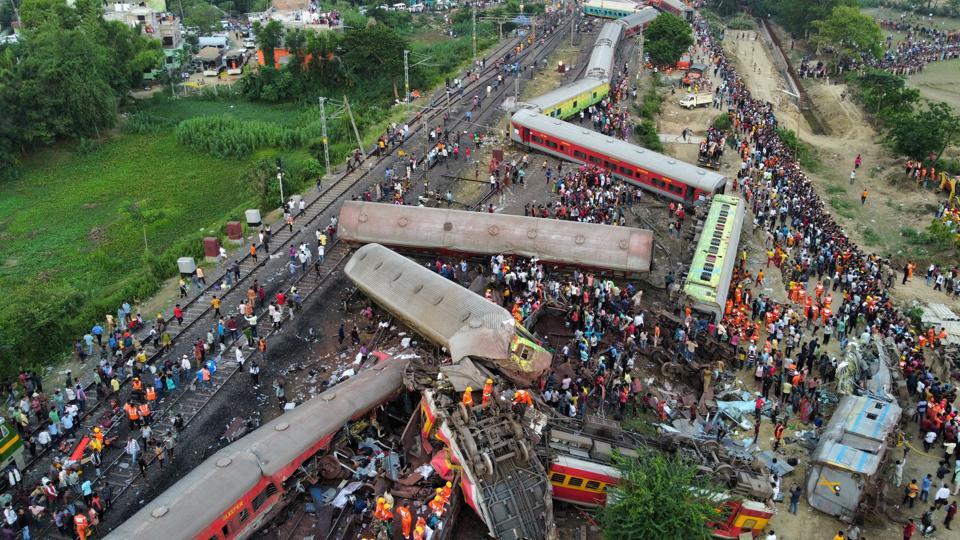
The report blamed the accident, the deadliest in three decades, on faulty signalling due to two botched repair works; one in 2018 and the second hours before the accident.
Chowdhary recommended that a competency certificate, issued after rigorous practical training, should be required for people carrying out signalling modification work after his investigation revealed multiple lapses in the signalling and telecommunication department led to the collision.
“A competency certificate should be issued after rigorous practical training for carrying out signalling modification works. Both the execution and checking & testing of signalling modification works should be done by staff in possession of this competency certificate,” the CRS report said.
Chowdhary’s probe was the main investigation by the railways into the accident that killed 293 people. The Central Bureau of Investigation (CBI) is carrying out a criminal investigation into the accident after the Coromandel Express was sent onto a line with a parked goods train, which it rammed into at the speed of 128 km/hr.
The CRS investigation linked the accident to botched repair work in 2018 including cable faults that were fixed but were not marked on a crucial circuit board.
For the future, Chowdhary’s report asked the railways to launch a drive to update and complete the signalling wiring diagrams, other documents and lettering of signalling circuits on site.
Also, it said station masters should be made aware of possible faulty conditions of the electronic interlocking (EI) system that could be detected through indications on the panel. ‘..these should also be listed and incorporated with a diagram of station working,’ it said.
“As a long-term measure, signalling functions/ gears should be directly connected to El, through OFC (optical fibre communications, which every zonal railway has installed in remote locations inside railway tracks), eliminating intermediate relays.”
Chowdhary’s report stressed officials following standard practices for carrying out signalling-modification work. It said before taking up modification of the existing signalling circuits, officials should carry out functional tests of the existing circuits, under alteration, to ensure that actual circuits are in accordance with the completed drawings.
“It is also learnt… that there was a similar incident of mismatch between the intended route set by signals, and actual route taken by train, on 16.05.2022, at BKNM (Bankranayabaz) station in
Kharagpur Division of South Eastern Railway, on account of wrong wiring and cable fault,” said the report.
It added that the June 2 tragedy could have potentially been avoided had the repeated glitches with the local signalling system been flagged, which could have led the signalling and track staff to trace the mistake that was made in 2018.
To be sure, the report dated June 29, is yet to be accepted by the railways, which may accept or reject the findings or see a re-investigation.
The CRS said that any alteration to signalling circuits should be carried out with an approved circuit diagram, and in the presence of an officer. He also suggested the deployment of a separate team for checking and testing modified signalling circuits and functions before restoration/ reconnection of the work.


