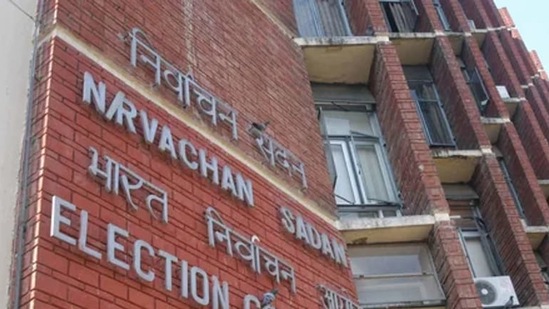
The Election Commission on Thursday announced schedule for elections to the Rajya Sabha, the Upper House of Parliament, for five states and the Union territory of Puducherry. Except for Puducherry, the polling exercise in states will constitute bypolls as members of Parliament (MP) from four states resigned for various reasons while the representative from Maharashtra, Rajeev Satav, passed away in May due to post-Covid complications.
Also Read | Congress MP Rajeev Satav dies of post-Covid complications in Pune
As per the schedule announced by the poll panel, votes for all five states and Puducherry will be cast on October 4. The counting of votes will take place on the same day. The elections were necessitated as the term of N Gokulakrishnan, who represents Puducherry in the Council of States, will end on October 6, while MPs from Assam, Madhya Pradesh, Tamil Nadu (two members) and West Bengal stepped down from their posts.
Among those who resigned, Bengal’s Manas Ranjan Bhunia joined chief minister Mamata Banerjee’s cabinet, while Biswajit Daimary from Assam, who was elected to the House earlier this year, became Speaker of the Assam legislative assembly. In Tamil Nadu, KP Munusamy and R Vaithilingam, were elected as members of the Tamil Nadu assembly. Finally, from Madhya Pradesh, former Union minister Thawarchand Gehlot was appointed as the governor of Karnataka by president Ram Nath Kovind.
Also Read | Union minister Thaawarchand Gehlot appointed Karnataka Governor, says will live up to expectations
{{/usCountry}}Also Read | Union minister Thaawarchand Gehlot appointed Karnataka Governor, says will live up to expectations
{{/usCountry}}The detailed schedule for the elections can be accessed on the Election Commission’s website or by clicking here and here. However, it is to be noted that the schedule is same for all four states and UT of Puducherry.
The Rajya Sabha, which is also called the House of elders, has a maximum strength of 245, of whom 233 members are elected and 12 are nominated by the president of India. They serve a term of six years each. The Upper House is different from the Lok Sabha in that MPs are not elected directly by voters, but by elected members of state legislative assemblies. Also, unlike the Lower House, the Rajya Sabha is never dissolved as one-third members retire after every two years and polling is held to fill up the vacancies.