
 E-Paper



RBI slashes policy rate by 50 bps to accelerate growth
RBI cuts policy rate by 50 bps to 5.5%, aiming to boost growth amid low inflation. Expectations rise for improved domestic investment and consumption.


Singles would have done the job, but the Reserve Bank of India decided to hit a six while chasing its monetary easing target .
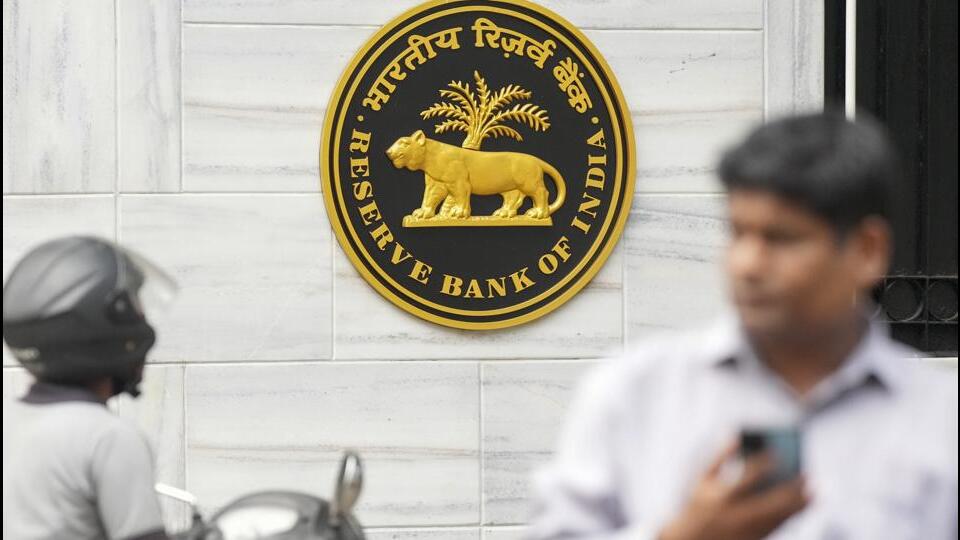
By announcing a higher-than-expected policy rate cut of 50 basis points to 5.5% along with a percentage point reduction in the Cash Reserve Ratio (to be implemented in a staggered manner) it has thrown the proverbial kitchen sink at the growth challenge.
There are now various possible upsides to domestic growth. If the banks also expedite the transmission of interest rate cuts from RBI, mortgage payments could fall and cushion household budgets. This will add to the disposable income tailwinds from the upwards revision in income tax slabs, which have kicked in from April. A good monsoon is expected to boost rural incomes. That all this is happening in what is expected to be a benign inflationary environment – 2025-26’s inflation forecast has been brought down from 4% to 3.7% -- only makes things better. The quarterly inflation projections beginning June 2024 are 2.9%, 3.4%, 3.9% and 4.4%.
The policy rate in this case is the repo rate at which the RBI lends money to banks, making it the anchor of all other interest rates in the economy. CRR is the mandated share of deposits which banks have to keep in cash, either themselves or with the RBI. A reduction in CRR, therefore, frees more money for credit creation (roughly ₹2.5 lakh crore in this case). After Friday’s decision, the MPC has already reduced the repo rate by a percentage point in this easing cycle of five months, taking it to the lowest level since August 2022 when it was 5.4%.
The rationale for the aggressive action came from RBI governor Sanjay Malhotra . “I must also add that while price stability is a necessary condition, it is not sufficient to ensure growth. A supportive policy environment is vital”, he said in unambiguous terms in his post-MPC written statement.
The message behind the action was best described by Madhavi Arora, lead economist at Emkay Global. “ RBI appears to have front-loaded all policy actions, be it higher-than-expected rate cuts or infusing durable albeit staggered liquidity via lower CRRs. All of that now implies that the ball is in the banks’ court to transmit easier financial conditions faster,” she said.
“It is imperative to continue to stimulate domestic private consumption and investment through policy levers to step up the growth momentum. This changed growth-inflation dynamics calls for not only continuing with the policy easing but also frontloading the rate cuts to support growth. Accordingly, the MPC voted to reduce the policy repo rate by 50 basis points to 5.50 per cent”, the Governor said in his statement while adding that there would likely be no more rate cuts in the immediate future.
“After having reduced the policy repo rate by 100 bps in quick succession since February 2025, under the current circumstances, monetary policy is left with very limited space to support growth. Hence, the MPC also decided to change the stance from accommodative to neutral”, governor Malhotra added.
All of this raises the hope that the Indian economy could finally see its private investment cycle getting kick-started. Stock markets cheered this possibility, closing 0.9% higher than Thursday, making it the best inter-day gain since May 23.
To be sure, RBI does not expect the economy to do better than its April projection of 6.5%. The quarterly growth projections now stand at 6.5%, 6.7%, 6.6% and 6.3% respectively. But Friday’s measures could have compensated for persisting, and perhaps strengthening headwinds to economic growth from the ongoing international turbulence.
That RBI’s decision came a day after the public spat between US President Donald Trump and Elon Musk – the two have gone from being friends to enemies over Trump’s fiscal plans – only underlines the volatility of the global economic environment, even as the government tries to work multiple trade deals including with the US to ensure or at least preserve gains from the export front.
However, what RBI is underlining, more emphatically than it has done in the recent past, are the strong structural foundations of the Indian economy.
Governor Malhotra spoke about a 5x3x3 matrix of fundamentals to highlight the relative advantage of the Indian economy vis-à-vis its peers. The matrix includes strong balance sheets in five sectors, corporates, banks, households, government and the external sector; stability on three fronts, price, financial and political; and investment opportunities through three Ds, demography, digitalisation and domestic demand. This matrix, the Governor said “provides the necessary core strength to cushion the Indian economy against global spillovers and propel it to grow at a faster pace”.
To be sure, the Indian economy has struggled to find its private investment mojo despite larger macroeconomic stability even as dissipating pent-up demand after the pandemic and a peak in government capex has led to a loss of growth momentum. India’s GDP growth came down from 9.2% in 2023-24 to 6.5% in 2024-25, showing a significant loss of growth momentum even though India continued to be the fastest growing major economy in the world and expected to become the world’s fourth largest by the end of this fiscal year.
“We had been forecasting 75bp in rate cuts over the June, August and December meetings, of which 50bps has now been done. We forecast a pause in the August and October meetings, but hold on to our final rate cut call of 25bp in the December meeting, taking the repo rate to 5.25%,” said Pranjul Bhandari, chief India economist at HSBC.
“This is predicated on our view that growth in FY26 will be lower than RBI’s 6.5% forecast,” she added.


