
 E-Paper



RCS-Udan completes 6 years; at least 10.6 million people travelled by air
Launched in 2016, the UDAN scheme aims to fulfil the aspirations of the common man with advanced aviation infrastructure and air connectivity in Category II and III cities. The airports under UDAN also include eight heliports and two water aerodromes.

 Prefer HTon Google


At least 10.6 million passengers travelled by air under the government’s ambitious Regional Connectivity Scheme-Udey Desh ka Aam Naagarik (RCS-UDAN), which completed six years on Friday, according to the Union civil aviation ministry data.
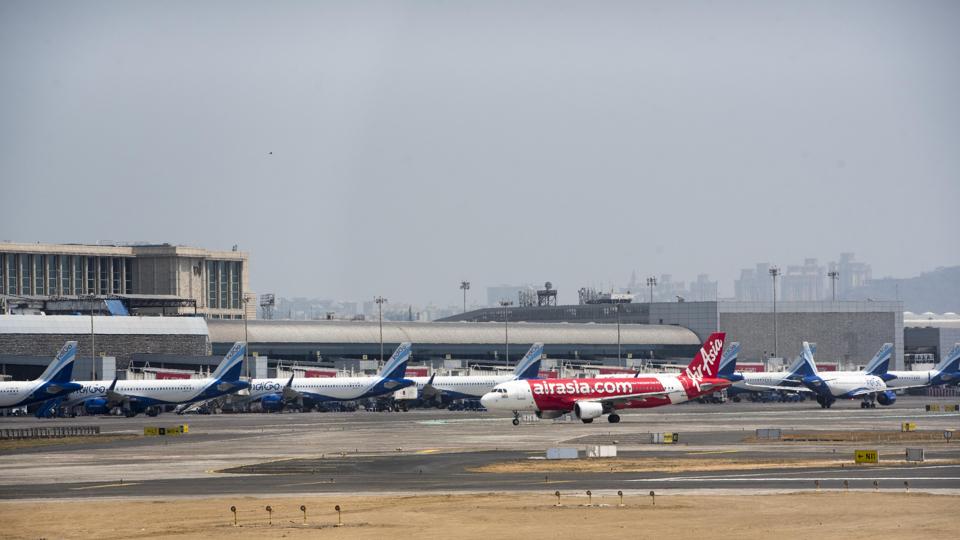
India operated 203,679 flights under UDAN from 70 regional airports on 439 routes, according to the ministry data. “Eleven airlines currently operate under this scheme,” a ministry official said.
Launched in 2016, the UDAN scheme aims to fulfil the aspirations of the common man with advanced aviation infrastructure and air connectivity in Category II and III cities. The airports under UDAN also include eight heliports and two water aerodromes.
Also Read| Domestic flight tickets get costlier amid festive season
“Civil aviation is not for a chosen few, it must be for the common man,” Union civil aviation minister Jyotiraditya Scindia had said earlier this week. “There have been constant efforts from the government to develop infrastructure in smaller cities.”
Elaborating the achievements under the scheme, Scindia had further said: “India today has 70 regional airports under the UDAN scheme and many passengers who could not have even dreamt of travelling by air have been able to make air travel under this scheme.”
RCS-UDAN was formulated based on the review of the National Civil Aviation Policy (NCAP)-2016 and it was planned to remain in force for a period of 10 years. It has a self-financing mechanism with the development of Regional Connectivity Fund (RCF).
Under this scheme, RCF covers the Viability Gap Funding (VGF) requirements through a levy on certain domestic flights. This way, the fund generated by the sector also stimulates the growth and development of the sector.
Experts, however, said the government should now focus on making the scheme profitable for the airlines for the future of UDAN.
“The major concern in strengthening the UDAN scheme is that Air India is not represented in the regional market. As the largest regional carrier, Alliance Air is no longer a part of Air India, and it has impacted seamless connectivity from Tier 2 and Tier 3 cities to metros and international destinations,” said CS Subbiah, former chief executive officer (CEO), Alliance Air.
“For example, Jabalpur is no longer on the map of Air India. In 2020, Alliance Air used to offer 61 destinations as part of Air India. The presence of Air India in regional markets is crucial for further success of UDAN and connectivity from international destinations,” he added.
He also pointed out that SpiceJet’s Q400 aircraft has recently come under the scanner of aviation authorities over safety concerns.
“It recently pulled out its flight to Pakyong, which was the only commercial flight to Sikkim,” he said, adding that IndiGo also does not seem to be adding more ATR aircraft for flying to smaller cities.
“It is time for the government to focus on strengthening and consolidating the existing UDAN infrastructure (airports and navigation), and work on extending the subsidy to support the routes that are currently not viable to the operators after they complete their initial three-year period,” he said. “The next phase could be extending the coverage to newer cities.”
Prof GK Chaukiyal, head of academics at Rajiv Gandhi National Aviation University, Amethi, said many unused airstrips of the world war time can be given to international aircraft leasing companies at concessional rates.
To make the scheme more feasible and reduce airlines’ cost, Chaukiyal, the former head of RCS-UDAN with Airports Authority of India, said, “Excise duty on air turbine fuel (ATF) can be reduced for the airlines for all non-UDAN operations too.”
“In fact, the government should bring the ATF under GST provisions to reduce airline costs,” he added.


