
 E-Paper



‘Ready for talks’: Maoists respond to Baghel’s dialogue offer, then list conditions
Chief minister Bhupesh Baghel offered to hold talks with Maoist leaders during a visit to the Kondagaon district of Bastar division on April 8 if they express faith in the Constitution.

 Prefer HTon Google


RAIPUR: Maoists in Chhattisgarh have responded to chief minister Bhupesh Baghel’s offer to hold talks to end violence in , saying they were also ready for dialogue but the government should first release their jailed leaders and withdraw security forces deployed in the Bastar region for anti-Maoist operations.
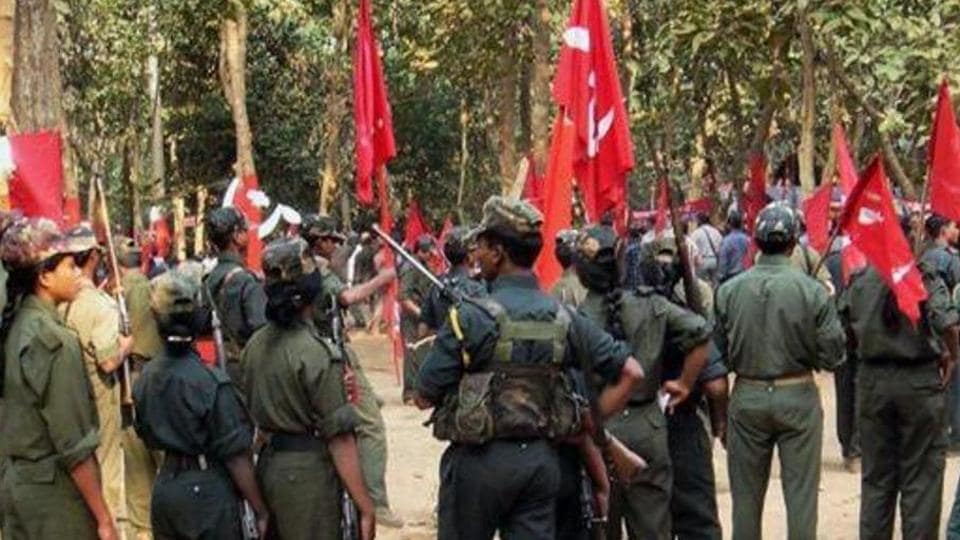
The Maoist statement purportedly issued on Friday by Vikalp, spokesperson of the Maoists’ Dandakaranya Special Zonal Committee (DKSZC), also ran down Bhupesh Baghel’s call for peace in Chhattisgarh as nothing but “an attempt to mislead the public and malign the Maoists. It added that there was what it described as a “larger conspiracy” behind Baghel’s peace overtures.
Baghel offered to hold talks with Maoist leaders during a visit to the Kondagaon district of Bastar division on April 8, saying that the state government was ready to hold talks if Maoists express their faith in the Constitution.
On Saturday, Baghel responded to the Maoist statement, underlining that his government is ready for talks with Maoists on any platform if they express their faith in the Constitution.
The Maoist statement, which has been circulating on social media, also alleged that on one hand, the state government was talking about peace and dialogue, and on the other, security forces were conducting airstrikes in the jungles of Bijapur and Sukma.
This is not the first time that the Maoists have accused the government of carrying out aerial strikes; the allegation has been consistently denied. Last month, the Maoists claimed that security forces conducted airstrikes using drones to target their hideouts in south Bastar. Police officers call it Maoist propaganda.
“We are always ready for the talks provided that in order to create a ‘conducive environment for talks, the restrictions imposed on Maoists are removed,” the Maoist statement said, a reference to the Centre’s 2009 decision to designate the CPI (Maoist) as a terrorist organisation under the Unlawful Activities (Prevention) Act.
The Maoists also demanded the withdrawal of forces from strife-torn areas and the release of their jailed leaders for peace talks.
Inspector-General of Police, Bastar range, Sunderaj P, said security personnel deployed in Bastar were committed to ensuring the safety of the native population
“We came across a press release issued by the spokesperson of Maoists …Police and security personnel deployed in Bastar are always committed to the safety and security of lives and properties of the native population. In spite of uncountable martyrdom and unexplainable hardship, we uphold the democratic values in this part of the country. Decision with regard to peace talks with Maoists is to be taken by the state government. Establishing peace and order in Bastar would be in the best interest of all the stakeholders,” said the IG.
-kW0H-U20214218012MgB-250x250%40HT-Web.jpg)


