
 E-Paper



Rely on Constitution for social, economic justice: SC judges
The event was attended by Supreme Court judges KV Viswanathan, Ujjal Bhuyan and PB Varale, along with Delhi high court judges and former Supreme court judges

 Prefer HTon Google


While constitutional courts have used articles 32 and 226 (both relating to power of courts to enforce fundamental rights) to render transformative justice, there was need to introspect as questions can be raised on priorities of courts when a petition by a business house is entertained at the cost of a poor prisoner seeking premature release, two judges of the Supreme Court said on Monday.
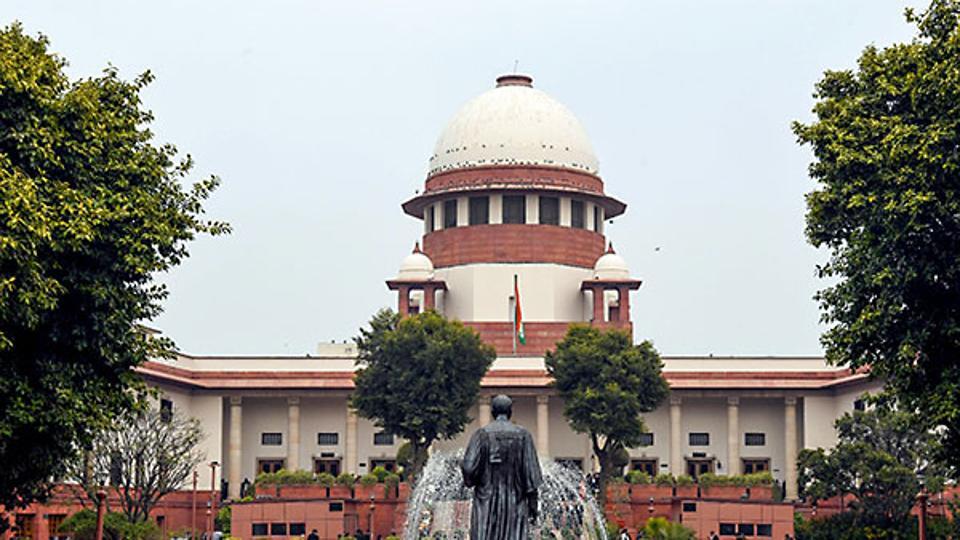
Speaking at a lecture series organised in memory of BR Ambedkar, the architect of the Constitution, justices BR Gavai and AS Oka spoke on the topic “Article 32: History and the Future” and said the Constitution should be used as a weapon achieve social and economic justice and fulfil the dream of our founding fathers.
“In the last 75 years, articles 32 and 226 have been used by the Supreme Court and high courts for achieving transformative justice,” said justice Gavai, who hails from the scheduled caste community and is in line to be become the chief justice of India in May next year. He listed out a string of cases decided by the courts under article 32 to expand the fundamental rights of citizens in the Constitution to include right to education, right to food, potable water, clean environment, and dignity of life.
He emphasised the importance of judicial remedies, described by Ambedkar as the “soul” of the Constitution and said, “The credit of origin of Article 32 goes to BR Ambedkar...The journey of Article 32 has been in furtherance of the dream of our Constitution makers to use Constitution as a weapon to achieve social and economic justice and to end inequalities in the society.”
Justice Oka addressed the issue of article 32 from a practical perspective. “On completing 75 years of independence, we must have a debate on enforcement of fundamental rights by courts,” he said. “This is the time to introspect... Under Article 32, if we start giving priority to cases of business houses, questions will be raised.”
Without citing any specific case or instance, he said, “If there is a powerful businessman, he will be backed by powerful lawyers to argue how a case under article 32 is made out. This consumes a lot of time of the courts. When this happens, look at the plight of other litigants, including prisoners denied premature release. They must wait in the long queue for justice. Can we actually devote time meant for entertaining genuine article 32 petitions by entertaining petitions by businessmen.”
A concept note shared with him by organisers Society for Constitution and Social Democracy and the Leaflet news portal raised this issue on whether any circumstances are spelt out for entertaining petitions under article 32, how the jurisdiction under article 32 differs from article 226 and what explains selective hearing of some cases under this provision by the top court.
“We are not living in an ideal world. The pendency of cases in Supreme Court is about 80,000. It is not merely a constitutional court but an appellate court. 25% of cases listed on a Monday or Friday are appeals against refusal to grant bail. In our legal system, there are victims where a small man is fighting for years for getting a small piece of land. These are some facts that force us to send people to high courts,” justice Oka said. “We must fix priorities faced with such mounting arrears.”
He did not support the idea of having a uniform approach by all judges in exercising powers under article 32 and said any attempt to limit this power was also not advisable. “If there is a uniform approach, will such approach not compromise on judicial discretion? It is because of different opinions (that) we are able to develop our constitutional law,” he opined.
“Parliament can bring a law conferring article 32 jurisdiction on high courts if it feels the Supreme Court is overburdened. This solution is provided under clause 3 of article 32 itself,” said Justice Oka, who came to the apex court from the Bombay high court. “If we lay down any guidelines, we will be curtailing our own jurisdiction. It is a highly debatable area and needs to be debated by scholars, jurists, members of the bar and human rights activists.”
The event was attended by Supreme Court judges KV Viswanathan, Ujjal Bhuyan and PB Varale, along with Delhi high court judges and former Supreme court judges.


