
 E-Paper



This Indian city ranked as the world's most polluted. It's not New Delhi
Delhi remains the most polluted capital city globally, while India ranked fifth in 2024, down from third in 2023.

 Prefer HTon Google


A new report on air quality released on Tuesday has painted a grim picture for India as 13 of the world's top 20 most-polluted cities are within the country's borders.
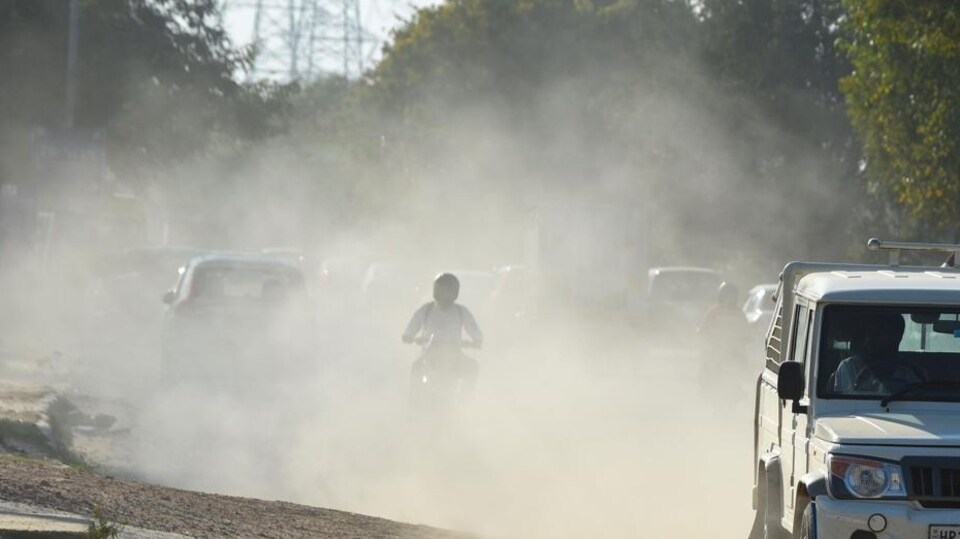
The World Air Quality Report 2024 by Swiss air quality technology company IQAir has picked Byrnihat in Assam as the most polluted city in the world. Delhi remains the most polluted capital city globally, while India ranked fifth in 2024, down from third in 2023.
According to the report, the country saw a 7 per cent decline in PM2.5 concentrations in 2024, averaging 50.6 micrograms per cubic metre, compared to 54.4 micrograms per cubic metre in 2023. With all those improvements, six of the world's 10 most polluted cities are still in India.
Delhi recorded consistently high pollution levels, with an annual average PM2.5 concentration of 91.6 micrograms per cubic metre, nearly unchanged from 92.7 micrograms per cubic metre in 2023.
The 13 Indian cities in the world's top 20 most polluted cities are Byrnihat in Assam, Delhi, Mullanpur in Punjab, Faridabad, Loni, New Delhi, Gurugram, Ganganagar, Greater Noida, Bhiwadi, Muzaffarnagar, Hanumangarh and Noida.
While India is fifth in the pollution rankings, the other four countries are Chad, Bangladesh, Pakistan, and the Democratic Republic of Congo.
Overall, 35 per cent of the Indian cities reported annual PM2.5 levels exceeding 10 times the WHO limit of 5 micrograms per cubic metre.
Air pollution remains a serious health risk in India, reducing life expectancy by an estimated 5.2 years.
Air pollution risks in India
According to another study published last year, about 1.5 million deaths in India every year from 2009 to 2019 were potentially linked to long-term exposure to PM2.5 pollution. The stats were given by the Lancet Planetary Health study.
PM2.5 refers to tiny air pollution particles smaller than 2.5 microns, which can enter the lungs and bloodstream, leading to breathing problems, heart disease and even cancer. Sources include vehicle exhaust, industrial emissions and the burning of wood or crop waste.
Former WHO chief scientist and health ministry advisor Soumya Swaminathan said India has made progress in air quality data collection but lacks sufficient action.
"We have the data; now we need action. Some solutions are easy like replacing biomass with LPG. India already has a scheme for this, but we must further subsidize additional cylinders. The first cylinder is free, but the poorest families, especially women, should receive higher subsidies. This will improve their health and reduce outdoor air pollution," she told PTI in an interview.
Swaminathan batted for expanding public transport and imposing fines on certain cars in cities. According to her, a mix of incentives and penalties is necessary.
"Finally, strict enforcement of emission laws is crucial. Industries and construction sites must comply with regulations and install equipment to cut emissions instead of taking shortcuts," the former director general of the Indian Council of Medical Research added.


