E-Paper



Restrictions on Bihu celebrations irks performers in Assam
Several performers have expressed reservations against the fresh set of guidelines imposed on matters ranging from timings to dress worn by performers and the fee charged by them.


Bohag Bihu, Assam’s biggest festival, which marks the start of the Assamese calendar year, is just three weeks away, but it has been caught in a swirl of controversy over restrictions imposed by a top committee.
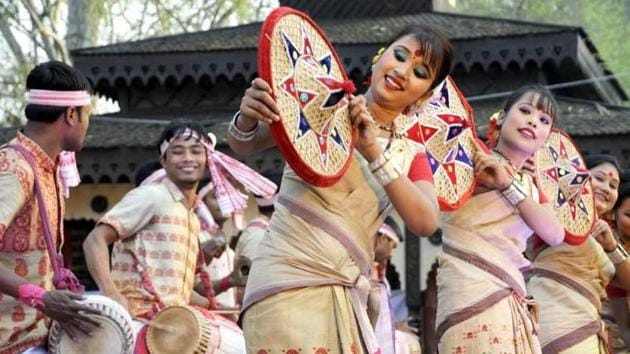
Several performers have expressed reservations against the fresh set of guidelines imposed by All Assam Bihu Sanmilani Samannayrakshi Samiti (AABSSS), the apex body of Bihu committees across Assam, on Sunday on matters ranging from timings to dress worn by performers and the fee charged by them.
Like previous years, AABSSS wants functions to end by midnight, performers to wear traditional or decent clothes, refrain from charging heavy fees and end Bihu celebrations within the month of Bohag.
“Bihu is our identity. It shouldn’t be made into an industry. Ours is just an appeal to make the festival stick to tradition,” said Ranjan Bora, working president of AABSSS.
Beginning on the first day of Bohag month (on April 14), over 2,000 Bihu functions are held across the state.
AABSSS is trying to unify all the events and bring in some uniformity in celebrations.
The festival, which also marks the onset of spring, used to be celebrated with Bihu songs and dances in fields and courtyards. But over the past decades, celebrations have shifted to stages and many feel it is losing its traditional charm.
Last year, Zubeen Garg, Assam’s versatile singer-composer-actor was banned from performing during Bihu in some places after he reportedly refused to wear ‘dhoti’, the traditional male garment, during his shows.
Following past instances of some singers performing under influence of liquor and an ongoing debate on lyrics and music videos getting raunchy, artists are also requested not to indulge in unruly behaviour or sing vulgar songs.
“We are Assamese and Bihu is in our blood. We don’t need any committee to tell us how we should perform or dress. They should not interfere,” said popular singer Baboo.
While some performers are okay with the timing of functions and conditions on attire, most are unhappy with the request to reduce fees. Some artists who are in demand are known to charge fees to the tune of several lakhs for each show.
Although it couldn’t be verified, Zubeen is believed to charge around Rs 6 lakh while Nahid Afrin, who was in the news recently for an alleged ‘fatwa’ against her, is said to get around Rs 3 lakh.
“Bihu committees organise functions with funds collected from public. Since demonetisation has affected their collections, artists are requested to reduce their fees, if possible,” Bora said.
Bihu celebrations, which last nearly a month, is the prime source of earning for singers, and since each performer is accompanied by a troupe, performers say the price they charge is justified.
“It is wrong to ask performers to lower their fees. The decision should be left to individual Bihu committees, if they want a particular artist and can afford, they should be allowed,” said singer-actress Parineeta Borthakur.
Based in Mumbai, Parineeta, who has been part of both Assamese and Hindi films and also appeared in several Hindi soaps, wants the conditions on traditional dress to be applicable for male performers as well.
“I would wear ‘mekhela-chador’ (traditional dress worn by Assamese women). Dress is a matter of personal choice, so it shouldn’t be imposed,” she said.
There was also a suggestion that performers should submit the list of songs they would sing, but AABSSS decided to do away with that following resentment from artists.
And while there is no blanket ban on singing Hindi songs, performers from Assam are expected to stick to languages spoken in the state or region. Troupes from other parts can sing in their own languages.