E-Paper



Rich vs poor rift now spills over to key nature talks
Union Environment Minister, Bhupender Yadav will reach Montreal on Friday and lead the Indian delegation through the last leg of negotiations next week. India is all for a new fund, an official said.

 Prefer HTon Google


Biodiversity talks (COP15) in Montreal came to a near halt before resuming gradually on Wednesday night. On Tuesday night, several countries from the global South including India, Indonesia, and some South American countries walked out of the negotiations after developed nations said they could only commit to discussing funding modalities of the Global Biodiversity Framework (GBF) for the period until 2030, during the next UN Biodiversity Conference (COP16) in 2024.
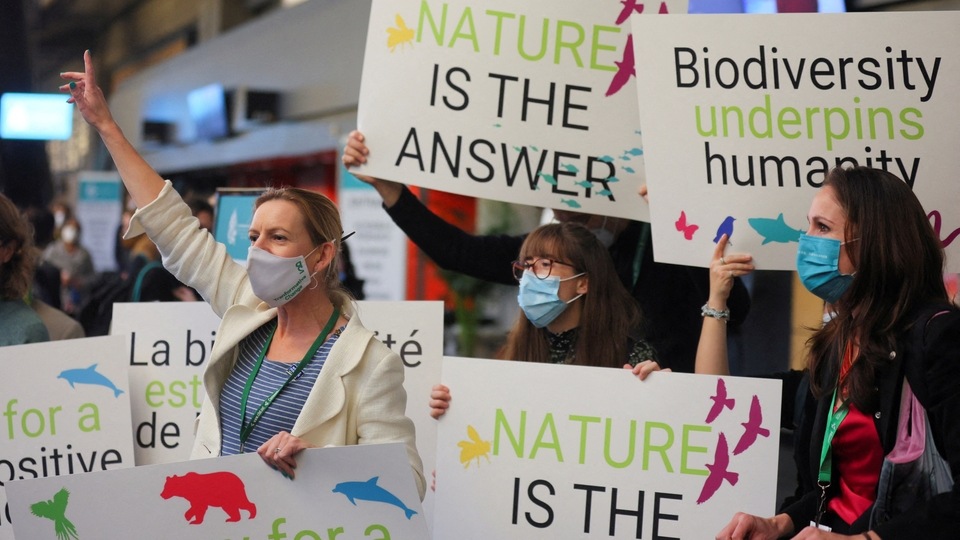
Union Environment Minister, Bhupender Yadav will reach Montreal on Friday and lead the Indian delegation through the last leg of negotiations next week.
India is all for a new fund, an official said.
“India is in favour of creation of a new fund under section 20 and 21 of the convention on Biological Diversity. India believes this should be in addition to the existing financial facilities,” a senior official from the union environment ministry said on Thursday, asking not to be named.
Also Read | India to focus on ‘harmony with nature’ at COP15
But there are some problems with what developed countries want.
“ This additional fund can be from developed countries, benefit from Digital Sequence Information sharing, private firm’s contribution etc; India does not agree that reduction of subsidies should be mentioned as a source of biodiversity related funding,” the official added. India and some countries have also raised a red flag on stopping certain subsidies to agriculture and fisheries sectors.
Digital sequence information is an emerging aspect of synthetic biology which involves certain functional genetic sequences being shared, according to GRUR International - Journal of European and International IP Law.
Also Read | World's 10 most groundbreaking conservation efforts. India's 'Namami Gange' is…
“COP 15 is finalizing the Global Biodiversity Framework (GBF) which is an action-oriented plan up to 2030. There are 22 targets in GBF. India, in principle, agrees to GBF, but has a few concerns which are under negotiation,” the official said.
For example, many countries are of the opinion that the loss of intact ecosystems and high biodiversity rich areas should be brought as close to zero as possible. India, on its part, is opposed to the use of word “as close to zero as possible” and has urged for its deletion.
India has argued that it is not allowing land use change within protected areas. “However, in extreme circumstances, such as land use for strategic infrastructure, land use change is allowed to the minimum extent possible after rigorous scrutiny at local, regional and national levels,” the official added, explaining India’s position.
The Global Biodiversity Framework calls upon member countries to protect 30% combined land and sea for biodiversity conservation. However, countries , including those that are part of the European Union are in favour of targeting 30% land and 30% sea, separately. That’s a problem for India, the official said. “India has an extensive coastline and it will be difficult to achieve the target if 30% of sea area has to be conserved.”
GBF urges for reduction of pollution from all sources by half by 2031. In principle, India has agreed to this target of reducing pollution. “However we do not agree to committing to the numerical value of reducing pollution by half. In principle, India again agrees to judicious use of pesticides and reducing highly hazardous chemicals. However, India does not agree to commit to the numerical value of reductions,” the official added.
Talks on eliminating environmentally harmful subsidies have also remained stalled. According to some observers, Brazil, Argentina, Indonesia, Japan and India objected to the use of the word “eliminate” in that goal.
“Majority of the rural population in India is dependent on agriculture and allied sectors and the Government of India provides a variety of subsidies, including seed, fertilizer, irrigation, power, export, credit, agriculture equipment, agriculture infrastructure for supporting the livelihoods of farmers mainly, small and marginal. Hence, India does not agree to reducing the agriculture related subsidy and redirecting the savings for biodiversity conservation, as there are many other national priorities,” the official explained.
A study commissioned by The B Team and supported by Business for Nature published in February said the world is spending at least $1.8 trillion a year, equivalent to 2% of global GDP, on subsidies that are driving the destruction of ecosystems and species extinction in sectors such as agriculture, construction, fisheries etc. According to a newsletter by Greenhouse, an environmental communications organisation on Wednesday, developing countries put forward two proposals: on Global Environment Facility (GEF) reform and a new fund for resource mobilization (to implement the GBF). In response, developed countries said they could only commit to talking about funding modalities at COP16, and the negotiations collapsed with several global south countries walking out late in the night.
“Developing countries are demanding to be heard. They want a serious discussion about finance to implement the global biodiversity framework. There can’t be biodiversity justice without solidarity. And for the past week they have been ignored by rich nations. So, they rallied together and left the negotiations on resource mobilization and that forced a heads of delegation meeting with the Presidency (China). Finance negotiations resumed tonight (Wednesday night). But the tension is palpable,” said Eddy Perez, a climate diplomacy specialist with Climate Action Network Canada.
Oscar Soria, campaign director of advocacy group, Avaaz tweeted on Thursday: “Over and over, in private conversations with delegates, from the Global South and the Global North (even including the EU), we hear that France was blocking compromises, and single-handedly preventing the #EuropeanUnion from building bridges with developing countries”.
COP15, the Convention on Biological Diversity (CBD) started on December 7 in Montreal, Canada. Over 10,000 delegates, including official representatives of 196 countries are participating in the negotiations, which Elizabeth Maruma Mrema, executive secretary of the CBD, described to be the “Paris moment for nature,” alluding to the landmark 2015 Paris climate pact where all countries unanimously agreed to limit global temperature rise within 2 degrees Celsius compared with pre-industrial times and make efforts to keep it within 1.5 degrees. The main objective of COP15 is to adopt an ambitious global biodiversity framework. The framework will replace the Aichi Biodiversity Targets, which expired in 2020 and were considered to be a failure by many experts. There are 22 targets that countries will implement under the framework. Some of the contentious issues to be negotiated for the framework are the target to protect 30% of land and sea areas by 2030; review and monitoring of implementation of targets under the framework; and how funding will be mobilised for developing nations to achieve these targets.
In 2020, scientists sounded an alarm on the ongoing sixth mass extinction, which can lead to a complete collapse of humanity’s life support systems.