E-Paper



Rights of persons with disabilities a landmark Supreme Court verdict
The ruling highlighted the principle of reasonable accommodation and also elucidated the importance of equality.

 Prefer HTon Google


The Supreme Court ruling on Tuesday (October 15) reaffirmed the right to educational opportunities for individuals with disabilities, rejecting rigid, blanket standards that could potentially bar candidates from admission based solely on disability levels.
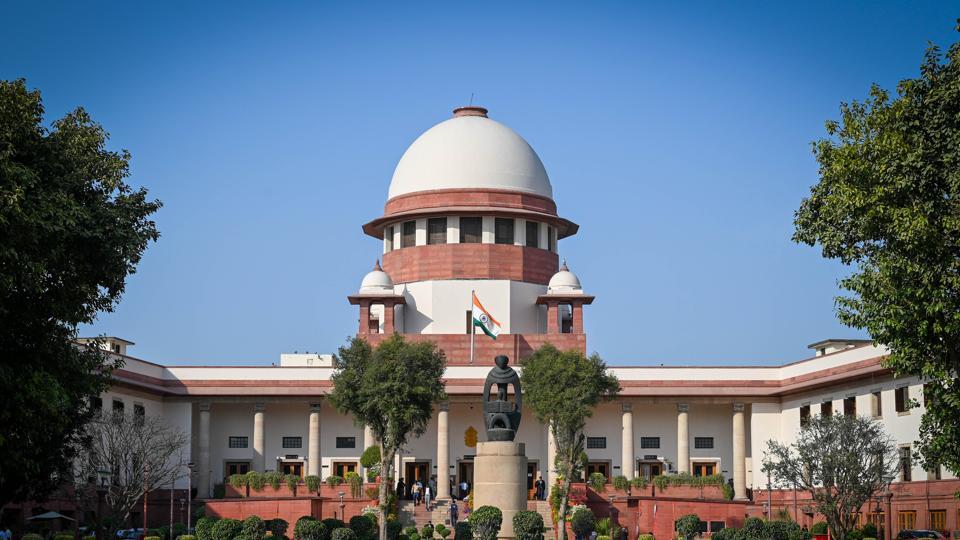
The judgment emphasised the positive obligations of the state, educational institutions and other bodies to create an enabling environment for persons with disabilities (PwD).
The bench, comprising justices Bhushan R Gavai, Aravind Kumar and KV Viswanathan, also clarified that benchmarks alone should not automatically exclude individuals from eligibility in educational programmes. The ruling directed that disability assessment boards must go beyond a mere percentage threshold of disability and assess the extent to which a specific disability may impact an individual’s ability to pursue a course or career. This approach ensures a more nuanced and individualised evaluation, which aligns with the goals of the Rights of Persons with Disabilities (RPwD) Act, 2016.
This judgment has far-reaching implications for educational and regulatory frameworks, encouraging a progressive shift and ensuring that institutions assess candidates based on their potential rather than their limitations. The ruling not only highlighted the principle of reasonable accommodation but also elucidated the importance of equality and inclusive education in achieving an accessible society.
Understanding reasonable accommodation:
The 2016 RPwD Act, which aligns with the United Nations Convention on the Rights of Persons with Disabilities, aims to promote, protect, and ensure the full and equal enjoyment of rights and freedoms for PwD. The Act is comprehensive, covering areas such as healthcare, education, employment, and accessibility to public spaces, with a particular focus on reasonable accommodation.
In the context of disability rights, reasonable accommodation refers to the necessary and appropriate modifications and adjustments, made without undue burden, to ensure that PwD can participate fully and equally in society. The 2016 Act defines reasonable accommodation under Section 2(y), requiring modifications that enable PwD to exercise their rights alongside non-disabled peers.
The Supreme Court’s recent judgment drew from the Vikash Kumar Vs UPSC (2021) case, which held that reasonable accommodation captures the State’s duty to provide additional support to PwD. The court underscored that reasonable accommodation should not be limited to physical aids or tangible support; rather, it should include structural adjustments that enable PwD to engage meaningfully in social, educational, and professional contexts.
In the ruling, the Supreme Court also referenced Lord Denning’s statement that laws should be interpreted in a way that supports their intended purpose. For reasonable accommodation, this means a flexible approach that respects the inherent dignity of PwD . This holistic understanding of reasonable accommodation stressed the importance of individualized assessment and support, moving beyond a “one-size-fits-all” approach.
The ruling built on several pivotal Supreme Court cases, notably State of Gujarat Vs Ambica Mills (1974), which addressed over-inclusive classifications, and Ravinder Kumar Dhariwal (2023), which critiqued a one-size-fits-all approach to disability. These precedents align with the apex court’s current stance on the need for contextual and individualised assessments of disabilities, rather than a monolithic approach.
It highlighted that reasonable accommodation should not be understood narrowly to mean only the provision of assisting devices and other tangible substances which will aid persons with disabilities. “If the mandate of the law is to ensure a full and effective participation of persons with disabilities in the society and if the whole idea was to exclude conditions that prevent their full and effective participation as equal members of society, a broad interpretation of the concept of reasonable accommodation which will further the objective of the RPwD Act and Article 41 of the Directive Principles of State Policy is mandated,” it underscored.
The principle of equality and its relevance to disability rights:
Central to the Court’s judgment is the principle of equality, particularly as enshrined in Article 14 of the Indian Constitution, which guarantees equality before the law. Equality for PwD, the bench held, is not just about preventing discrimination, but about ensuring positive action and support that allows for full participation in all aspects of life.
It relied on the top court’s previous judgment in Jeeja Ghosh & Anr Vs Union of India & Ors (2016) which articulated that equality implies more than non-discrimination. It involves actively removing societal barriers and creating conditions that enable PwD to enjoy opportunities on an equal footing. “Equality not only implies preventing discrimination (example, the protection of individuals against unfavourable treatment by introducing anti-discrimination laws), but goes beyond in remedying discrimination against groups suffering systematic discrimination in society. In concrete terms, it means embracing the notion of positive rights, affirmative action and reasonable accommodation,” the judgment held.
Rejecting “facial equality” in matters involving PwD, the top court asserted that courts are obliged to probe as to whether beneath the veneer of equality there is any invidious breach of Article 14. It cited Khandige Sham Bhat and Anr vs. Agricultural Income-tax Officer, Kasaragod, and Anr (1963) to note: “Though a law ex facie appears to treat all that fall within a class alike, if in effect it operates unevenly on persons or property similarly situated, it may be said that the law offends the equality clause.”
In the ruling, the Supreme Court furthered this understanding by emphasising that equality demands sensitivity and flexibility, particularly in the educational context. The bench highlighted that disability assessment boards should not rely on rigid thresholds, which may inadvertently deny PwD their right to education and professional development.
The importance of inclusive education in fostering equal opportunity:
The judgment, penned by justice Viswanathan, also elaborated on the role of inclusive education -- a cornerstone of the RPwD Act. Inclusive education, as defined by Section 2(m) of the Act, refers to a system where students with and without disabilities learn together, with adjustments made to accommodate diverse learning needs. The court stressed that inclusive education is essential for PwD to achieve social and economic inclusion and participate effectively in society.
Referring to the Avni Prakash Vs National Testing Agency (2023) case which recognised that an inclusive educational environment is vital to the realisation of the right to education, the court declared that mere existence of benchmark disability cannot disqualify a candidate from being eligible for the course applied for.
This approach reflects a paradigm shift, moving from mere integration to a more inclusive, adaptive system that respects each individual’s unique abilities and challenges.
While the court acknowledged the barriers that exist in implementing inclusive education, such as inadequate resources and infrastructure, it also highlighted the legal and moral imperative to remove these barriers.
“The approach of the government, instrumentalities of states, regulatory bodies and for that matter even private sector should be, as to how best can one accommodate and grant the opportunity to the candidates with disability. The approach should not be as to how best to disqualify the candidates and make it difficult for them to pursue and realize their educational goals,” it noted. The ruling encouraged educational institutions to provide reasonable accommodations, such as assistive technology, modified curricula and flexible examination methods.
A step towards an inclusive society:
This judgment has far-reaching implications for educational and regulatory frameworks in the country as it directed regulatory bodies, like NMC, to revise regulations that automatically exclude individuals with certain disabilities. The decision encourages a progressive shift, ensuring that institutions assess candidates based on their potential rather than their limitations. This could pave the way for new policies that champion inclusivity, aligning India’s educational standards with international disability rights norms.
Simultaneously, the implications of this judgment may extend beyond educational institutions in establishing a broader framework for interpreting disability rights and setting a precedent for other sectors, such as employment, healthcare and public services. By emphasising individualised assessments over rigid benchmarks, the ruling acknowledged that disability is not a uniform experience and that each individual may require different forms of support.
This judgment underlined the positive obligations of the state, educational institutions, and other bodies to create an enabling environment for PwD, thereby fostering their full and effective participation in society.
The ruling could serve as a guiding principle for policy reform, encouraging public and private sectors to adopt more inclusive practices. For educational institutions, this could mean increased funding and resources for assistive technologies, accessible infrastructure, and training programmes to build awareness and competency in inclusive education.
It cited the 2014 judgment in Sunanda Bhandare Foundation Vs Union of India wherein the top court called for a proactive approach in addressing the needs of PwD, emphasizing that the government and society must adopt a relief-oriented, supportive attitude towards disability accommodations. “In the matters of providing relief to those who are differently abled, the approach and attitude of the executive must be liberal and relief oriented and not obstructive or lethargic,” this judgment stated.
The Supreme Court’s ruling on reasonable accommodation marks a significant milestone in India’s journey towards inclusivity and equality for persons with disabilities. By interpreting the RPwD Act in a way that promotes a flexible, supportive approach, the top court has reinforced the importance of individualised support and an inclusive educational framework. This judgment lays the foundation for a more compassionate society that respects the inherent dignity and autonomy of every individual, recognising that disability rights are, fundamentally, human rights.