E-Paper



RTI doesn’t apply to collegium’s discussions: Supreme Court
The Right To Information (RTI) Act is not applicable to discussions of the collegium, the Supreme Court said in a ruling on Friday.

 Prefer HTon Google


The Right To Information (RTI) Act is not applicable to discussions of the collegium, the Supreme Court said in a ruling on Friday, adding that only a resolution drawn and signed by all the judges in the collegium can be said to be the final decision, open for public to know.
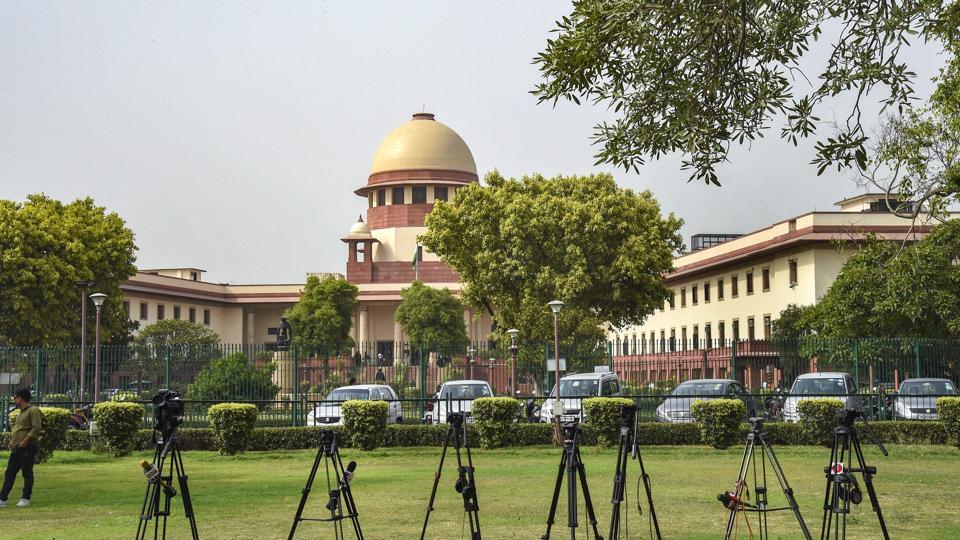
“Whatever is discussed shall not be in the public domain. As per the Resolution dated October 3, 2017, only the final resolution and the final decision is required to be uploaded on the Supreme Court’s website,” held a bench of justices MR Shah and CT Ravikumar, as it dismissed a petition demanding information about a 2018 collegium meeting under the RTI Act.
The actual resolution passed by the collegium regarding appointment of judges only can be said to be a final decision of the collegium, said the bench, adding a resolution is the document drawn and signed by all the members of the collegium after completing the process of deliberation and consultation.
The Union government and the judiciary have increasingly sparred in recent months over the collegium system of appointing judges. While various functionaries such as Vice President Jagdeep Dhankar and Union law minister Kiren Rijiju have adversely commented on the system of selecting judges for constitutional courts (the minister termed it opaque) , a Supreme Court bench has, on more than one occasion pulled up the government over delays in clearing appointments, clarifying that the collegium system is the law of the land which the executive is bound to follow.
Referring to the decision making process of the collegium, the court said: “During the consultation, if some discussion takes place but no final decision is taken and no resolution is drawn, it cannot be said that any final decision is taken by the collegium. Collegium is a multimember body whose decision embodied in the resolution that may be formally drawn up and signed,” said the court.
Anything that happens before the judges in the collegium sign a resolution, the court pointed out, “at the most, can be said to be a tentative decision during the consultation”.
The court order came while refusing to entertain the petition by RTI activist Anjali Bhardwaj, who cited statements and press reports quoting former Supreme Court judge Madan B Lokur. As per these reports, the collegium resolution was not uploaded on the Supreme Court website despite a decision taken at the meeting on December 12, 2018, to elevate justice Pradeep Nandrajog, the then chief justice of the Rajasthan high court, and justice Rajendra Menon, the then chief Justice of the Delhi high court, as judges to the top court.
According to the reports, Justice Lokur, who retired on December 30, 2018, and reportedly took part in the collegium meeting that approved the names of the two high court chief justices, said he was “disappointed” that the decision taken by the collegium on December 12, 2018, was not “followed and put out.”
In its judgment on Friday, the Supreme Court noted that the January 10, 2019 resolution by the Supreme Court collegium did mention that though some decisions were taken in the December meeting, the consultation was not concluded, and therefore, those decisions were adjourned.
“Therefore, as no final decision was taken which was culminated into a final resolution drawn and signed by all the members of the collegium, the same was not required to be disclosed in the public domain and that too under the RTI Act,” it underlined.
Justice Lokur retired on December 2018 and the decisions at the January 10, 2019 meetings were taken by a new collegium.
While hearing the petition on December 2, the bench called itself the “most transparent institution”, adding the collegium system should not be derailed on the basis of statements of “some busybody.”
It further disapproved of adverse comments made by former judges against the selection mechanism of the collegium, terming it a “fashion”.
Refusing to pay heed to the petitioner’s emphasis on justice Lokur’s statements, it said on that day: “We don’t want to comment on anything said by former members. Nowadays, it has become a fashion for the former members to comment upon the decision when they were part of the collegium.”
Bhardwaj had approached the Supreme Court against the denial of information to her by the top court’s administration regarding the agenda and other pertinent information about the December 2018 collegium meeting. Her appeals before the Central Information Commission and the Delhi high court also failed to elicit any positive response.
The Delhi high court, meanwhile affirming the decision of the public information officer of the top court administration earlier this year, held that in the absence of any formal resolution being adopted and signed by the members of the SC collegium for the said meeting, the authorities rightly took the position that there was no material liable to be disclosed. Further, it said that “unsubstantiated and unverified” press reports cannot be taken cognisance of.