E-Paper



Supreme Court asks Netaji Subash Chandra Bose's daughter to file petion herself for return of ashes from Japan
A bench of CJI Surya Kant and justices Joymalya Bagchi and Vipul M Pancholi declined to entertain a petition filed through Netaji’s grandnephew Ashish Ray.

 Prefer HTon Google


The Supreme Court on Thursday asked Anita Bose Pfaff, the daughter of freedom fighter Netaji Subhas Chandra Bose, to “come forward” and file a petition in her own name if she wanted the court’s intervention in bringing Netaji’s ashes from Japan’s Renkoji temple to India.
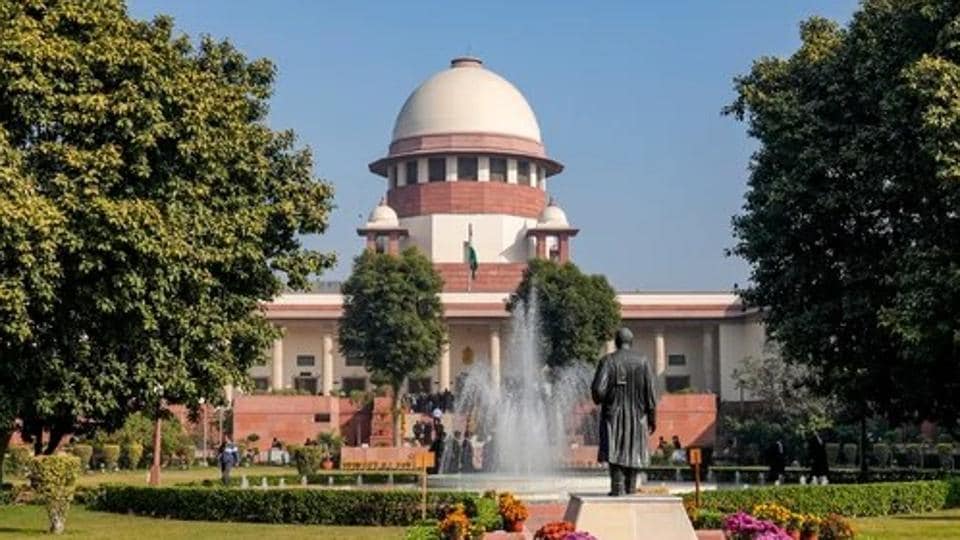
A bench comprising Chief Justice of India Surya Kant and justices Joymalya Bagchi and Vipul M Pancholi declined to entertain a petition filed through Netaji’s grandnephew and author Ashish Ray, noting that the issue involved reported differences within the Bose family over the circumstances of the leader’s death and the authenticity of the ashes and thereofre, a “direct heir” must approach the court.
“We respect her sentiments and her rights, and we will ensure that her sentiments are translated into suitable legal action, but she will have to come forward herself,” the bench observed during the hearing.
Senior advocate Abhishek Manu Singhvi, appearing for Ray, told the court that the petition was effectively seeking relief on behalf of Pfaff, who has for years been urging the Indian government to bring her father’s remains back to India.
Also Read: ‘To be or not to be…’: What Supreme Court said in Harish Rana euthanasia case
“I am appealing for the rights of his daughter to possess his ashes,” said Singhvi, adding that Pfaff was currently in Austria and was present during the proceedings through video link.
The bench, however, pointed out that she was not the petitioner before the court.
“How many times will we have to adjudicate it? We dealt with this matter last year only,” the court remarked. “First, tell us how many members from his family are in this petition? He was one of the greatest leaders of our nation and we all bow down to his supreme sacrifices,” it added.
When Singhvi reiterated that the plea had been filed by Netaji’s grandnephew, the court responded that such a sensitive matter could not be pursued indirectly.
“This cannot be a fight beyond the wall,” responded the bench, adding that given the reported differences within the family regarding the incident, Pfaff herself would have to approach the court if she wanted judicial intervention.
Singhvi then sought permission to withdraw the petition with liberty to file a fresh one.
Allowing the request, the court recorded in its order: “The petitioner seeks liberty to withdraw this petition with liberty to file a fresh petition. The prayer is allowed.”
Pfaff, an economist based in Austria, has repeatedly appealed to the Indian government to bring Netaji’s ashes back from Renkoji temple in Tokyo, where they have been preserved since 1945. She believes her father died following a plane crash in Taipei in August 1945, a version supported by several eyewitness accounts, including that of INA officer Col. Habibur Rehman. Pfaff has argued that the remains should be returned to India for a proper and dignified funeral, saying it is time to end what she has described as Netaji’s long “exile”.
On Netaji’s 129th birth anniversary in January 2026, she renewed her appeal and noted that she had earlier written to Prime Minister Narendra Modi seeking the government’s intervention in bringing the ashes back.
However, the question of Netaji’s death and the authenticity of the ashes has long remained controversial, including within his own family.
One section of the extended Bose family accepts the plane crash theory, while others believe that Netaji may have survived the crash or never boarded the aircraft at all. Some alternative theories have suggested he might have lived incognito in India or died in a Soviet prison. These divisions also surfaced in debates over whether a DNA test should be conducted on the ashes preserved at Renkoji temple.
Documents declassified by the Indian government in 2016 revealed that the Bose family itself was sharply divided on the proposal. According to a memo signed by then foreign secretary Salman Haider, Pfaff had expressed willingness for the ashes to be brought back to India but did not support conducting a DNA test. Another classified note from the mid-1990s indicated that the ministry of external affairs had examined the possibility of a DNA test but eventually decided against it due to fears that it could trigger a fresh controversy. Then external affairs minister Pranab Mukherjee had recorded that public opinion remained divided on the issue and that conducting a DNA test could further complicate matters.
Netaji remains one of the most iconic leaders of India’s freedom struggle. After escaping British surveillance in India, he travelled to Europe and later undertook a perilous submarine journey to Southeast Asia, where he reorganised the Indian National Army (INA) and formed the Provisional Government of Free India during the Second World War. The INA fought alongside Axis forces against British rule in India, leaving an enduring imprint on the independence movement.
Yet, eight decades after his reported death, the mystery surrounding Netaji’s final days and the question of his remains continues to provoke debate, both within the Bose family and in the public sphere.