The Supreme Court on Monday directed Karnataka to ensure compliance with the Cauvery Water Management Authority’s (CWMA) directions on releasing water to Tamil Nadu, while deciding to wait another week to assess whether the state continues to honour the water-sharing order, noting that Tamil Nadu currently had sufficient water and no immediate intervention was required.
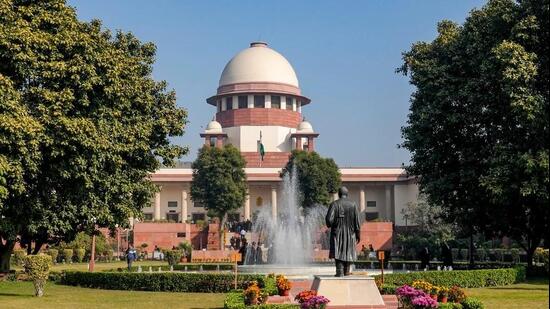
A bench of justices Vikram Nath and Sandeep Mehta fixed the matter for hearing after a week, seeking an updated status on the release of Cauvery water by Karnataka.
The bench was hearing Tamil Nadu’s plea seeking implementation of the CWMA’s decision directing Karnataka to release water to the state.
Senior advocate CS Vaidyanathan, appearing for Tamil Nadu, told the court that Karnataka was not complying with the authority’s directions and that Tamil Nadu was “not seeing the water”, leaving it unable to release water to farmers.
“In spite of the directions of CWMA, that is not being complied with and we are not seeing the water. We are not able to release any water to the agriculturists. It can’t be that they will keep all the waters,” Vaidyanathan submitted.
He said Karnataka’s reservoirs had 76% live storage as of Monday morning and, under the Cauvery Water Disputes Tribunal award, 64 TMC should have come to Tamil Nadu, whereas the state received only 14 TMC.
{{/usCountry}}He said Karnataka’s reservoirs had 76% live storage as of Monday morning and, under the Cauvery Water Disputes Tribunal award, 64 TMC should have come to Tamil Nadu, whereas the state received only 14 TMC.
{{/usCountry}}Even assuming a distress-year reduction, Vaidyanathan said, Tamil Nadu should have received 55.29% of the water and there was a backlog of about 20 TMC.
Appearing for Karnataka, senior advocate Shyam Divan disputed Tamil Nadu’s allegation of non-compliance, saying the state had not only complied with the earlier CWMA direction to release 3,500 cusecs a day but had substantially exceeded it.
Divan told the bench that the first direction remained in force until August 11 and Karnataka was required to ensure a flow of 3,500 cusecs at the inter-state border. He added that water released from the Krishna Raja Sagar reservoir took about 48 hours to reach the downstream point and protocols had to be followed before releases could be made.
“As of this morning the flow has exceeded the 12,000 cusecs which has been directed in the last order,” Divan said, adding that instructions had been issued to ensure that the 12,000-cusecs flow was maintained through the day.
The bench asked Divan whether, according to Karnataka, it had complied with the CWMA direction requiring a flow of 12,000 cusecs a day from August 12.
Divan responded that there had been a shortage in the first four-five days but that the flow crossed the mandated level on Monday. He submitted that the CWMA requirement on August 17 was 12,000 cusecs and the flow reached 12,607 cusecs.
“We are not releasing any water, it is because God has been kind and flow has come. As of this morning it has exceeded 12,000 and those gates have been opened,” Divan maintained. He assured the court that Karnataka would endeavour to maintain the 12,000-cusecs flow directed by the CWMA, though it would be “very difficult” for the state.
Divan also submitted that two expert bodies applied their minds to the issue and issued directions and, therefore, the role of the Supreme Court should be “very minimal”.
The development comes days after the CWMA endorsed the Cauvery Water Regulation Committee’s direction that Karnataka release 12,000 cusecs of water a day to Tamil Nadu for 15 days from August 13.
Tamil Nadu approached the Supreme Court alleging that Karnataka had willfully failed to comply even with the earlier direction to release 3,500 cusecs a day from July 29. It sought directions to ensure that the stipulated flow reached the inter-state border at Biligundlu and that Karnataka made good the accumulated shortfall.
Karnataka, in a reply filed before the court, disputed Tamil Nadu’s calculation of a shortfall and said it in fact released substantially more water than mandated between July 29 and August 10.
It said 86,797 cusecs reached Biligundlu against the required 45,500 cusecs during that period. The state also maintained that the 2026-27 water year was a “distress year” and questioned the basis of Tamil Nadu’s claim for an additional 26.954 TMC as its pro-rata entitlement.
With the two states differing sharply over compliance and hydrological data, the Supreme Court on Monday chose not to pass any fresh coercive direction immediately.
“Let this matter be posted after a week so that further status regarding the release of water can be reported,” said the bench, while directing Karnataka to ensure compliance with the CWMA directions.
The matter will now come up on August 2for a fresh assessment of the water releases.