
 E-Paper



SC: Ensure smaller cities don’t become polluted like Mumbai
A bench of justices Dhananjaya Y Chandrachud and MR Shah emphasised that smaller cities have to be protected from the kind of development and changes that a big city like Mumbai went through.


The Union and state governments should make sure that small cities do not become what Mumbai is today, the Supreme Court said on Friday while describing Maharashtra’s capital as one of the most polluted cities in the country.
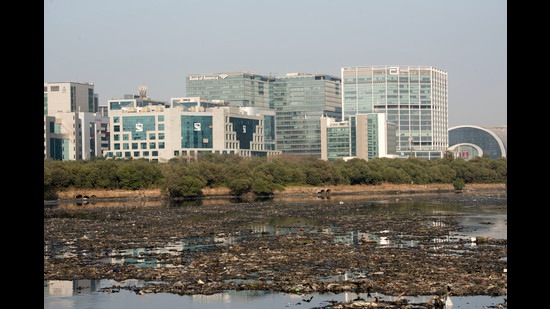
A bench of justices Dhananjaya Y Chandrachud and MR Shah emphasised that smaller cities have to be protected from the kind of development and changes that a big city like Mumbai went through.
“If you don’t take steps for cities which are on the brink of industrialisation then what quality of life will these cities have after some years? They will go down the same way,” the bench told the two law officers of the Centre, appearing on behalf of the environment and urban development ministries.
The court’s comments came after additional solicitor general KM Natraj, representing the urban development ministry, submitted that the norms for effluent discharge by sewage treatment plants (STPs) in water bodies cannot be the same for all the cities.
“Smaller cities cannot compete with a city like Mumbai,” he argued.
“Mumbai is worse than smaller cities. Just make sure smaller cities don’t become Mumbai, what it is today. Also, you are talking about different norms but can you say that people in smaller cities deserve a different standard of life? Every citizen is entitled to the same quality of life. In fact, cross-subsidisation has to be there. What is the Union and the state doing? You should provide funds wherever required to make sure smaller cities are protected,” it said.
On her part, ASG Aishwarya Bhati, who appeared for the environment ministry, regretted the lack of infrastructure in tier two and three cities with regard to checking the deterioration of water quality.
“So, the Union and the states should make infrastructure available. Why should people in a tier two or three city not get the same quality of life that a tier one city has? Everybody is entitled to the same standard of life. We are here to soften the rough edges of law but the governments will have to take the lead,” responded the bench.
The court was hearing appeals by the central government and the Municipal Corporation of Greater Mumbai (MCGM) against an order of the National Green Tribunal (NGT) in 2019. The NGT had found fault with the ministry’s 2017 notification by which new norms for effluent discharge by sewage treatment plants (STPs) in water bodies were laid down. It held that the new notification would lead to deterioration of water quality and prescribed stricter standards based on the recommendations of an expert committee.
While the expert committee had suggested a time frame of seven years for existing STPs to switch to higher sewage treatment criteria, the tribunal directed that the existing STPs should apply these norms “without any delay”. The NGT had further held that standards recommended for mega and metropolitan cities will also apply to the rest of the country.
At the same time, the green tribunal had imposed a penalty of around ₹100 crore on the MCGM for continued pollution of the city’s creeks and water bodies by discharge of inadequately treated effluent into drains from different STPs. By an order in July, the NGT directed that municipal commissioner Iqbal Singh Chahal be present in person to explain why adverse orders should not be passed against him for continuing violations.
On Friday, the top court stayed the NGT’s order asking for Chahal’s presence and asked the MCGM to submit a comprehensive response before the tribunal, detailing the steps taken and the timelines of those being contemplated.
“Protection of the environment is a matter of the highest concern...The issue is serious since it relates to discharge of untreated waste into the sea. MCGM must, in good faith efforts, demonstrate what steps it has taken to upgrade existing facilities and what it plans to do. This order cannot be taken as a carte blanche to continue to violate environmental norms and the municipal corporation must follow all the standards in the meantime,” stated the bench in its order.
The court also clarified that financial constraints cannot be cited by MCGM as a reason not to upgrade the STPs, especially when the municipal body happens to have a budget of ₹10,000 crore which is more than the budget of some states.
“The municipal corporation cannot turn a blind eye and keep dumping untreated waste in the sea. Your corporation is ranked number one in the entire country. Please act like one,” the bench told senior advocates Mukul Rohatgi and Dhruv Mehta, representing the MCGM.


