
 E-Paper



SC makes anti-drug law more stringent
The Court held that henceforth punishment for possession of drugs will not depend on the exact quantity of drug present in a consignment.


A recent Supreme Court ruling has strengthened the ability of the police to tackle the menace of drug peddling across the country.
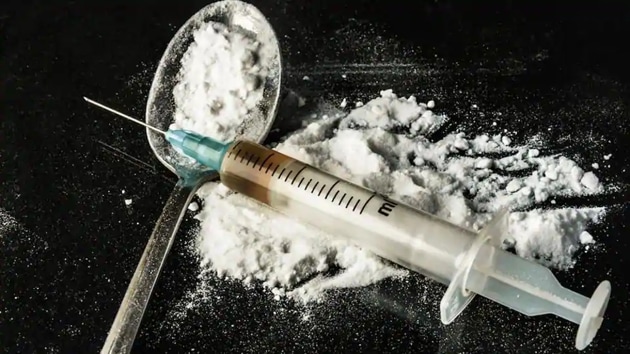
The Court held that henceforth punishment for possession of drugs will not depend on the exact quantity of drug present in a consignment. Rather, traces of an offending drug in the seized mixture will be sufficient to declare the entire quantity to be an offending drug under the Narcotic Drugs and Psychotropic Substances (NDPS) Act of 1985, the Court said.
By this pronouncement, the Court has changed its own ruling delivered 12 years ago. In 2008, a two-judge bench ruled the opposite in the E Michael Raj v Intelligence Bureau, Narcotics Control Bureau case. It said that punishment under NDPS Act will depend on the quantity of offending drug present in a consignment seized by the police. Five grams of heroin would classify as a small quantity while 250 grams of the same contraband would be considered a commercial quantity attracting punishment of up to 20 years in jai. Drug peddlers would sell heroin mixed with caffeine, chalk powder, zinc oxide, to get around the law and escape with minor sentences.
Reversing the 2008 decision, the three-judge bench of justices Arun Mishra, Indira Banerjee and MR Shah said, “The problem of drug addicts is international and the [drug] mafia is working throughout the world. It is a crime against society and it has to be dealt with [with] an iron hand. The use of drugs by young people in India has increased. The drugs are being used for weakening the nation.”
The Court noted that the NDPS Act was introduced by Parliament with a laudable objective of tackling the drug menace. “The punishment part in drug trafficking is an important one but its preventive part is more important,” ruled the bench. From the Statement of Objects and Reasons and the Preamble of the NDPS, the Court was convinced that the legislature never intended to exclude the quantity of neutral substance.
The Court observed that illicit drugs are mostly sold in adulterated form. For instance, caffeine mixed with heroin allows users to take the drug faster. Brown sugar contains 20% heroin, is cheaper but more dangerous. “Therefore, what is harmful or injurious is the entire mixture/tablets with neutral substance and narcotic drugs or psychotropic substances. Therefore, if it is accepted that it is only the actual content by weight of offending drug which is relevant for the purpose of determining whether it is small quantity or commercial quantity, in that case, the object and purpose of enactment of NDPS Act would be frustrated,” the court said.


