E-Paper



SC recalls order that halted retrospective green permits
Chief Justice of India (CJI) Bhushan R Gavai and Justice K Vinod Chandran, writing separate but concurring opinions, allowed a batch of review petitions and declared that the May verdict, delivered by a two-judge bench of justices Abhay S Oka (since retired) and Ujjal Bhuyan in the Vanashakti case, could not stand in the face of earlier Supreme Court rulings that had recognised limited situations where post-facto EC may be permissible

 Prefer HTon Google


The Supreme Court on Tuesday, by a 2-1 majority, recalled its May 16 judgment that barred grant of ex-post-facto environment clearance (EC) to development projects, holding that the previous ruling failed to consider binding earlier precedent and thereby violated judicial discipline.
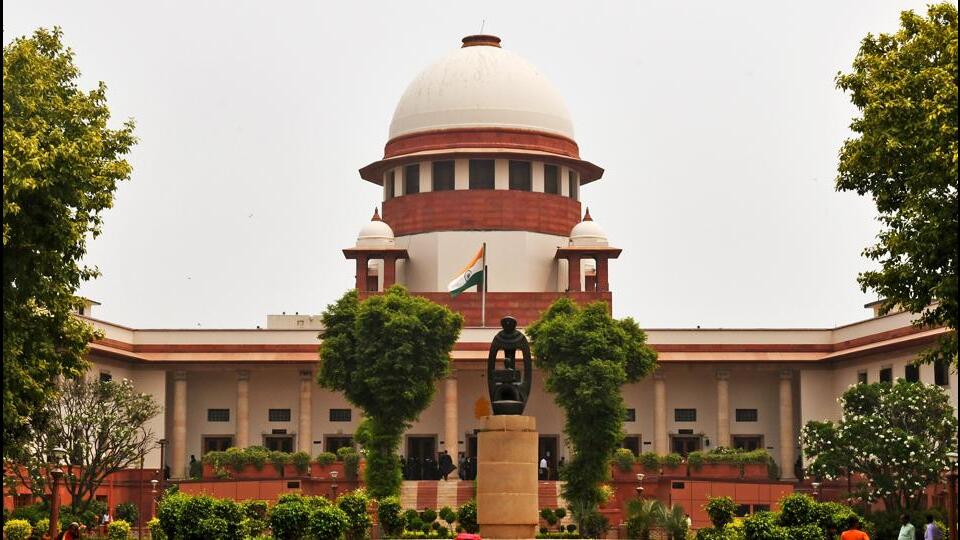
Chief Justice of India (CJI) Bhushan R Gavai and Justice K Vinod Chandran, writing separate but concurring opinions, allowed a batch of review petitions and declared that the May verdict, delivered by a two-judge bench of justices Abhay S Oka (since retired) and Ujjal Bhuyan in the Vanashakti case, could not stand in the face of earlier Supreme Court rulings that had recognised limited situations where post-facto EC may be permissible. The majority judgment further noted that the May ruling produced consequences that were legally unsustainable and “devastating” for numerous public projects across the country.
Justice Bhuyan dissented firmly, emphasising that ex-post-facto EC is “an anathema to environmental jurisprudence” and that the earlier ruling took the only legally correct view. Justice Bhuyan described the majority judgment a “step in retrogression”.
The review verdict, issued on a plea by the Confederation of Real Estate Developers’ Association of India (CREDAI) and others, means that the 2017 notification and 2021 office memorandum (OM), which permit post-facto EC in limited situations with heavy penalties, revive. The challenges to them will now be placed before an appropriate bench for a fresh consideration, upon administrative orders of the CJI.
In his opinion, CJI Gavai said the May judgment relied only on selective portions of earlier rulings and missed crucial paragraphs of the judgments in Common Cause (2017), Alembic Pharmaceuticals (2020), and Electrosteel Steels (2023), which, if considered, would have led the court to a “different view”. All these judgments, the CJI noted, favoured a “balanced approach” and recognised the legitimacy of post-facto approvals in limited circumstances.
Most critically, two binding two-judge bench decisions in D Swamy (2022) and Pahwa Plastics (2022), which upheld the 2017 notification and 2021 OM, were not brought to the attention of the Vanashakti bench at all. On this ground alone, Justice Gavai held, the May ruling was per incuriam.
He added that decisions in D Swami (2022) and Pahwa Plastic (2022), which examined the very same notification and OM, were not brought to or considered by the May bench. The CJI noted that if the earlier bench disagreed with that finding, “the only option was to refer the matter to a larger bench.”
CJI Gavai also highlighted the practical fallout of the May judgment. The Centre had placed before the court a list of ongoing central and state projects -- 24 projects worth ₹8,293 crore at the Centre and 29 projects worth ₹11,168 crore at the state level -- that had completed required studies, including EIAs, and were awaiting final ECs. However, ECs could not be granted due to an interim stay issued on January 2, 2024 after the review petitions were filed.
If the May judgment were allowed to stand, the CJI held, numerous completed or near-completed public projects worth ₹20,000 crore would have to be demolished, despite being otherwise permissible in law. CJI Gavai listed examples: the nearly 1,000-bed AIIMS Medical College and Hospital in Odisha, a greenfield airport in Vijayanagar, Karnataka, and several common effluent treatment plants. The demolition of such facilities built at enormous public cost, he said, would not merely waste “thousands of crores of rupees” but also “generate more pollution”, defeating the environmental purpose .
CJI Gavai highlighted that both the 2017 Notification and 2021 OM permitted ex-post facto ECs only where projects were legally permissible and imposed heavy penalties and rigorous environmental safeguards. If demolition was ordered now, he wrote, the same projects—still legally permissible—could merely be rebuilt after obtaining ECs, creating “an anomalous and counter-productive cycle”.
Calling for a return to the “balanced approach” adopted in a series of previous judgments, Justice Gavai concluded that the review petition had to be allowed to prevent large-scale wastage of public resources and environmental harm.
Justice Chandran, concurring with CJI Gavai, wrote a separate opinion emphasising that the power to regulate inherently includes the power to relax regulations, unless expressly barred. He reasoned that since the requirement of prior EC under the EPA arose from a notification issued under statutory authority, the State could not be seen as totally denuded of its power to provide calibrated relaxation, particularly when backed by environmental safeguards, penalties, mandatory remediation plans and the option of demolition if EC was ultimately denied.
The 2017 notification and 2021 OM, Justice Chandran added, were not regressive measures but pragmatic responses to “ground realities” in environmental regulation -- a regime that “falters more often than ever” for reasons not limited to wrongdoing by project proponents.
Calling the previous bench’s method “demolish first, allow EC applications later” akin to “setting the clock back to save time,” Justice Chandran said the earlier bench had “completely lost sight” of the balanced approach mandated by Supreme Court precedents. He concluded that recalling the May judgment was not just justified but “imperative and expedient.”
Justice Bhuyan, dissenting and reiterating his May position, maintained that the May 2025 ruling was correctly decided and that permitting ex-post facto ECs undermines the statutory scheme and encourages violations. He insisted that prior EC is the heart of the environmental clearance framework, and deviations dilute both environmental protections and legislative intent.
During earlier hearings, Solicitor General Tushar Mehta, for Steel Authority of India and AIIMS Kalyani, had argued that the May judgment ignored D Swamy verdict and destabilised the regulatory regime. The environment ministry, on its part, informed the court that 45 major projects worth ₹79,000 crore were stuck -- 33 under appraisal and 12 awaiting final EC. The lead petitioner, CREDAI, warned of demolition risks for hundreds of nearly-complete real-estate projects. Senior counsel Kapil Sibal, for a greenfield airport, noted that even after recall, each violating project would require full appraisal.
Environmental groups, represented by senior advocates Gopal Sankaranarayanan, Anand Grover, Sanjay Parikh, Raju Ramachandran and Anitha Shenoy had opposed recall, arguing that post-facto EC incentivises illegal construction.