E-Paper



SC refuses to quash CBI case against Lalu Yadav in land-for-jobs case
Senior advocate Kapil Sibal, appearing for Yadav, argued that the absence of prior sanction vitiated the investigation itself

 Prefer HTon Google


The Supreme Court on Monday declined to entertain a plea by Lalu Prasad Yadav seeking to quash the Central Bureau of Investigation (CBI) case in the alleged land-for-jobs case, holding that objections on sanction can be raised before the trial court without impeding the proceedings.
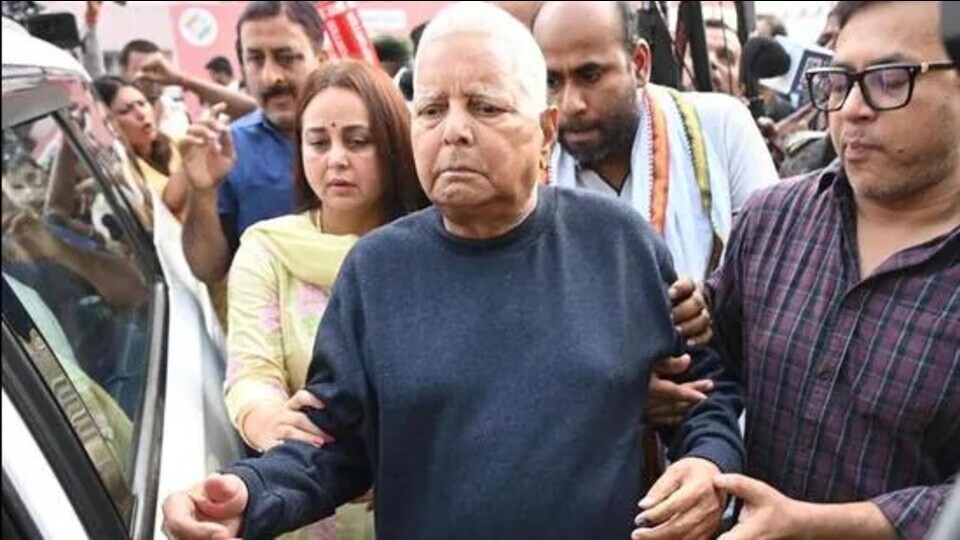
A bench of justices MM Sundresh and N Kotiswar Singh refused to intervene at this stage, granting liberty to Yadav to raise the issue of prior sanction during trial. “Taking into consideration the facts and circumstances, liberty is granted to the petitioner to raise the legal issue at the time of the trial,” the court said in its order.
The bench made it clear that the pendency of such legal questions cannot stall the progress of the trial.
The case before the court centred on the applicability of Section 17A of the Prevention of Corruption Act, which requires prior approval before initiating an investigation into decisions taken by a public servant in discharge of official duties.
Also Read:Delhi judge rejects Lalu Yadav plea, says it was a ruse to delay trial
The Supreme Court identified two issues — scope and applicability of Section 17A, and whether it operates retrospectively, but declined to examine them at this stage, leaving the questions open.
During the hearing, senior advocate Kapil Sibal, appearing for Yadav, argued that the absence of prior sanction vitiated the investigation itself. He contended that the allegations of influencing appointments in the railways were intrinsically linked to Yadav’s official functions as railway minister, thereby attracting the protection under Section 17A.
Sibal also pointed out that the Delhi High Court had held the provision to be prospective, but maintained that the issue warranted consideration at the threshold since it goes to the root of the investigation.
Opposing the plea, additional solicitor general SV Raju argued that sanction was not required in Yadav’s case as he was neither the decision-making authority nor the recommending authority in the alleged transactions. He further submitted that the petition had been filed belatedly, long after the investigation had concluded.
The bench, however, observed that questions relating to whether influence was exercised formally or informally could arise during trial, indicating that such issues would be better adjudicated at that stage. The court, however, granted Yadav exemption from personal appearance in the case.
Monday’s order comes weeks after the Delhi High Court dismissed Yadav’s plea to quash the case, holding that Section 17A, introduced in 2018, does not apply retrospectively to alleged offences committed between 2004 and 2009. The high court had also ruled that the protection under Section 17A would not apply since the alleged acts were not linked to any official recommendation or decision taken by Yadav in discharge of his duties.
The CBI case relates to alleged irregular appointments in the railways during Yadav’s tenure as Union railway minister between 2004 and 2009. According to the agency, Group-D jobs were granted in exchange for land parcels transferred to Yadav’s family members or associates.
The agency registered the case in May 2022 against Yadav and several others, including members of his family. A trial court has already framed charges of corruption and criminal conspiracy, observing that public employment was allegedly used as a “bargaining chip” to acquire land.
On January 9, a Delhi court had framed charges of corruption and criminal conspiracy against the former Bihar chief minister, his wife Rabri Devi, sons and daughter, in the case while noting that Yadav used the railway ministry as his “personal fiefdom” to carry out a criminal enterprise when he was the Union minister.
The trial court further said that the chargesheet revealed an overarching conspiracy wherein public employment was used by Yadav as a bargaining chip to acquire lands favourably in the name of his family members, including sons Tejashwi and Tej Pratap Yadav, wife Rabri Devi and daughter Misa Bharti.
With the Supreme Court declining to entertain Yadav’s plea, the trial in the case will continue, with Yadav now expected to raise his legal objections at the appropriate stage before the trial court.