
 E-Paper



SC rejects ex-IPS Bhatt’s pleas in 1996 drugs seizure case
The Supreme Court on Tuesday slapped a fine of ₹3 lakh on former IPS officer Sanjiv Bhatt while dismissing petitions filed by him seeking relief during a trial against him in a 1996 drug peddling case

 Prefer HTon Google


The Supreme Court on Tuesday imposed a fine of ₹3 lakh on former Indian Police Service (IPS) officer Sanjiv Bhatt while dismissing petitions filed by him that sought relief during a trial against him in a 1996 drug seizure case.
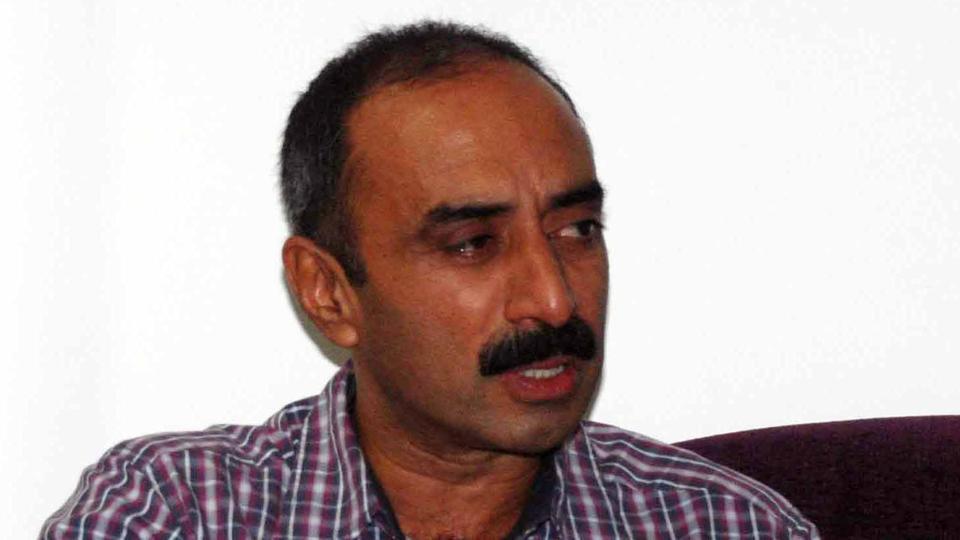
Dismissing the three petitions, a bench of justices Vikram Nath and Rajesh Bindal directed the cost to be deposited with the Gujarat high court advocates welfare fund.
Bhatt approached the court against two orders passed by the Gujarat high court on August 24 and May 5 refusing his demands to transfer the trial from the presiding judge, alleging bias, refusing him audio and video recordings of previous hearings and his plea to recall 19 witnesses dropped by the prosecution.
The high court had dismissed his plea, saying it was aimed at delaying trial, senior advocate Devadutt Kamat, appearing for Bhatt along with advocate Aljo K Joseph, informed the court.
The case against Bhatt followed the arrest of lawyer Sumer Singh Rajpurohit in a case of opium peddling. According to police, information was received about drugs being brought to Hotel Lajwanti in Palanpur in Gujarat. On a raid being conducted, the contraband was recovered and Rajpurohit arrested under the Narcotics Drugs and Psychotropic Substances Act. Later, Rajpurohit gave a statement that the contraband was planted by Bhatt, following which charges were filed against 20 persons, including Bhatt.
Kamat said that Section 233(3) of the Code of Criminal Procedure (CrPC) allows an accused to compel evidence or witness in his defence. “The prosecution cited these witnesses and dropped them. If I wish to examine them, how can it be termed as vexatious and an attempt to delay trial? Obviously, they were inconvenient for the prosecution and so they were dropped,” Kamat said.
“At least a dozen times you have approached the Supreme Court and high court,” the bench said, referring to the latest decision in February by the top court dismissing his plea to expedite the trial with a cost of ₹10,000. “That bench was lenient. We will impose heavy cost as you are repeatedly approaching this court. He has no dearth of finances as every time he approaches this Court with the best of lawyers. He may now do something for the benefit of lawyers.”
The court asked Kamat if he wished to withdraw the petitions before dismissing them with cost. In his petition, Bhatt sought shifting of the trial judge hearing his case by pointing out instances to suggest that the conduct of the trial court was suspicious, with the only intention being to convict the petitioner.
The trial judge permitted the prosecution to adduce evidence for 17 months, irrespective of the fact that the case was more than 26 years old, his petition said. Bhatt alleged that the trial court did not permit a request for adjournment on ground of his lawyer’s illness and went on to close defence evidence.
In June 2019, a sessions court in Jamnagar convicted Bhatt and sentenced him to life imprisonment in a 1990 case of custodial death. A 1988 batch IPS officer of the Gujarat cadre, Bhat was sacked in 2015 for “unauthorised absence” from service. He was earlier suspended after he accused the then Gujarat chief minister Narendra Modi of being negligent in controlling the 2002 Gujarat riots, but failed to provide any evidence on support his charge. His statement was found to be false by a special investigation team that probed the Gujarat riots cases.
The Supreme Court in June last year dismissed any larger conspiracy behind riots, following which the Gujarat government registered a criminal case against Bhatt, social activist Teesta Setalvad and former director general of police RB Sreekumar for allegedly fabricating documents to frame innocent people in 2002 Gujarat riots cases.


