
 E-Paper



SC slams Delhi Govt’s “lacklustre” efforts on green cover, summons forest secy
The remarks were made by a bench of justices AS Oka and SVN Bhatti during a hearing on the efforts to boost green spaces in Delhi

 Prefer HTon Google


The Supreme Court on Monday criticised the Delhi government’s forest department for its “lacklustre” and “lackadaisical” approach to enhancing the Capital’s green cover, summoning the forest department secretary to explain lapses.
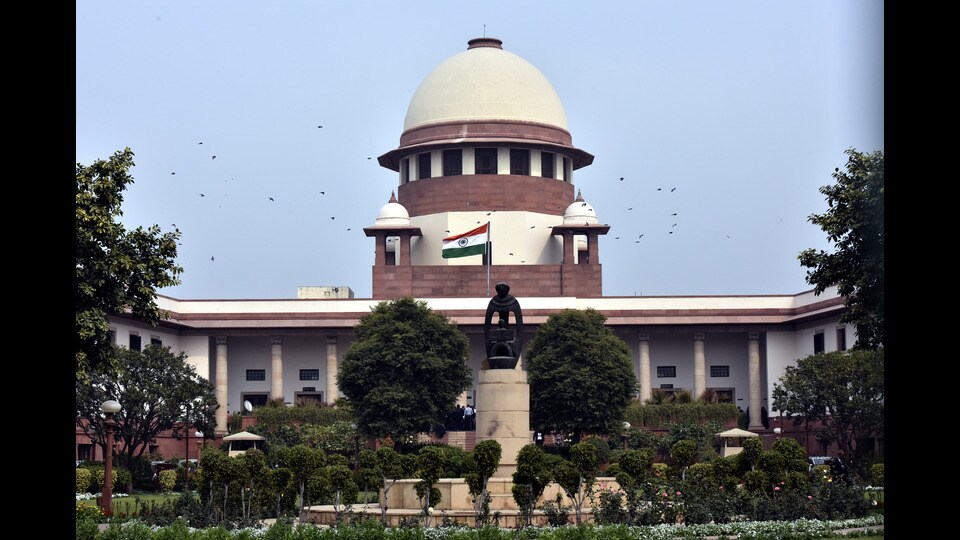
The remarks were made by a bench of justices AS Oka and SVN Bhatti during a hearing on the efforts to boost green spaces in Delhi, in which it ordered the secretary of the forest department to appear on October 18 to respond to further questions from the court and to file a personal affidavit outlining the steps taken to improve the city’s green cover.
“First, you (forest department) are not doing anything at all... You have a completely lacklustre approach... It is not for the benefit of judges like us that we are hearing this case. It is for the benefit of the people of Delhi that we are hearing this matter,” observed the bench.
During the proceedings, the bench sought an update from the Delhi government’s forest department on the measures taken to enhance green cover in terms of its previous directives in May and June. However, the counsel for the department, Chirag M Shroff, requested more time, stating that the government’s status report did not include the required information and referring to a separate affidavit filed in a contempt case.
To be sure, the contempt case in question was the one that prompted Chief Justice of India (CJI) Dhananjaya Y Chandrachud to intervene for resolving a rare confrontation between two Supreme Court benches. Related to tree-felling in Delhi’s Ridge area, the contempt case was shifted to the CJI’s bench by an order in August after two different benches – one led by justice Bhushan R Gavai and another headed by justice Oka -- started hearing related but separate aspect of the contempt case against the Delhi Development Authority (DDA), leading to a potential judicial standoff.
When it was informed about the affidavit in the contempt case, justice Oka’s bench on Monday rebuked the counsel for filing the affidavit in the wrong case. “The directions on enhancing green cover were filed in the writ petition, not the contempt matter. Don’t try to take advantage of the contempt petition being transferred. We are warning you,” it told Shroff.
At this point, senior counsel Guru Krishna Kumar and Anitha Shenoy, who have been assisting the court as amicus curiae, pointed out that there is a working plan for Delhi being prepared, and that they had also given elaborate suggestions during the last meeting convened by the forest department. But the senior advocates also flagged the issue of lack of alacrity on the part of the authorities concerned.
Responding, the bench expressed frustration over the government’s inaction, remarking: “They have done nothing. They are only holding meetings. They are doing nothing more.”
The court’s formal order noted that despite a directive issued on June 26, 2024, for responsible officers to meet and implement green cover enhancement measures, no substantial progress had been made. The court highlighted the government’s failure to submit any relevant records over the past three months detailing steps taken to improve the city’s green cover.
“The status report dated September 21, 2024, shows complete lack of interest by the principal secretary, forest department, and the forest department as a whole,” the order stated.
It further noted that comprehensive suggestions had been provided by environmental experts, yet the government had not taken any visible steps. The court expressed disappointment with the actions of the forest department and directed the principal secretary to file a personal affidavit detailing the measures taken by the government. The court also instructed the secretary to be personally present at the next hearing scheduled for October 18, with the affidavit due by October 15.
Justice Oka added: “It is either complete lack of knowledge or somebody wants that even this matter should not be heard by this court. First, you have a lackluster approach, and to top it, you say you have filed an affidavit in some other matter.” The judge emphasised that the case was being heard for the benefit of Delhi’s citizens.
The court’s displeasure stems from several instances of “illegal and high-handed acts of felling of trees” in Delhi, including the city’s ecologically sensitive Ridge area as it heard a 1985 PIL relating to sealing of unauthorised constructions and environmental protection in Delhi.
On June 26, the bench directed the secretary of the forest department of the Delhi government to convene a meeting of relevant officials and a committee of three experts to discuss measures to enhance the green cover of the national capital territory (NCT).
Justice Oka’s bench also heard a contempt petition filed by Delhi resident Bindu Kapurea, which sought action against the illegal felling of trees at the south Delhi ridge area. The bench on the day instructed the Delhi government and the Tree Authority under the Delhi Preservation of Trees Act (DPTA) to initiate penal action against the DDA for the illegal tree felling.
The court’s inquiry simultaneously deepened into the role of lieutenant governor (LG) VK Saxena, following claims that he had ordered the felling of trees during a visit to the ridge area on February 3. The DDA failed to produce records of LG’s visit, despite an email from a senior DDA official suggesting that LG gave orders to fell trees after the site inspection. The matter was scheduled for further consideration to ascertain Saxena’s involvement.
But the issue led to a rare clash between the Supreme Court benches when, on July 24, a three-judge bench led by justice Gavai, designated as the forest bench, raised concerns about judicial propriety in relation to the proceedings before justice Oka’s bench. Justice Gavai’s bench, which was overseeing the TN Godavarman forest conservation case, earlier issued a contempt notice against DDA for allegedly felling trees in the Ridge area without proper permissions. It questioned whether justice Oka’s bench should have entertained the contempt plea, as a similar issue was already being addressed by the forest bench.
This judicial conflict led to CJI Chandrachud intervening to centralise the matter under his own bench, manifestly to avoid any future standoffs between benches and ensuring consistency in the court’s handling of environmental protection and the rule of law.



