
 E-Paper



Supreme Court slams expert bodies for back-to-back nod to rationalisation of Sariska boundaries
The Supreme Court said it had reposed great faith in NTCA and SC-NBWL thinking they are experts but they "are acting like a post office"

 Prefer HTon Google


The Supreme Court on Wednesday pulled up the National Tiger Conservation Authority (NTCA) and the Standing Committee of National Board for Wildlife (SC-NBWL) for “making a mockery of the system” by granting back-to-back clearance, in a gap of 48 hours, to the proposal for rationalisation of the Sariska tiger reserve boundaries.
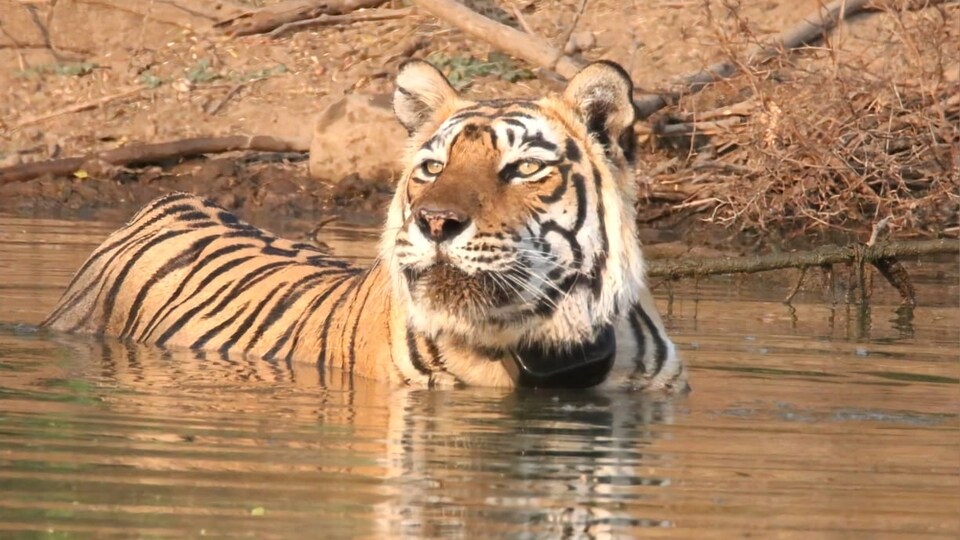
A bench headed by chief justice of India (CJI) Bhushan R Gavai sent the proposal back to the apex expert bodies for fresh consideration and posted the matter to next week.
“We reposed such great faith in NTCA and SC-NBWL thinking they are experts as we expected them to do some deliberation on this issue. But they are acting like a post office,” the bench, also comprising justices K Vinod Chandran and NV Anjaria, said.
The bench was considering the issue of management of Sariska Tiger Reserve in the TN Godavarman case, pertaining to protecting wildlife and forests across the country.
The central empowered committee (CEC) —the expert statutory panel assisting the apex court on environment issues — and amicus curiae senior advocate K Parmeshwar pointed out that the Rajasthan state wildlife board approved the rationalisation proposal on June 23, NTCA on June 25 and SC-NBWL the following day.
The approved proposal aims to increase the critical tiger habitat (CTH) of the Sariska reserve from 881 sq km to 924 sq km, and reduce the buffer area from 245 sq km to 203 sq km.
“You cannot do it in a day,” the bench remarked, adding the issue concerns tigers which are critical to the ecosystem.
Boundary rationalisation will mean that the mining area will decrease, the bench observed, adding, “We have clarified that no mining activity will be permitted within 1 kilometre of the boundary of CTH. There ought to have been a draft notification, inviting objections and holding deliberations…This is only providing lip service. It amounts to making a mockery of the system.”
Additional solicitor general (ASG) Aishwarya Bhati appearing for Rajasthan government informed the court that the actual CTH has increased. The court said that the issue concerns tigers which are critical to the ecosystem. The rationalisation plan was proposed by the court to ensure increased movement of traffic inside the Sariska tiger reserve by pilgrims visiting the ancient Pandupole temple does not impact the tiger ecosystem. Further, concerns were also raised that mining activities were taking place inside the Sariska reserve. While several mining activities were closed, the miners were pushing for the rationalisation plan to be in place to revive their activities.
The court said, “We will set aside everything if we are not satisfied. This gives an impression that the allegation that miners are having a say is proving to be right. It was done to facilitate miners.” ASG Bhati sought to dispel the impression by pointing out that the entire process was rightly done.
The court also allowed an intervention application moved by NGO People for Aravallis along with three civil society members who challenged the SC-NBWL decision of June 26 to grant clearance to the boundary rationalisation plan of Sariska. Advocate Srishti Agnihotri appearing for the applicants alleged that there is a move by the state to revive 50 marble and dolomite mines in Alwar.
The state denied the same but the bench remarked, “Even if such a notification is issued, it will not be given effect to.”
The court had last year banned private vehicles inside the Sariska tiger reserve and had asked the state to provide e-buses to ensure less pollution, noise and to regulate traffic inside the tiger reserve. However, this ban was objected to by the Pandupole temple trust claiming that the e-buses are inadequate to cater to the large number of devotees, nearly 6000-7000 every week, visiting the temple. To find a solution, the court appointed a three-member committee headed by Sariska collector and comprising the field director of the reserve and a CEC member to address the concerns and consider implementing the ban in a phased manner.
On Wednesday, the temple trust informed the bench that the committee has held only two meetings since its formation in December 2024. It further informed that state proposes to run e-buses on Tuesdays and Saturdays and not on other days. The court observed that in addition to e-buses, there could be CNG buses, while insisting that the bus service should be provided on a daily basis.
The court noted that the situation is far worse in Ranthambore where a similar problem exists due to pilgrims visiting an ancient Ganesh temple inside the reserve which has increased man-animal conflict and threatened the tiger habitat.
ASG Bhati assured the court to file a status report as the bench posted the matter on August 12.


