
 E-Paper



SC to hear army veteran’s PIL on closure of all sedition cases
Top court is already hearing a petition and a clutch of applications challenging the constitutional validity of Section 124A IPC. What sets this petition apart is its prayer to quash all complaints lodged under this law and to stop police from further investigating case to the extent that the offence relates to sedition

 Prefer HTon Google


The Supreme Court on Wednesday sought the assistance of the attorney general on an army veteran’s plea to strike down the sedition law as unconstitutional and quash all proceedings under Section 124A of the Indian Penal Code (IPC) pending with the police and courts across the country. The petition will be heard on Thursday.
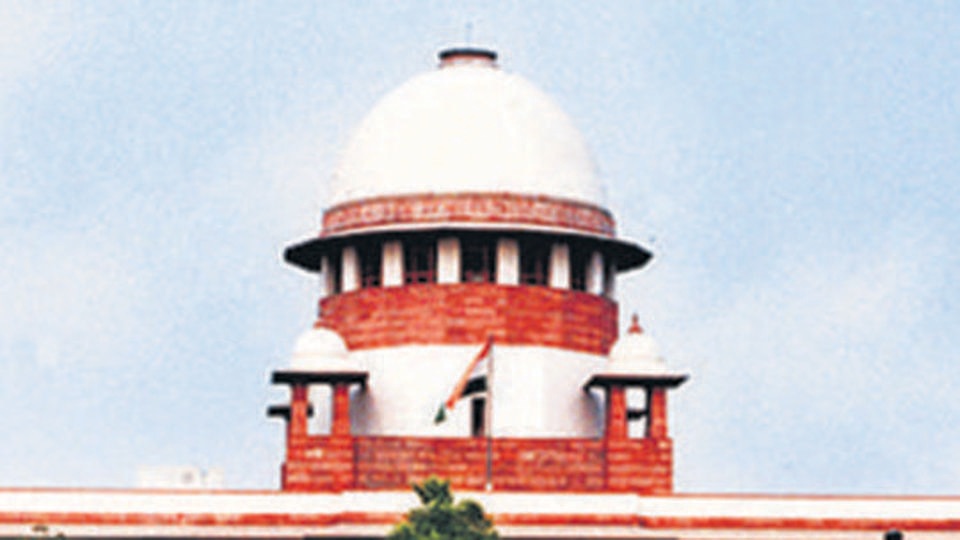
The top court is already hearing a petition and a clutch of applications challenging the constitutional validity of Section 124A IPC. But what sets this petition apart is its prayer to quash all complaints lodged under this law and to stop police from further investigating case to the extent that the offence relates to sedition.
The petition filed by SG Vombatkere, a former army officer, was argued by advocate PB Suresh. A three-judge bench headed by Chief Justice of India (CJI) NV Ramana directed a copy of the petition to be given to attorney general KK Venugopal and posted the matter for hearing on Thursday.
Section 124A of the IPC makes any speech or expression that “brings or attempts to bring into hatred or contempt or excites or attempts to excite disaffection towards the Government established by law in India” a criminal offence punishable with a maximum sentence of life imprisonment. The offence is not bailable. The Supreme Court in 1962 had upheld the validity of this provision in Kedar Nath Yadav v State of Bihar.
Also Read | Minority schemes do not defy Hindus’ rights, Centre tells SC
The petition said, “A statute criminalising expression based on unconstitutionally vague definitions of ‘disaffection towards Government’ is an unreasonable restriction on the fundamental right to free expression guaranteed under Article 19(1)(a) of the Constitution and causes constitutionally impermissible ‘chilling effect’ on speech.”
Vombatkere further stated that in 1962, when this law was upheld, there was a restricted definition of fundamental rights which now needs a relook. He sought a declaration that “all subsisting criminal proceedings before any court” under Section 124A of IPC should be closed and all complaints and investigation reports relating to the offence under Section 124A be quashed.
The petition filed through advocate S Prasanna said, “No authority including any state or central police must take any step in furtherance of investigation or prosecution of any cases in respect of and to the extent that the accusation is of an offence under Section 124A of the Indian Penal Code.”
The other petition challenging Section 124A before the apex court is being heard by a bench headed by justice UU Lalit. It has been filed by two journalists – Kishorechandra Wangkhemcha and Kanhaiya Lal Shukla working in Manipur and Chhattisgarh respectively. The court has already issued notice to the Centre and sought assistance of the attorney general. In this matter, the Foundation of Media Professionals, journalist Shashi Kumar and law professor Sanjay S Jain have filed applications to declare Section 124A IPC unconstitutional. This matter is expected to come up for hearing on July 27.


