
 E-Paper



Scattered rainfall slows the planting of key kharif crops
A normal June-to-September monsoon has been forecast this year by the India Meteorological Department but there have been shortfalls even in regions where the monsoon has already arrived.


A patchy monsoon has slowed the planting of key kharif, or summer-sown crops, with rainfall recording a 32% shortfall in the first fortnight of the rainy season that began on June 1. A shortage of diesel, a key input needed to irrigate crops, is also weighing on farm operations, cultivators said.
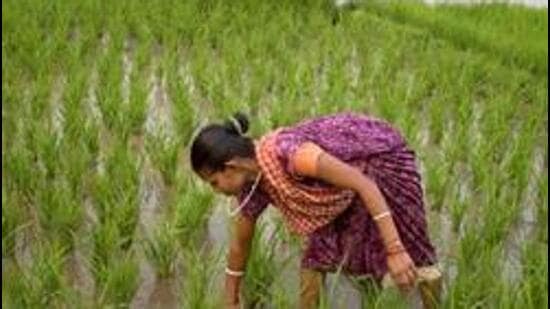
Total acreage of kharif crops stood at 6.6 million hectares as on June 10, about 28% less than the 8.5 million hectares sown during the corresponding period last year, according to latest available data of the agriculture ministry.
A normal June-to-September monsoon has been forecast this year by the India Meteorological Department but there have been shortfalls even in regions where the monsoon has already arrived.
Evenly distributed rains are critical this year to boost food output amid a global food shortage. Soaring food prices due to Russia’s invasion of Ukraine have roiled many economies, including India’s, as disruptions add to existing strains on supplies of grains, edible oil, and other foodstuff. The country is hoping for a robust farm output on the back of a normal monsoon for the fourth straight year to cushion the economic impacts of the coronavirus disease and the high costs of food imports.
Retail inflation declined modestly to 7.04% in May from a year ago, compared to an eight-year high of 7.8% in April, but prices continued to breach the Reserve Bank of India’s upper limit of 6% for the fifth straight month. About 75% of the higher inflation is due to a rise in food prices.
Kharif crops account for nearly half of India’s annual food output. Latest available weekly area-coverage data of the agriculture ministry for kharif crops, as on June 10, showed farmers planted rice in 0.64 million hectares compared to 0.59 million hectares in the year-ago corresponding period, down 1.5%.
Sowing of pulses has been lower by 37.5%, as farmers were able to plant only 0.2 million hectares so far, compared to last year’s 0.27 million hectares. Among lentils, acreage for arhar, a widely consumed pulse, has lagged the most by 70%, the data showed.
Analysts expect sowing to pick up when rains advance further into the mainland.
The monsoon is critical for Asia’s third-largest economy, as nearly 60% of the country’s net sown area is not irrigated and half of the country’s population depends on a farm-derived income. The rain also replenishes more than 100 nationally important reservoirs, critical for drinking, power supply and irrigation.
Millions of farmers depend on the rain for a range of summer crops such as rice, oilseeds, pulses, millets, sugarcane, and cotton.
“Timely rains are critical, but it’s just the beginning of the kharif season and there’s a big sowing window ahead. Sowing will pick up but large gaps between two active monsoon cycles can impact yields,” said Deepali Choudhary, a former scientist with the Indian Council of Agricultural Research.
Sowing of coarse cereals stood at 0.31 million hectares compared to last year’s 0.45 million hectares, a deficit of 43%, while oilseeds have been planted on 0.13 million hectares over last year’s 0.19 million hectares, down 47%.
Many states are facing a fuel shortage, with Rajasthan, Madhya Pradesh, Karnataka Uttarakhand, Gujarat and Haryana being the worst hit due to a surge in demand. “There are long queues to get diesel. Everybody is trying to stock up because there are rumours of a shortage this year,” said Karan Singh, a farmer from Punjab’s Ferozepur district, who is a member of the Krantikari Kisan Union.
Good summer harvests, which boost rural income, are important to support the broader economy and cool prices. A prolonged heatwave in March cut India’s wheat output by at least 5% from initial projections of 111 million tonnes, prompting the country to ban exports.


