
 E-Paper



SC seeks govt’s response to plea over CBI chief
NGO Common Cause approached the top court with a public interest litigation to question the Centre’s decision to appoint an interim chief for the agency, Pravin Sinha.


The Supreme Court on Friday sought the response of the central government on a petition seeking appointment of a regular Director for the Central Bureau of Investigation (CBI).
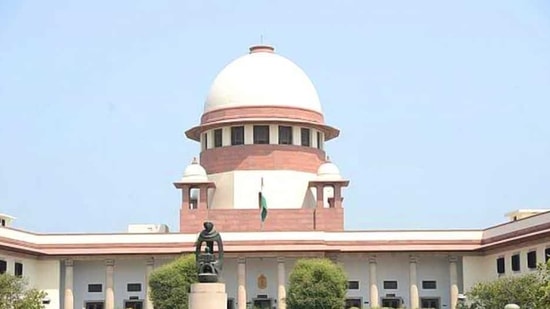
NGO Common Cause approached the top court with a public interest litigation to question the Centre’s decision to appoint an interim chief for the agency, Pravin Sinha. The plea, argued by advocate Prashant Bhushan pointed out there was no concept in law of appointing an interim or acting director under the Delhi Special Police Establishment (DSPE) Act, which applies to the central agency.
According to Section 4A of the Act, the government is required to convene a meeting of the High Powered Committee chaired by the Prime Minister and comprising the leader of the single largest Opposition party and the Chief Justice of India or his nominee. This panel has to recommend the name of a suitable candidate as director following which the recommendation is approved by the Appointments Committee of the Cabinet. The Department of Personnel and Training (DoPT) finally issues the order appointing the CBI director. This procedure was bypassed after the previous director Rishi Kumar Shukla demitted office on February 2 this year, the petition alleged.
A bench of Justices L Nageswara Rao and S Ravindra Bhat issued notice and gave the Centre two weeks to file a response. Meanwhile, Bhushan urged for direction to convene the meeting of the High Powered Committee under Section 4A of the Act. “Not only has the independence of CBI been eroded with the appointment of an interim Director but even the work of the agency has been affected.” he said. But the bench refused to pass any interim orders. “We will first hear them and then pass any orders,” they said.
In the petition, the NGO said: “The Director of CBI is the final authority in the organization. He supervises all the work in CBI and is responsible for constitution of investigating teams for probing cases. Hence, this Court and later even Parliament have made determined efforts to enhance the functional autonomy of the CBI Director and limit the extent of executive discretion in the matter of appointment of this key functionary.”
In 2016 too, the appointment of an interim director of CBI was challenged before SC by Common Cause. “Now again the same issue has cropped up which has to be dealt with utmost seriousness in view of the sheer power that vests with the important office of a CBI Director,” the petition stated, adding: “The manifest unwillingness of the government to institute a transparent and accountable system to ensure that the culprits are punished seriously impairs the right of the people to live in a corruption and crime free society which violates Articles 14 (right to equality) and 21 (right to life and liberty)...”


