
 E-Paper





Follow the latest breaking news, major developments and agenda-setting stories from India and around the world with the newsdesk at Hindustan Times. Operating round the clock, the desk brings together experienced editors, reporters and correspondents to deliver fast, accurate and contextual reporting across subjects that influence public policy, governance, business, society and international affairs. The HT News Desk covers politics, elections, government policies, the economy, business and markets, science and technology, the environment, law and order, infrastructure, education, climate issues and geopolitics, while closely tracking developments across states, institutions and global capitals. The team also leads coverage of major breaking news events, policy announcements, court proceedings, natural disasters, public emergencies and significant international developments. Reports published by the newsdesk are based on information gathered from reporters on the ground, official statements, government agencies, court records, regulatory filings, recognised institutions and other authoritative sources. Stories undergo editorial scrutiny and verification processes to ensure accuracy, fairness and relevance, and are updated as events evolve and additional information becomes available. Whether covering a key political decision in New Delhi, an economic policy shift affecting millions, a landmark court ruling or a major global event, the HT News Desk aims to provide readers with reliable, fact-based journalism that delivers not only the latest developments but also the context and analysis needed to understand their wider implications.
‘Sena broke 30-year friendship, murdered democracy’: BJP strikes back
Ravi Shankar Prasad accused the Shiv Sena of double standards and breaking its alliance with the BJP because of selfishness.


Under fire from the Congress, NCP and the Shiv Sena for the way Devendra Fadnavis was sworn in as Maharashtra chief minister early Saturday morning, the BJP shot back at the three parties that had been trying to form a coalition government.
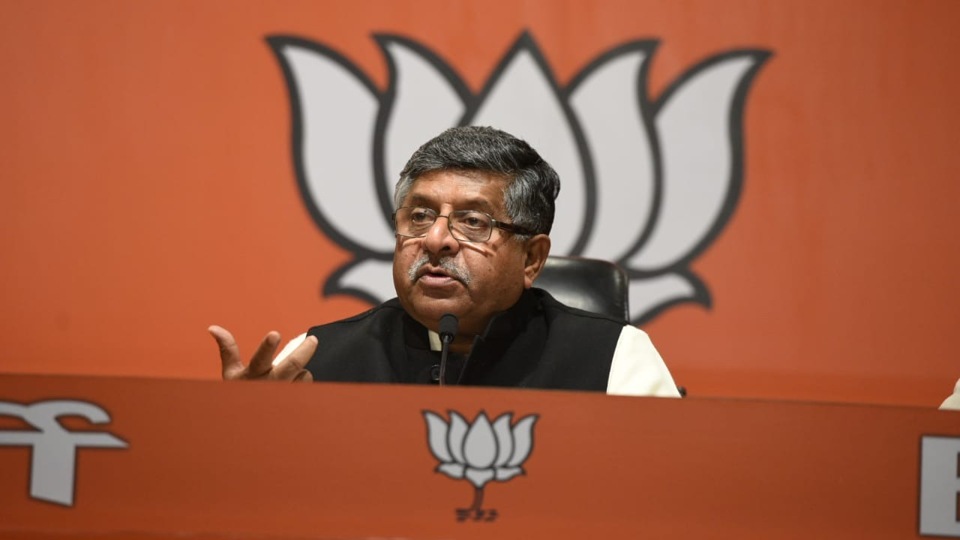
Union minister Ravi Shankar Prasad questioned the Shiv Sena’s insistence on a rotating chief ministership in the state after the elections results were declared that eventually lead to an impasse before President’s rule was imposed on November 12.
“This was the moral and electoral victory of the BJP alliance when the BJP and Shiv Sena won the majority. On whose direction did Shiv Sena become agitated after the election results?” Prasad asked at a press conference.
He also put the Sena in his line of fire for breaking a 30-year alliance with the BJP.
“It is being said that democracy has been murdered. When the Shiv Sena, inspired by selfishness, breaks its 30-year friendship and holds on to its adversaries, is it not murder of democracy?”
Prasad also reminded NCP chief Sharad Pawar and the Congress of their post-poll comments about sitting in the opposition.
“Sharad Pawar and the Congress had given a statement after the result that we have got a poll to sit in the opposition. So how did this match-fixing for the chair become a public opinion?
The Union minister said Fadnavis and Ajit Pawar were the only ones who had claimed to have the numbers to form a government.
“Apart from the collective claim of (Ajit) Pawar and Fadnavis, who have a clear majority, there was no counter claim before the governor…The new alliance will give a stable government,” Prasad said.
He also accused the NCP, Congress and Sena of conspiring “to control the financial capital (Mumbai) through the backdoor” by trying to forming a government.
Earlier, in a stunning development Saturday morning that caught the Congress, NCP and the Sena on the wrong foot, BJP’s Fadnavis was sworn in as chief minister for a second term while NCP’s Ajit Pawar took oath as deputy chief minister at the Raj Bhawan. The early morning ceremony drew a firestorm of protests from the three parties.
While Shiv Sena boss Uddhav Thackeray called it a surgical strike and warned that there would be revenge for it, NCP chief Sharad Pawar said the BJP won’t survive a floor test because it doesn’t have the numbers. Congress leader Ahmed Patel insisted that the party, along with the Sena and the NCP will form the government in Maharashtra and will also moun a political and legal challenge.


