E-Paper



Shivraj Singh Chouhan urges ICAR to launch grading system for agri universities
Union agriculture minister Shivraj Singh Chouhan said agricultural studies must be pursued with equal seriousness and professional rigour like in engineering and medical fields

 Prefer HTon Google


New Delhi: Union agriculture minister Shivraj Singh Chouhan on Monday urged the Indian Council of Agricultural Research (ICAR) to introduce a grading system for agricultural universities and colleges to ensure greater quality and accountability in agricultural education. Drawing a comparison with engineering and medical fields, he said agricultural studies must be pursued with equal seriousness and professional rigour, as “the nation’s food security depends on it”.
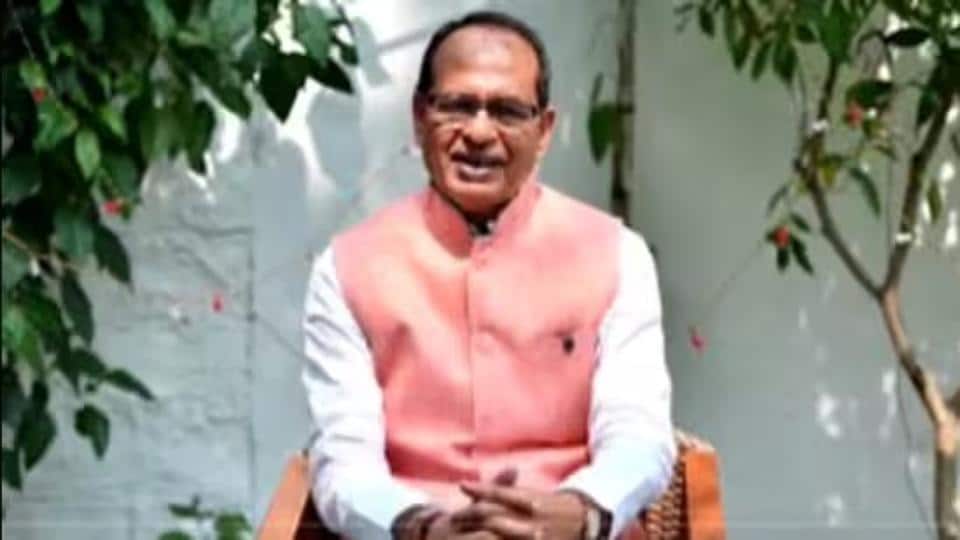
Addressing a gathering of agriculture students and faculty at the Indian Agricultural Research Institute (IARI), New Delhi, Chouhan said the future of Indian agriculture lies in its students.
“Agriculture feeds the nation and ensures food security. While we have achieved self-sufficiency in wheat, rice, fruits, vegetables, milk, and fish production, serious gaps remain in agricultural education,” he said.
The minister said the time has come to introduce a grading system for agricultural universities to assess teaching quality and encourage healthy competition.
“We must set clear benchmarks to know where we stand. Good institutions should be recognised and others inspired to improve. Without competition, there can be no progress. Each agriculture university should develop its own area of specialisation, like IITs are known for specific engineering branches. Students should know which college is best for horticulture, animal husbandry, or agri-engineering,” he said.
ICAR director general (DG) Mangi Lal Jat said there is a need for a stronger mechanism to ensure quality standards in agricultural universities. “We are working on introducing a grading system to foster healthy competition among these institutions, assessing them on parameters such as teaching–learning quality, entrepreneurship, and technology integration,” Jat told HT.
In his address, Chouhan also urged states to fill vacant faculty positions, saying many new agriculture colleges have been opened but faculty positions remain unfilled, impacting the quality of teaching. “If there is no adequate staff, how will students receive meaningful education?” he asked, adding that he would write to all chief ministers to ensure vacancies are filled in state agriculture universities at the earliest.
ICAR DG Jat said faculty shortages remain a major concern in agriculture universities, with vacancies “ranging from 15% to 85% in some universities.”
Chouhan also emphasised linking agricultural education with innovation, value addition, and entrepreneurship, saying India must move beyond primary crop production. “India must strive to become the world’s food basket, contributing not only to our own food security but also to global nutrition and sustainability. Agricultural and allied education should empower students to change their own lives, and through them, to change the world,” he said.
There are 63 State Agricultural Universities (SAUs), 3 Central Agriculture Universities (CAUs), 4 deemed universities and 4 Central Universities with agriculture faculty totaling to 74 Agricultural Universities (AUs) enrolling over 3.5 lakh students.