
 E-Paper



Shock, pain... and last rites for Morbi’s kids
Many families took the bodies of their kin to their native homes in Morbi district and elsewhere.

 Prefer HTon Google


Jagdish Devsi is no stranger to cremating children. The Mukti Dham crematorium in Morbi town – where Devsi is the caretaker – is the primary crematorium for the young in the region. In the first 30 days of October, he had already cremated eight children brought from various hospitals in town. But the last day of the month – when 135 people, including 48 children, were killed in a bridge collapse – brought forth a situation he had not witnessed in the two decades that he has been employed here. Even during the peak of Covid-19, in which the roof of a neighbouring electric crematorium collapsed due to overload, Mukti Dham remained largely unaffected.
“I laid out seven bodies next to each other in a row, in order of their age. They included five children aged between four and 13,” Devsi said. The pyres were lit, but Devsi’s tough job continued. He walked down a nearby slope, dug two shallow pits about two metres apart, and lowered two small cloth-wrapped bodies into them. He then filled the pits with mud, put large stones over them, and placed flower garlands around the stones. “The bodies were of a two-year-old boy and a four-year-old girl. As per our local tradition, we don’t burn the bodies of children aged four years or less. Unless their families demand so, we bury them,” said Devsi.
While burying the children, Devsi struggled to come to terms with the fact that the parents and sister of the boy were cremated separately at the electric crematorium less than 50 metres away. “After so many years of service here, I am not often moved by deaths. Not even by that of children. But I don’t remember the last time I had tears in my eyes in these premises,” said Devsi.
Also read: 'Wilful fraud, not will of God': Priyanka Chaturvedi's jibe over Morbi bridge collapse
In Morbi, where the last big tragedy was a dam collapse in 1979, and even the peak Covid-19 pandemic largely spared its children, the scenes at the crematoriums and burial grounds shook the residents. They first prepared in the manner they had in 1979, when hundreds of bodies were cremated or buried at the same time. At the Haji Zafar Shah Kabristan, the biggest burial ground in Morbi town, the management sought the services of a crane when the news of the deaths came in.
“In 1979, we had dug huge pits to bury hundreds of people together. Since a Muslim neighbourhood is located next to the cable bridge, we expected a large number of casualties to be Muslims. This time we thought we would use a crane to dig huge pits,” said Rafiq Dal, one of the staffers.
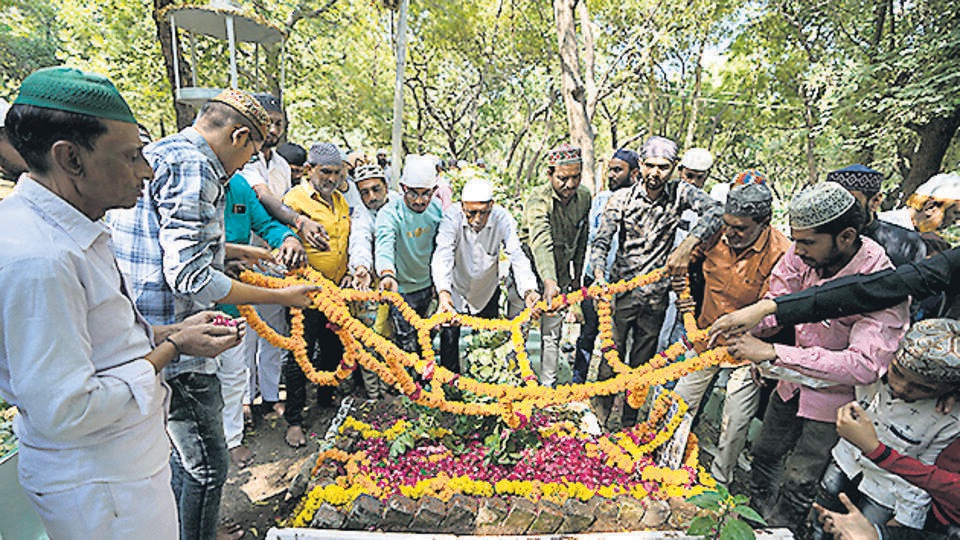
But the local Muslim community had other plans. “Our people insisted that they would bury the victims with dignity, irrespective of how much effort it required,” said Sajid Piludia, an influential local resident. So, about 50 local men joined the kabristan’s two grave diggers, Yusuf Sahmada and Younis Sheikh, in digging graves in the premises that is spread over 10 acres. “We began at 9pm on Sunday. By next afternoon, we had dug all the graves that were required,” said Sheikh. In all, 24 bodies were buried here, and one in another burial ground nearby. One family that lost seven members brought four bodies here, while the three others were sent to Jamnagar.
There were also bodies of five members of a family belonging to Kutch. It included a couple and their three children. The five were buried in four graves. “A member of the family mentioned that the two youngest siblings were very close. They requested the two siblings to be buried together. We obliged,” said Sahmada.
Also read: Morbi bridge collapse: From pride to disaster, tracing Oreva’s links to ceramic town
On Wednesday, garlands and plants placed on the four graves told the story of a tragedy that left several children dead in its wake. “Ten of the 24 victims buried here were children,” said Dal.
Many families took the bodies of their kin to their native homes in Morbi district and elsewhere. Those who belonged to Morbi town opted for the crematoriums and burial grounds in the city.
There were several stories of multiple members from a family dying in the bridge collapse at these places. “During Covid-19, I remember cremating 22 bodies on the worst day. But even then, I didn’t have to cremate entire families,” said Jayantibhai, the caretaker of Vidyut Shamshan. “It will take time for our town to recover.”


