
 E-Paper



Showed in Ladakh that China can’t push India around: CDS Gen Rawat
India, the United States, Japan and Australia constitute the Quadrilateral Security Dialogue or Quad. China has been wary of the grouping that was revived in late 2017, and Beijing’s suspicions have increased since the four countries upgraded the forum to the ministerial level in 2019.


India’s senior-most military commander on Thursday said while China believed it could compel nations to give in to its demands with “a little bit of push and shove,” it was not able to do that in the Ladakh sector where the two countries have been locked in a border row for more than 11 months.
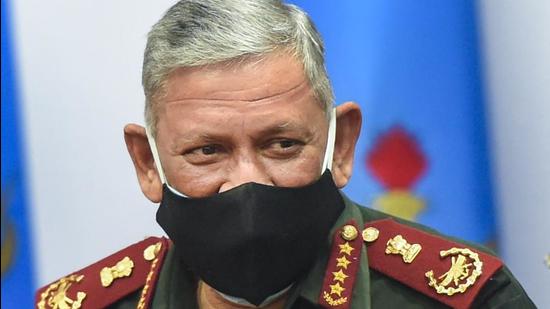
“India stood firm on its northern borders and we have proven that we will not get pushed (around),” chief of defence staff (CDS) General Bipin Rawat said during a discussion on the future of conflict at the Raisina Dialogue.
His counterparts from Australia and Japan --- Generals Angus Campbell and Koji Yamakazi --- were also on the panel. India, the United States, Japan and Australia constitute the Quadrilateral Security Dialogue or Quad. China has been wary of the grouping that was revived in late 2017, and Beijing’s suspicions have increased since the four countries upgraded the forum to the ministerial level in 2019.
India and China are currently negotiating a withdrawal of troops and weapons from friction points on the contested Line of Actual Control (LAC).
Asked to comment on China’s aggression in the region despite its behaviour bringing the Quad closer, Rawat said the Chinese feel that they have arrived and have a better armed force because of the technological advances they have made.
The CDS linked China’s assertiveness to its developing disruptive technologies that can paralyse systems of its adversaries, causing breakdowns in critical areas such as banking, power grids, transportation and communication.
“In whatever we have been able to achieve in standing firm, in preventing change of status quo; we have been able to gather world support. The international community has come to our support to say that yes there is an international rules-based order which every nation must follow,” Rawat said.
Experts said China miscalculated India’s response in the Ladakh sector while making its forward deployments to alter status quo in the sensitive area.
“China went wrong in its assessment of India’s response and resilience to the People’s Liberation Army’s forward deployment and aggressive behaviour along the LAC. This resulted in the first ever withdrawal of China’s forward deployment from a neighbouring country including the maritime domain,” said Lieutenant General Vinod Bhatia (retd), a former director general of military operations.
The CDS said China tried to show it can change status quo by the use of disruptive technologies without using force. “As of now, they have not used force and they thought India as a nation will succumb to the pressures they are putting on us because of the technological advantage that they have,” he said.
On April 7, Rawat said China was way ahead of India in technology, and it was capable of launching cyber-attacks and disrupting a large number of Indian systems. He said the biggest gap between the two countries was in the cyber domain and India was looking at collaborating with western nations to overcome deficiencies in the critical area.
A few weeks ago, Recorded Future, a US-based security consultancy, reported that Chinese groups had intruded into the networks of at least a dozen Indian state-run organisations since mid-2020 in an attempt to insert malware that could cause widespread disruptions. To be sure, India denied any data breach in the attempts made by Chinese hackers to target the country’s power grid.
At the Raisina Dialogue, the CDS said while some nations follow the international rule-based order, there are others who make their own rules and regulations and attempt to change status quo.
“Such things do lead to conflicts (like the one) that we are witnessing on our northern borders. The world is now becoming fragile on account of threats from hybridisation of warfare. Some nations feel they have arrived with better technology and, therefore, threaten other nations which probably don’t have that kind of technology,” the CDS said.
He said nations that have developed disruptive technologies feel they will be able to impose their will on other nations by saying that “if you don’t come to my terms, I have other means of bringing you into conflict through unconventional means.”
“So nations are trying to become assertive and this is what China attempted to do and say that ‘it is my way or no other way.’ Such nature of undeclared wars will place dilemma in the minds of decision makers whether or not to resort to kinetic force and thus be labelled as an aggressor. It is trying to draw you into a conflict without you starting the conflict but (by it) resorting to disruptive technologies,” Rawat said.
On the scheduled withdrawal of US troops from Afghanistan and the North Atlantic Treaty Organisation (NATO) forces following suit, the CDS said the vacuum created there should not create space for other disruptors to step in.


