With India's neighbourhood in the grip of protests over the past half a decade — from Sri Lanka to Bangladesh, and now Nepal — a spokesperson of the main opposition party, the Congress, has said that such a thing will not happen in India “as it has already happened here” and “its beneficiaries are already in power”.
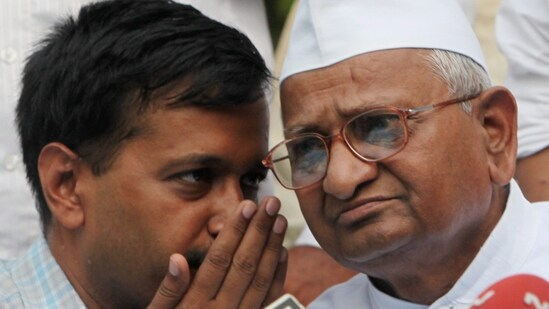
Congress leader Surendra Rajput said power is now with “beneficiaries of the anarchy”, for which he held responsible the Anna Hazare-Arvind Kejriwal movement that catalysed the Congress's ouster from power over a decade ago.
“India has already endured the kind of anarchy seen in Nepal and Bangladesh, when our government was destabilised by the conspiracies of foreign powers,” Rajput, a national media panelist of the Congress who speaks for the party almost every night on TV, posted on X on Wednesday.
Narendra Modi became PM after the BJP-led NDA came to power at the Centre in 2014, and Arvind Kejriwal-led Aam Aadmi Party (AAP), which emerged from the Anna movement, is a notable pole in Indian politics since.
Nepal, meanwhile, is facing its latest rebuilding crisis after protests triggered by a social media ban quickly widened over deep-set frustrations and unseated the government at the start of this week.
‘Puppets of foreign powers’
{{/usCountry}}Nepal, meanwhile, is facing its latest rebuilding crisis after protests triggered by a social media ban quickly widened over deep-set frustrations and unseated the government at the start of this week.
‘Puppets of foreign powers’
{{/usCountry}}“Recall 2012-13, the banner of India Against Corruption, and the screaming, shouting crowds determined to bring the government to its knees,” he said. He claimed that the protesters in the Anna movement “were equally devoid of ideas”.
He credited the leadership of Sonia Gandhi, the then chairperson of the Congress-led UPA, and the then PM Manmohan Singh for keeping peace. The leaders “sent out a clear message that even if the government falls, no bullets should be fired”. The leadership saw the protesting young people as “being used”, he added.
The Aam Aadmi Party (AAP) unseated the Congress in Delhi first (2013) and then Punjab (2022), and has also challenged the BJP over the years. The Congress and AAP have come together, too, at time, but mostly have a love-hate relationship.
Rajput termed the Anna-Kejriwal movement as that by “foreign powers’ puppets”.
Saying that “what happened in Myanmar, Pakistan, Sri Lanka, Bangladesh, and Nepal had already played out in India in 2013”, he claimed that those who have come to power after the protests in the neighbouring countries are “American agents”.
The UPA government took the path of engaging in talks with yoga guru Ramdev, former army chief (and later minister) VK Singh, and retired police officer (and later politician) Kiran Bedi, and other leaders of the movement at the time, “to show the youth that away from anarchy, it believed in dialogue”, he added.
“The UPA government saved the country from the kind of violent anarchy that the governments of Bangladesh and Nepal could not,” he further wrote, in Hindi.
But, he added, as a result “a government working for the people, rooted in democratic values, was defamed” and economic progress “achieved by Manmohan Singh” was halted.
He claimed that respect for Sonia Gandhi and the late Manmohan Singh has been restored. “Trust in Congress has returned, and hope has been kindled in Rahul Gandhi,” his post read.
Another Congress leader, former MP Udit Raj, meanwhile faced criticism from the BJP for drawing parallels between Nepal's 'Gen Z' protests and India, while also citing Sri Lanka and Bangladesh as examples.
Udit Raj had argued that “circumstances are similar” but India’s Constitution and strong democratic foundation have prevented such upheavals, a legacy he credited to the Congress.
BJP's CR Kesavan termed Raj's remarks dangerous and “blatantly anti-national”.