
 E-Paper



Singur and the ghost of Nano: How PM Modi's Bengal rally seeks to reverse Mamata Banerjee's role
Prime Minister Narendra Modi, who provided an alternative home to Tata Motors after Singur agitation led by Mamata, set to lead a massive rally in the town

 Prefer HTon Google


It's been around two decades since the fertile plains of Singur became the epicentre of political change that toppled a 34-year-old regime in West Bengal, and brought Mamata Banerjee to power. It's once again at the heart of the state's high-stakes political rhetoric — this time not over a factory being planned, but over one that was never built here, of a car called Nano.
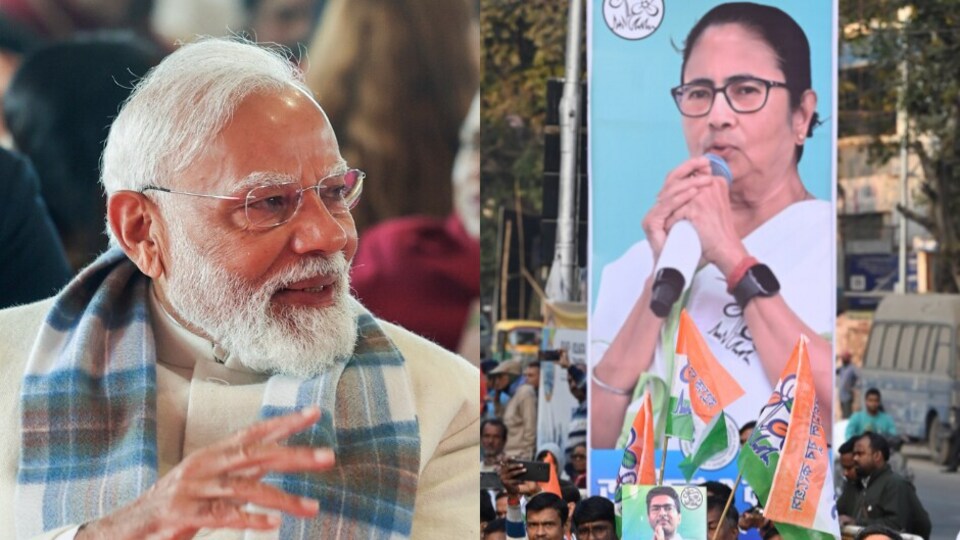
Prime Minister Narendra Modi, who provided an alternative home to the Nano then, will lead a massive rally in the town the coming Sunday, January 18. The symbolic weight of the location is lost on no one.
The political circumstances have, in some ways, undergone a dramatic reversal for Chief Minister Mamata Banerjee, as the BJP seeks to weaponise the very soil that once fueled her rise to power.
In 2006, Buddhadeb Bhattacharjee's Left Front government attempted to acquire nearly 1,000 acres of farmland for Tata Motors’ Nano car project. But fierce resistance from local farmers, who feared for their livelihoods, halted it; and an agitation led by Mamata's Trinamool Congress (TMC) meant an end to the Nano plan.
Five years later, on the back of this and other issues, the TMC won a brute majority in the Vidhan Sabha, unseating the longest-serving democratically elected communist government in the world.
Skeletal remains of that abandoned factory remain at the site.
The BJP, which has made Bengal its primary battleground for months now after a spike in seats last time, is framing the site as a symbol of "de-industrialisation". The state's main opposition party recently released a booklet titled ‘West Bengal: Industrialisation Graveyard’, highlighting Singur as a prime example of the state's alleged decline under the TMC.
For Narendra Modi, the rally is yet another opportunity to contrast the Bengal model “of agitation” with his own Gujarat model “of rapid industrial growth”.
Modi's trajectory from ‘welcome’ SMS to Tata to Singur stage now
Modi had reacted fast in 2008, when Ratan Tata famously remarked that he could not operate "with a gun to his head" and pulled the Nano project out of Bengal. As CM of Gujarat, Modi reportedly sent a one-word SMS to Ratan Tata: "Welcome".
Within days, the project moved to Sanand in Gujarat, where Modi’s administration provided land and clearances in quick time.
This "Sanand gain" became a crucial pillar of Modi’s 2014 national campaign, showcasing him as a pro-business leader who could succeed where traditional politics had failed.
Now, as Prime Minister, Modi is returning to the source of that argument, to argue that he can "re-industrialise" West Bengal.
The Nano apparently ran out of steam as a market proposition and production of the model stopped around seven years ago.
There have been recent reports regarding a potential Tata Nano electric vehicle (EV), though no official announcement has been made.
Mamata fights an image assault
Adding to the pressure on Banerjee is Suvendu Adhikari, the Leader of the Opposition.
As Banerjee's aide at the time, Suvendu Adhikari was a key figure in the anti-land acquisition movements. He now describes the agitation as a "mistake" that led to a "corrupt, dynastic" regime.
"We have not been able to usher in real change for the people," Adhikari has stated, promising that if the BJP comes to power in the 2026 assembly election due by March-April, the party would ensure industrialists “return” to the state.
The TMC has disputed the allegations and claims as the Singur rally represents a direct assault on Mamata Banerjee's political identity.
Her "Maa, Mati, Manush" (Mother, Land, People) slogan was born in the agitations of Singur and Nandigram.
She has since spent years attempting to shed the "anti-industry" label through various iterations of the Bengal Global Business Summit (BGBS). However, the BJP has dismissed these efforts as a "flop show".
Centre vs state, locals vs ‘outsiders’ ahead of Bengal election
TMC's national general secretary Abhishek Banerjee has labeled the BJP leadership as “zamindars (landlords) of Delhi”, accusing them of trying to “snatch the dignity” of Bengal’s people. TMC activists have even been seen "purifying" the BJP rally sites with water, symbolically attempting to wash away the opposition's influence.
The TMC and BJP most recently faced off over the central agency ED's raid on political consultancy I-PAC's premises in Kolkata in relation to a corruption case. Mamata Banerjee called it a “theft” of TMC's data as I-PAC is the TMC's strategist for the election. That issue is now in the Supreme Court.
The ongoing Special Intensive Revision (SIR) of voter rolls has already been a major point of contention as the TMC accuses the Election Commission of working for the BJP, while the BJP has alleged that Mamata Banerjee wants illegal Bangladeshi migrants and Rohingya Muslims to stay on the voter rolls.
(with PTI inputs)


